
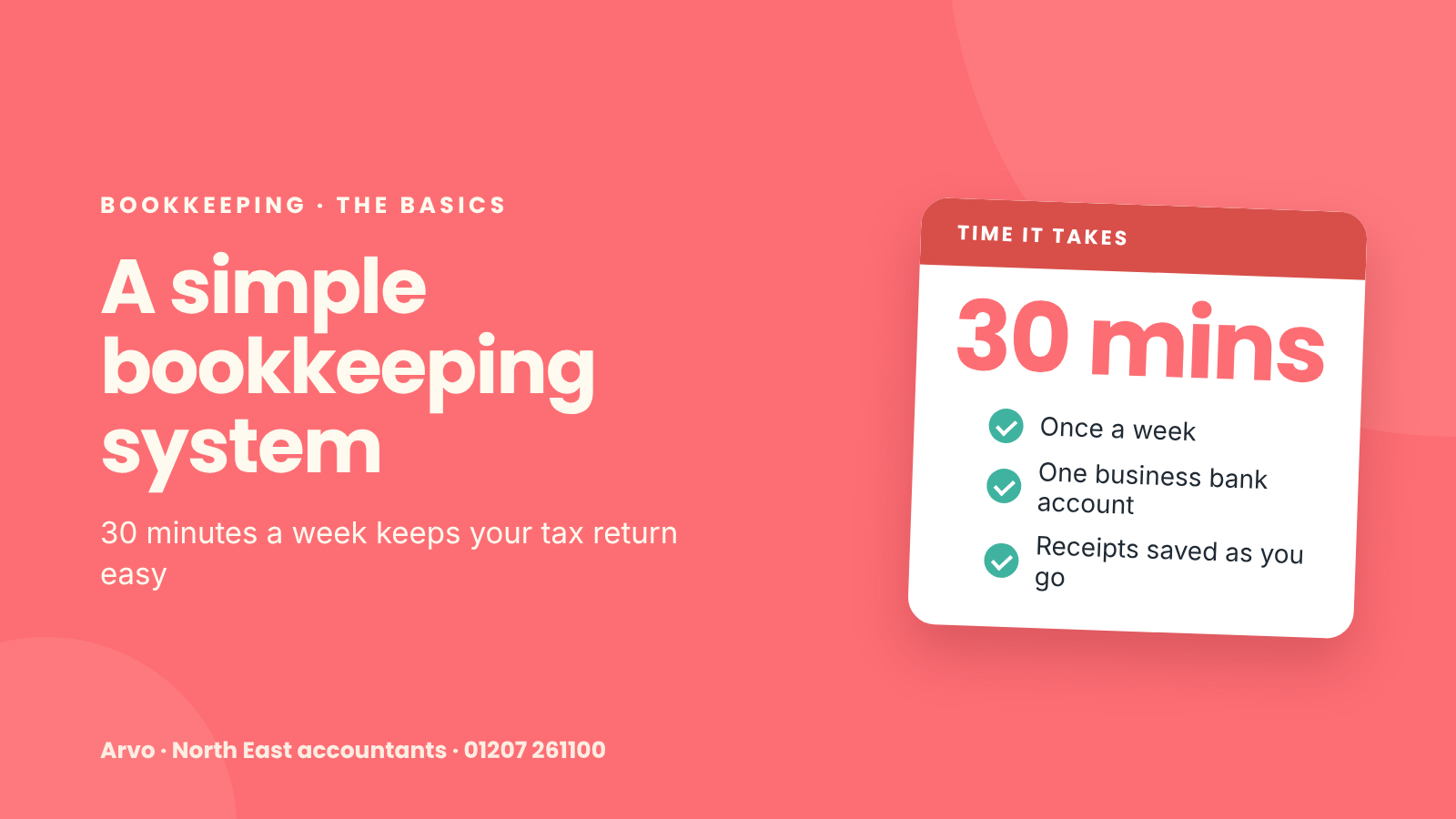
Most sole traders don't start their business because they love paperwork. But a simple system, done little and often, saves time, stress and usually money at tax return time.
1. Keep business money separate
Use one bank account for business income and costs. It doesn't have to be an expensive business account, but keeping it separate from your personal spending makes everything easier to follow.
2. Capture receipts as you go
Take a photo of every receipt when you get it, or forward email receipts to one folder. Paper receipts fade and get lost. A photo on the day takes seconds.
3. Use simple software
Bookkeeping software like Xero, QuickBooks or FreeAgent connects to your bank, pulls in your transactions and lets you match them to receipts. A spreadsheet works too if your business is small, but software is quicker and will help when Making Tax Digital arrives.
4. Set a weekly 30 minutes
Pick a regular time, such as Friday afternoon, and:
Categorise the week's transactions
Match receipts
Send any invoices you haven't sent
Check who owes you money
5. Do a monthly check
Once a month, make sure your bank balance in the software matches your actual bank balance. If it doesn't, find out why while it's still fresh.
6. Put tax money aside
When you get paid, move a percentage into a separate savings account for tax. For many basic rate taxpayers, 20% to 25% of profit is a sensible starting point.
What records do you need to keep?
Keep records of all your income and expenses, including invoices, receipts and bank statements, for at least five years after the 31 January filing deadline for that tax year.
Related reads
Cash basis is now the default for sole traders: what changes
Keeping business and personal money separate: why it matters
How Arvo can help
We can set up your bookkeeping software, show you a routine that works for your business and take the tax return off your hands at the end of the year.
Find out more about our bookkeeping and Xero service.
Get in touch to arrange a free, no-obligation chat, or call us on 01207 261100.