

CIS tax refunds for North East subcontractors.
If you’re a subcontractor and your contractors take 20% off every invoice, there’s a good chance you’ve paid more tax than you owe. We work out exactly what you’re due, file your tax return properly and get your CIS refund back from HMRC, without the jargon.
From our office in Stanley, we help builders, sparks, plumbers, joiners, roofers and groundworkers across County Durham, Newcastle, Gateshead, Sunderland and the wider North East.

Why most subcontractors are owed a CIS refund.
CIS deductions are a flat 20% (or 30% if you’re not registered) taken off the labour part of every payment. But that 20% doesn’t know about your personal allowance, your van, your tools or the miles you drive to site. Once your tax return takes those into account, the tax you actually owe is often far less than what’s been deducted, and HMRC owes you the difference.
Things that bring your bill down include your personal allowance, van or car costs (or 45p a mile for your first 10,000 business miles), tools and protective workwear, public liability insurance, CSCS cards and training, the work part of your phone bill and your accountancy fees.

Step 2: Send us your paperwork.
Send us your CIS payment and deduction statements and your receipts, or just photos of them. Lost a few statements? Your contractors have to give you copies, and we can help chase them up.


Step 4: HMRC pays your refund.
HMRC pays the refund straight into your bank account. It often lands within a few weeks, but it can take longer if HMRC run checks or your CIS statements don’t match their records. If that happens, we deal with HMRC for you.
Step 1: Have a quick chat.
Getting your CIS refund back starts with a quick call. We ask what you earn, who you work for and what you spend on the job, then tell you roughly what you could be owed. No forms to wrestle with.
Step 3: We file your return.
We prepare your Self Assessment tax return, claim every allowable expense and file it with HMRC. You can file from 6 April, so there’s no need to wait until the January deadline. The sooner it’s in, the sooner you’re paid.

How much CIS could you get back?
Many subcontractors on 20% CIS pay more tax than they owe. Use our free CIS refund calculator to see how much has been taken off your pay this year and the refund you could be due. It takes less than a minute.
Specialist accountancy support for CIS Contractors.
-
![Pink building with a document checklist icon in front]()
CIS Tax Returns
We prepare self-assessment tax returns for CIS contractors and subcontractors, ensuring CIS deductions, income and allowable expenses are reported accurately. Our aim is to make the tax return process simple while helping maximise legitimate tax reliefs and minimise unnecessary stress around deadlines.
-
![Illustration of an identification card with personal details and a green verification checkmark]()
CIS Tax Refunds
Many subcontractors overpay tax throughout the year due to CIS deductions being taken at source. We help contractors recover tax refunds efficiently by preparing accurate tax returns and ensuring all eligible expenses and deductions are properly accounted for.
-
![Xero logo beside a blue gear icon]()
Xero & Cloud Accounting Support.
We help CIS contractors move away from spreadsheets and paper receipts by implementing cloud accounting software like Xero. This allows income and expenses to be tracked more efficiently while helping contractors stay organised and better prepared for tax deadlines.
-
![Clipboard with checklist and pencil icon]()
Sole Trader & Limited Company Advice.
As income increases, many contractors begin questioning whether operating as a sole trader is still the most tax-efficient option. We provide practical advice around business structure, limited companies and tax planning to help contractors make informed decisions as they grow.
-
![Green icon of a clipboard with a pound sterling symbol and three people]()
Gross Payment Status Support.
For growing subcontractors and construction businesses, obtaining Gross Payment Status can significantly improve cash flow by allowing payments to be received without CIS deductions. We help contractors understand the eligibility criteria and support the application process where appropriate.
-
![Pink and purple target icon with an arrow hitting the bullseye]()
Expense Tracking & Bookkeeping.
Keeping records organised throughout the year makes managing CIS tax significantly easier. We help contractors track income, expenses and receipts properly while implementing simple systems that reduce paperwork and improve visibility over finances.
-
![Green icon of a financial presentation board with a pound symbol and three people]()
Payroll & CIS Compliance.
For contractors beginning to take on workers or subcontractors themselves, payroll and CIS responsibilities can quickly become more complex. We help construction businesses remain compliant with HMRC while simplifying ongoing payroll and CIS reporting requirements.
-
![Illustration of an orange upward-trending bar chart with a magnifying glass over it]()
Ongoing Advice & Support.
Whether you need help understanding CIS deductions, claiming expenses or planning for growth, we provide practical ongoing support designed specifically for subcontractors and construction workers.
-
![Pink light bulb icon representing business ideas and advice]()
Year End Accounts & Corporation Tax.
For CIS contractors operating through limited companies, we prepare year end accounts and corporation tax returns while ensuring all filing obligations are handled accurately and on time.


Do you need to join Making Tax Digital?
From April 2027, sole traders and landlords earning over £30,000 must keep digital records and send HMRC quarterly updates. Our free checker tells you if and when it applies to you in under a minute.

CIS refund questions.
-
After the tax year ends on 5 April. You can file your tax return from 6 April, so there’s no need to wait until the 31 January deadline. The sooner it’s filed, the sooner you’re paid.
-
Usually, yes. You can normally claim back overpaid CIS for up to four previous tax years. If you’ve never filed a return, or filed one without claiming your expenses, we can look back and claim what you’re still owed before the time limit runs out.
-
Your CIS payment and deduction statements from each contractor, records of your business expenses and your business mileage. If you’re missing statements, your contractors have to give you them, and we can help you get them.
-
Yes, but it works differently. CIS taken off a limited company is set against the company’s PAYE bill through payroll, and anything left over can be reclaimed from HMRC. We can sort this for you.
-
No. We help subcontractors right across the North East, including Durham, Consett, Chester-le-Street, Newcastle, Gateshead, Sunderland and Washington. Everything can be done by phone and email, or you can pop into our office in Stanley.
Helpful reads for CIS contractors
Plain-English guides from our team in Stanley.
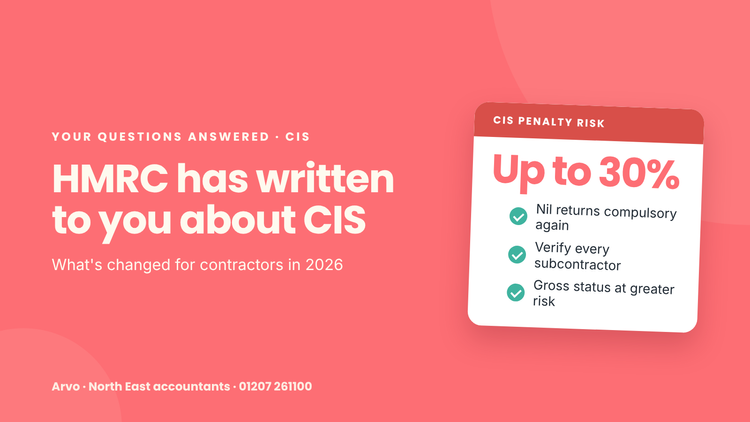
CIS contractors: why HMRC is writing to you, and what's changed
Read the article →
10 expenses sole traders often forget to claim
Read the article →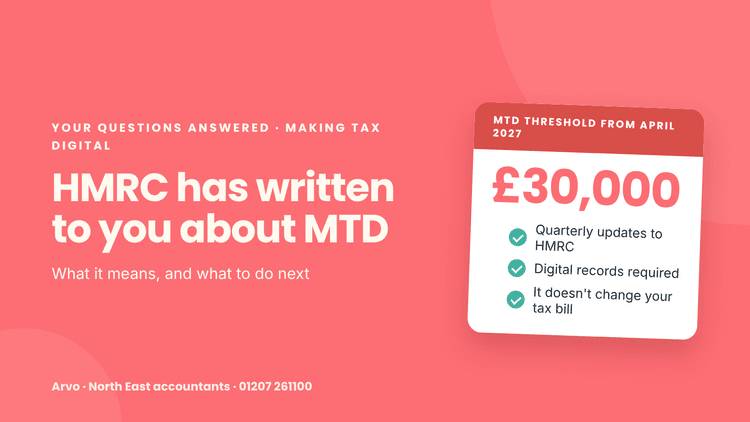
HMRC has written to me about Making Tax Digital. What now?
Read the article →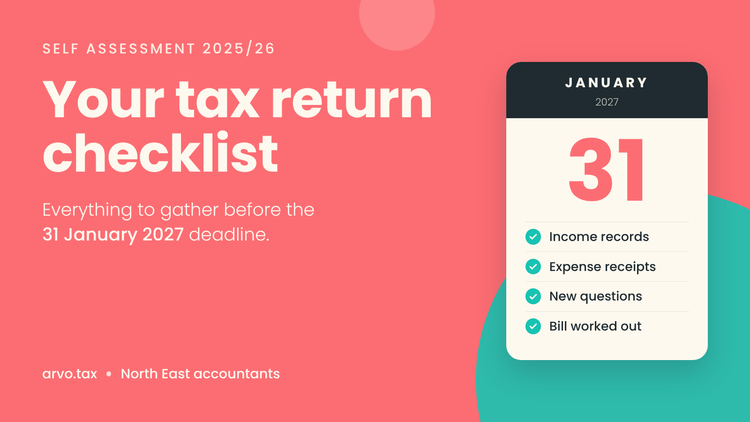
Self Assessment 2026: your checklist before 31 January
Read the article →