
With a new tax year under way, it's tempting to clear out old paperwork. Before you do, here's how long you need to keep it.
Sole traders and landlords
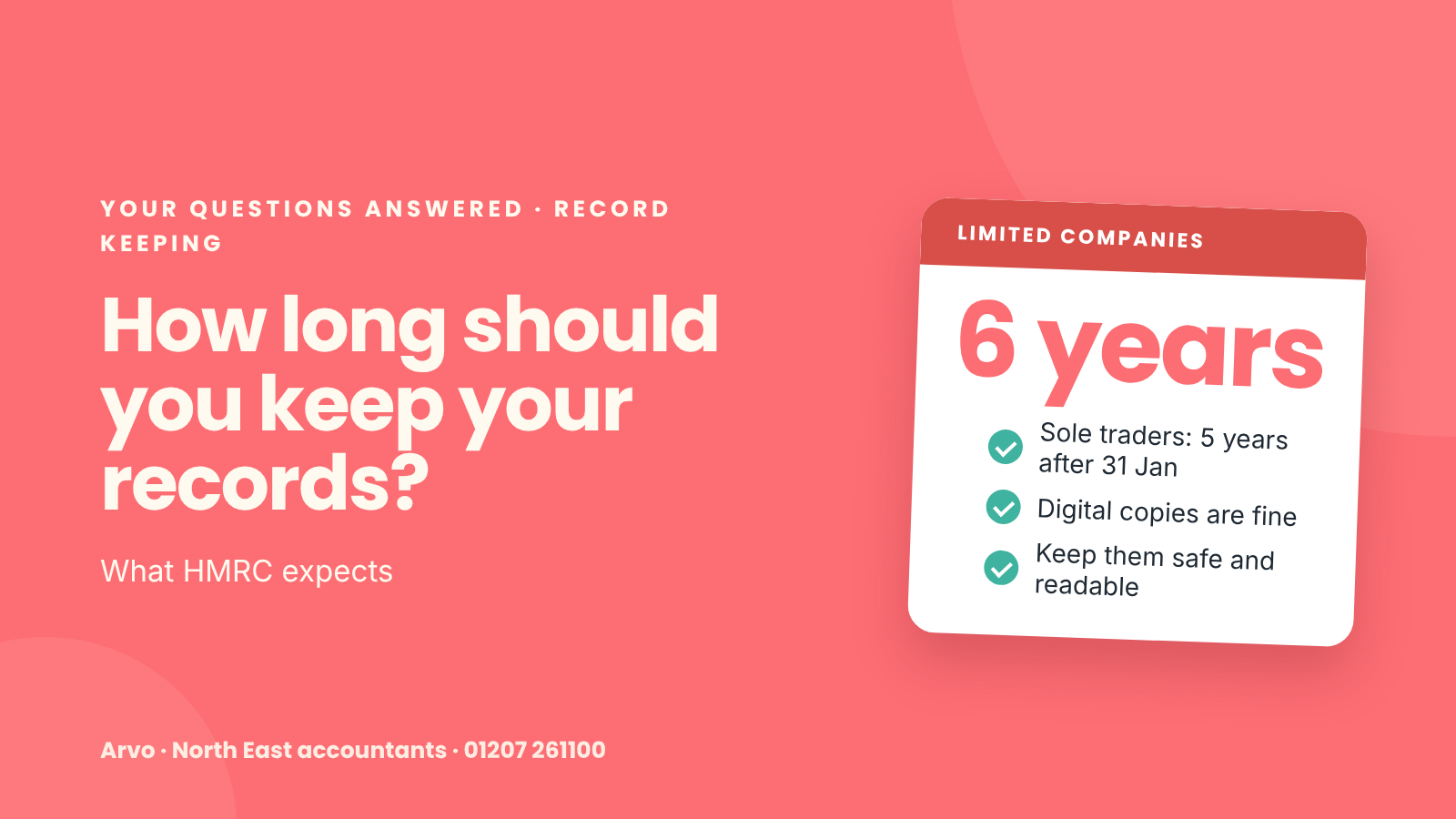
Keep your records for at least 5 years after the 31 January filing deadline for that tax year.
So for the 2024/25 tax year, the deadline was 31 January 2026, which means you should keep those records until at least 31 January 2031.
If you file late, or HMRC opens an enquiry, you may need to keep them longer.
Limited companies
Companies must keep records for 6 years from the end of the financial year they relate to. Some records, like those for assets or loans, may need to be kept longer.
What counts as a record?
sales invoices and receipts
purchase receipts and bills
bank and credit card statements
payroll records
VAT records, if you're registered
mileage logs
rental agreements and letting agent statements
Can I keep digital copies?
Yes. HMRC accepts digital copies, like photos or scans, as long as they're clear and complete. Many cloud bookkeeping apps let you snap a receipt on your phone and attach it to the transaction straight away.
If you're using Making Tax Digital, your records need to be digital anyway.
What if I don't keep them?
If HMRC asks to see your records and you can't produce them, you could face a penalty of up to £3,000, and HMRC may estimate your tax. Good records are your best defence.
A simple system
Use a separate bank account for your business
Photograph receipts as soon as you get them
Store them in one place, either in your software or a dedicated folder
Back them up
How Arvo can help
We're a local accountancy practice in Stanley, County Durham, and Xero Platinum Partners. We'll help you set up a simple record-keeping system that keeps HMRC happy and saves you time.
Get in touch to arrange a free, no-obligation chat, or call us on 01207 261100.