
National Insurance for the self-employed has changed a lot in the last few years. Here's how it works now.
Class 4 National Insurance
If you're a sole trader or partner, you pay Class 4 National Insurance on your profits through your Self Assessment tax return:
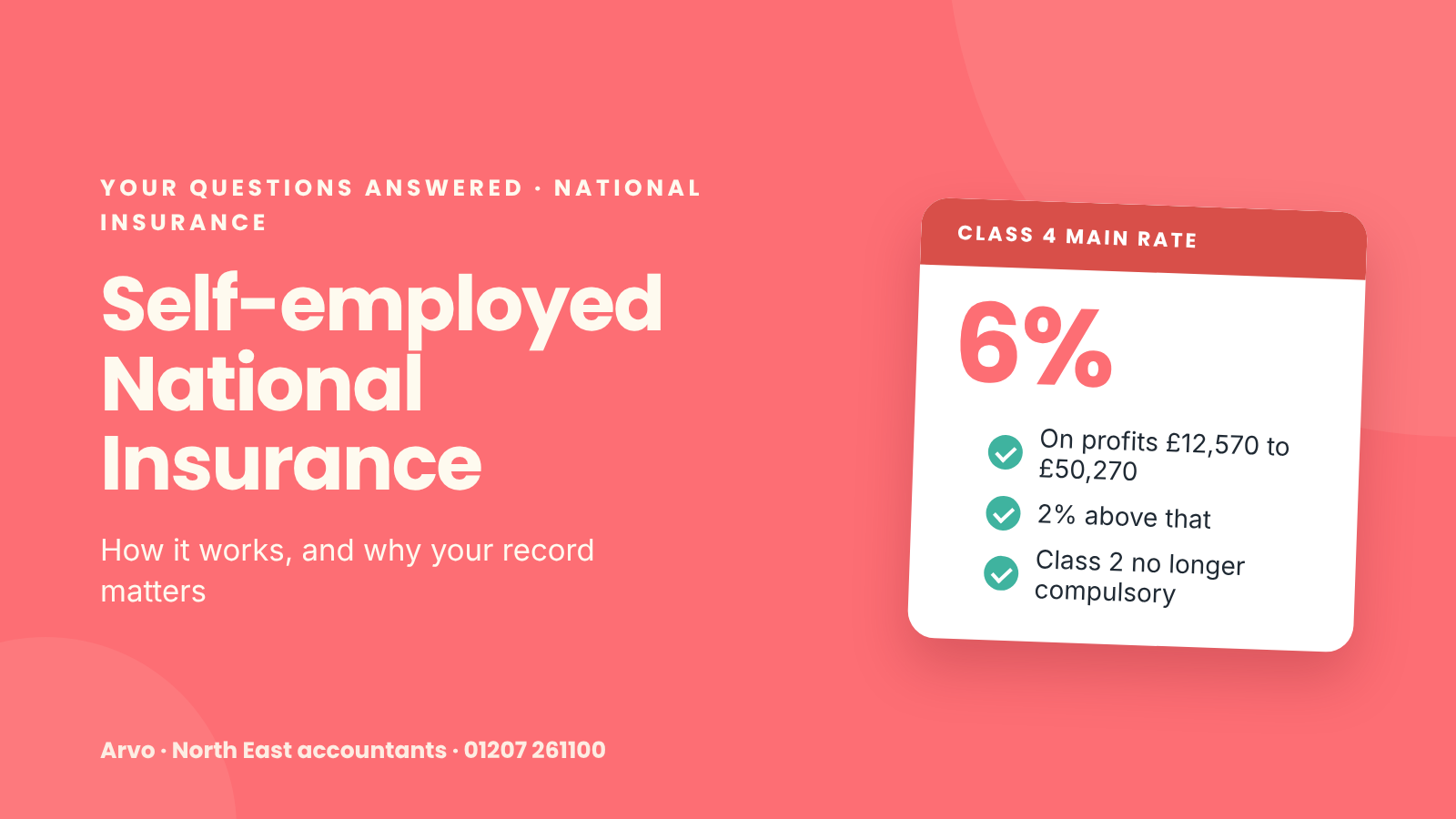
6% on profits between £12,570 and £50,270
2% on profits above £50,270
It's worked out on your tax return and paid along with your Income Tax, including through payments on account.
What happened to Class 2?
Since April 2024, self-employed people no longer have to pay Class 2 National Insurance. If your profits are above the small profits threshold, you automatically get National Insurance credits towards your State Pension without paying anything extra.
If your profits are below that threshold, you can choose to pay voluntary Class 2 contributions to protect your record. It's usually very good value.
Why your record matters
You normally need 35 qualifying years on your National Insurance record to get the full new State Pension, and at least 10 years to get anything. Gaps can reduce your pension.
You can check your record for free in the HMRC app or your personal tax account.
Employed and self-employed?
If you have a job as well as self-employed income, you pay Class 1 National Insurance through your wages and Class 4 on your self-employed profits. There's an annual maximum, so you may be able to defer or reclaim some if you've overpaid.
Tips
Set aside money for Class 4 along with your Income Tax
Check your National Insurance record every year or two
If you've had a low-profit year, ask whether voluntary contributions make sense
How Arvo can help
We're a local accountancy practice in Stanley, County Durham. We'll work out your Income Tax and National Insurance, check your record and make sure you're not paying more than you need to.
Get in touch to arrange a free, no-obligation chat, or call us on 01207 261100.