
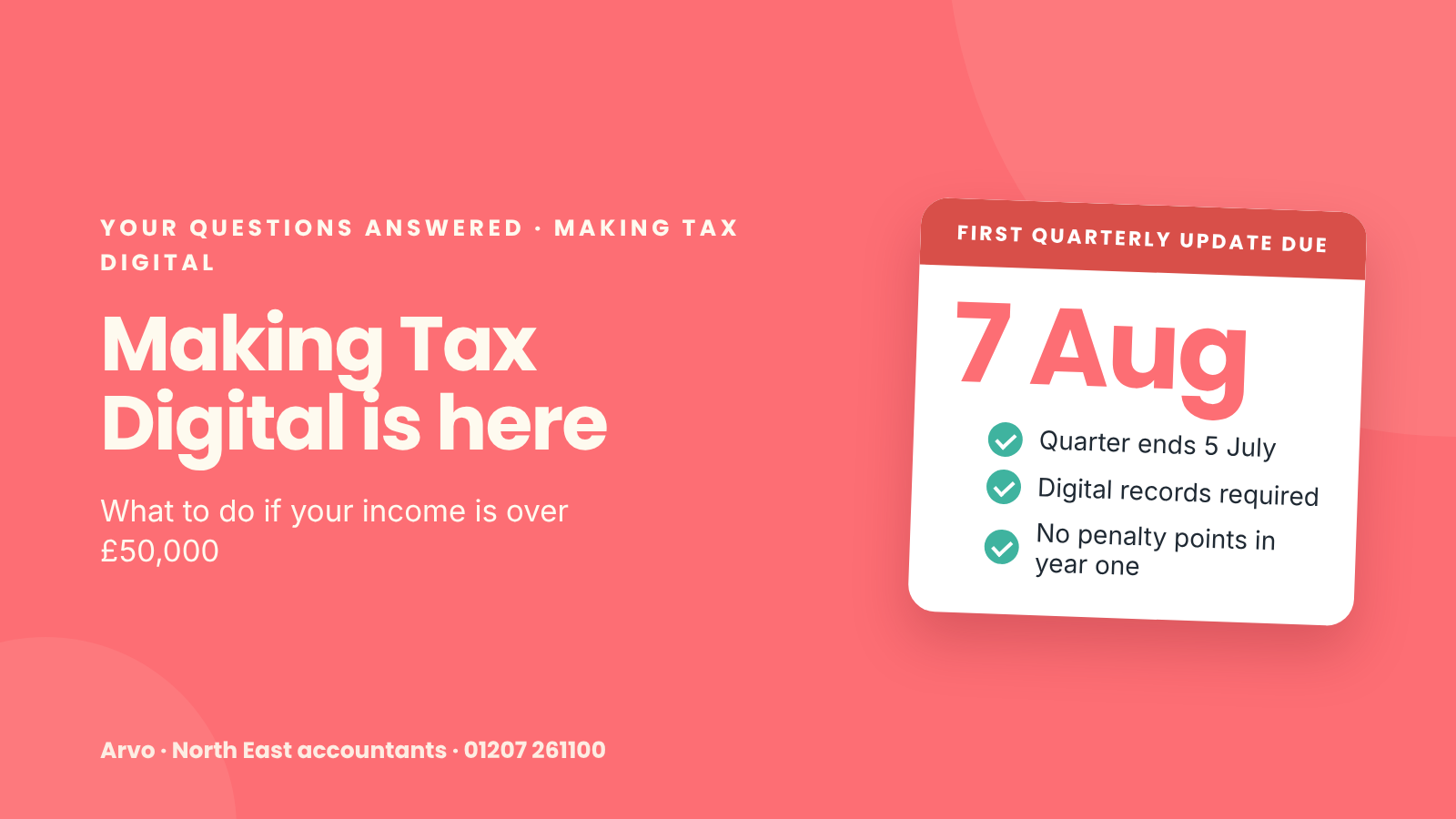
Making Tax Digital for Income Tax started on 6 April 2026. If you're a sole trader or landlord whose combined income from self-employment and property was over £50,000 in 2024/25, it now applies to you.
What's changed
Instead of one tax return a year, you now need to:
keep your records digitally, in software recognised by HMRC
send HMRC a short update every quarter
file a final return after the end of the tax year
It doesn't change how much tax you pay, or when you pay it.
Your quarterly deadlines for 2026/27
Quarter to 5 July 2026: due 7 August 2026
Quarter to 5 October 2026: due 7 November 2026
Quarter to 5 January 2027: due 7 February 2027
Quarter to 5 April 2027: due 7 May 2027
What to do now
Check you've signed up. Joining isn't automatic. You, or your accountant, need to sign up through HMRC.
Choose your software. It needs to be recognised by HMRC. If you prefer spreadsheets, you'll need bridging software.
Start recording from 6 April. Every sale and expense from the start of the tax year needs to be in your digital records.
Use a separate business bank account. It makes the quarterly updates much quicker.
What about penalties?
HMRC has said it won't give penalty points for late quarterly updates in this first year. But you still need to send them, and the usual deadlines and penalties apply to your final return.
Below £50,000?
The threshold drops to £30,000 in April 2027. If that's you, now is a good time to get ready. Our Making Tax Digital checker will tell you when you're likely to be affected.
How Arvo can help
We're a local accountancy practice in Stanley, County Durham. We'll get you signed up, set up the right software and send your quarterly updates for you if you'd prefer.
Get in touch to arrange a free, no-obligation chat, or call us on 01207 261100.