
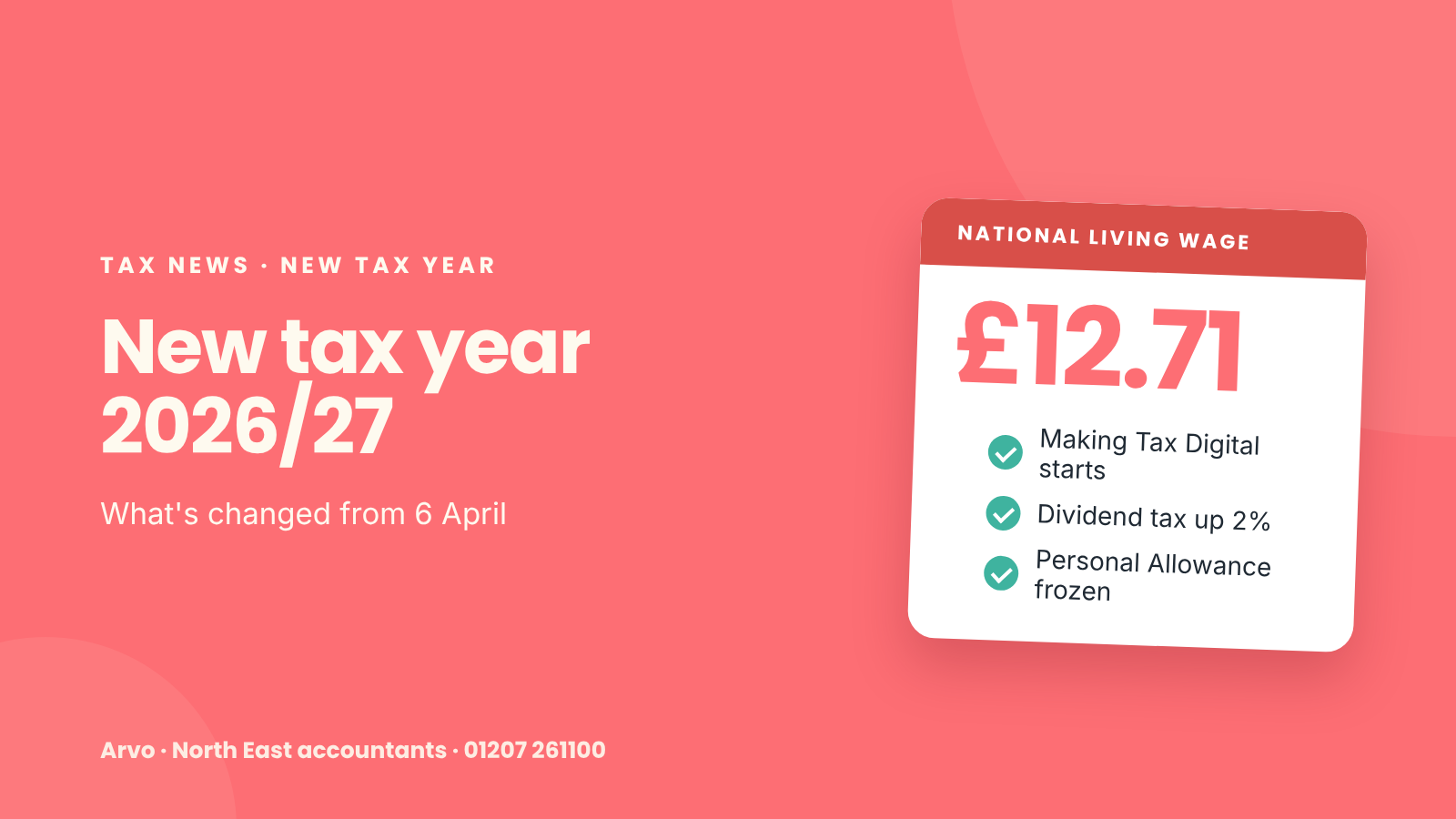
Today, 6 April 2026, is the first day of the 2026/27 tax year. Here's a round-up of what's changed, and what it means for you.
Making Tax Digital starts
From today, sole traders and landlords with qualifying income over £50,000 in the 2024/25 tax year must keep digital records and send HMRC quarterly updates. Qualifying income is your total income from self-employment and property, before expenses. The first quarter ends on 5 July, and the first update is due by 7 August.
Dividend tax goes up
Tax on dividends rises by two percentage points:
10.75% in the basic rate band
35.75% in the higher rate band
39.35% in the additional rate band (unchanged)
The tax-free dividend allowance stays at £500. If you run a limited company, it's worth checking your salary and dividend mix.
Selling a business
The rate of Capital Gains Tax under Business Asset Disposal Relief rises from 14% to 18% for disposals from today.
Employers
The National Living Wage for workers aged 21 and over is now £12.71 an hour (from 1 April).
Employer National Insurance stays at 15% above £5,000 a year, and the Employment Allowance stays at £10,500.
Capital allowances
The main rate writing-down allowance falls from 18% to 14%. The Annual Investment Allowance of £1 million still lets most small businesses deduct the full cost of equipment in the year they buy it.
What hasn't changed
The Personal Allowance stays frozen at £12,570.
The higher rate threshold stays at £50,270.
The VAT registration threshold stays at £90,000.
How Arvo can help
We're a local accountancy practice in Stanley, County Durham. If you're not sure how the new tax year affects you, we'll talk it through and help you plan the year ahead.
Get in touch to arrange a free, no-obligation chat, or call us on 01207 261100.