
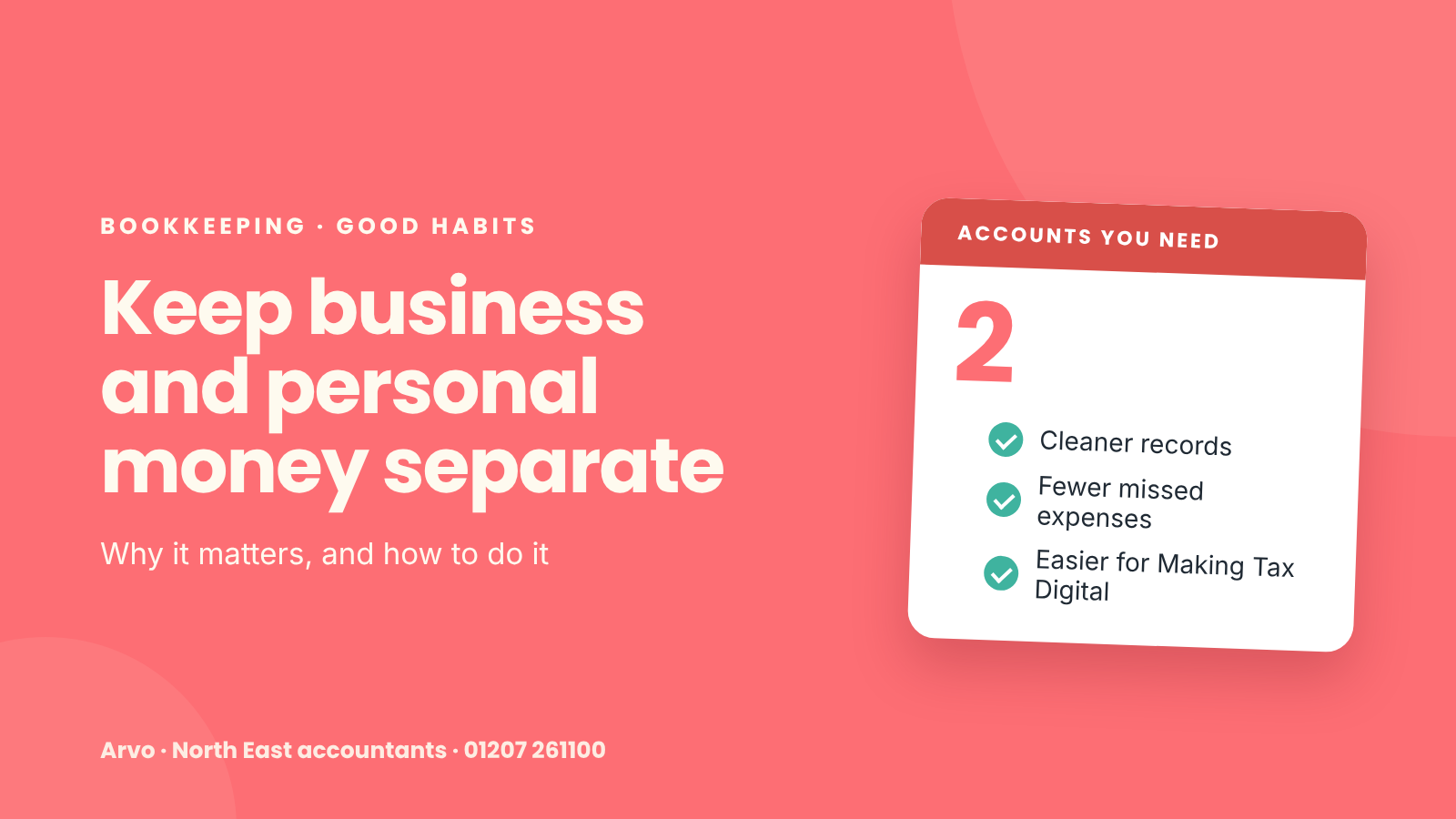
With the tax return deadline behind us, it's a good time to make next year easier. One of the simplest changes you can make is keeping business and personal money apart.
Why it matters
Cleaner records. Your bank statement becomes your business record
Fewer missed expenses. Business costs are easy to spot and claim
Less time. No more sorting through supermarket shopping to find a fuel receipt
Fewer mistakes. It's easier to see your real profit
Making Tax Digital. With quarterly updates for many sole traders and landlords from April 2026, a clean bank feed saves hours
Sole traders
You don't legally need a business bank account as a sole trader, though some banks require one for business use. A separate current account used only for the business works well. Pay yourself from it to your personal account as you need to.
Landlords
Have rent paid into a dedicated account and pay property costs from it. It makes your property records far simpler, especially if the property is jointly owned.
Limited companies
A company must have its own bank account. The company's money isn't yours. Taking money out without it being salary, dividends or expenses creates a director's loan, which can have tax consequences.
A simple system
Business account for all income and costs
Tax pot: a savings account where you put a percentage of income for tax
Personal account for your own spending, paid from the business account
Already mixed things up?
It happens. Tag business transactions in your bookkeeping software as you go from now on, and keep receipts for anything paid personally that was for the business.
Related reads
How Arvo can help
We can help you set up a simple banking and bookkeeping system that works for you, and keep it running smoothly.
Get in touch to arrange a free, no-obligation chat, or call us on 01207 261100.