
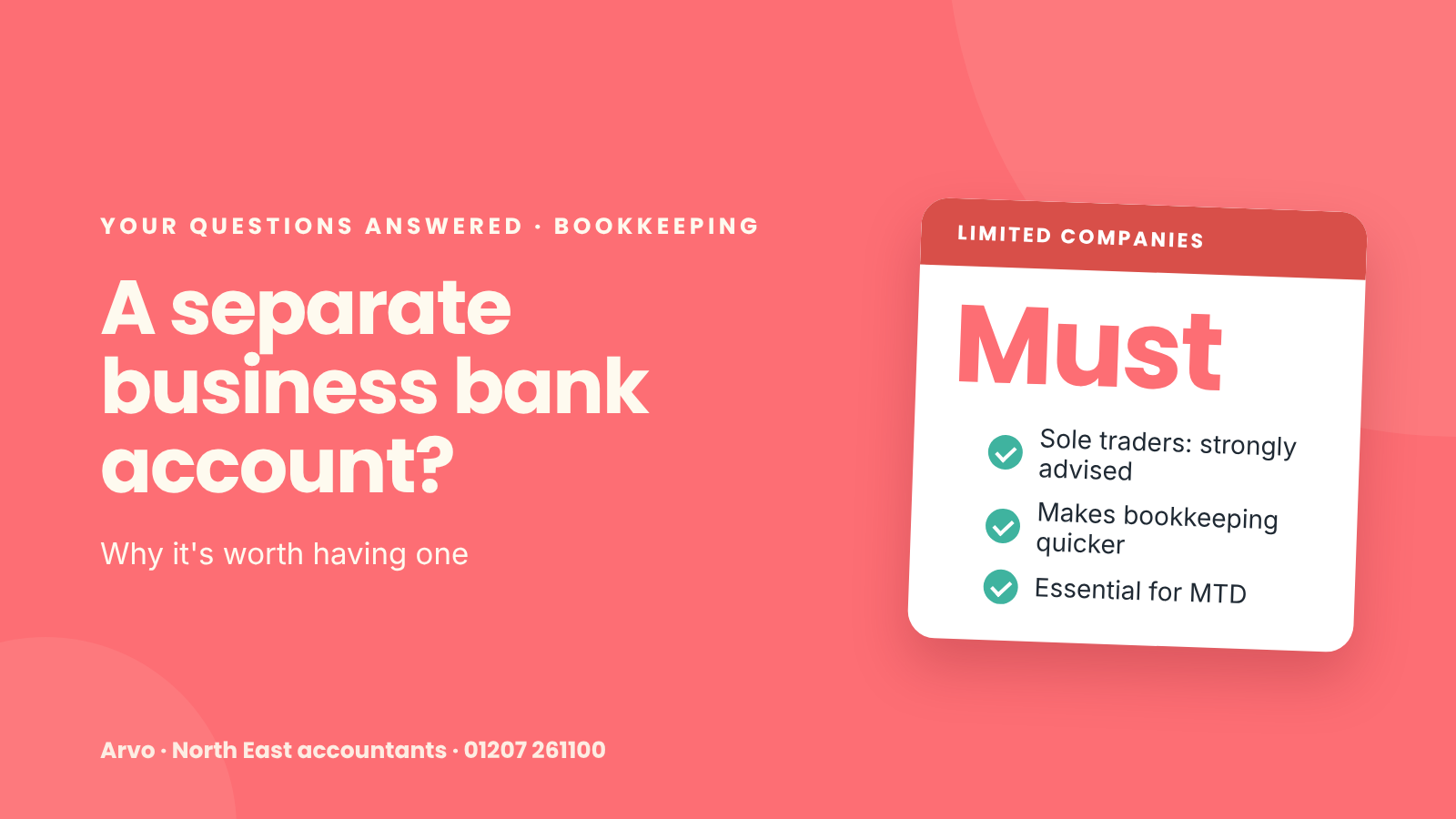
It's one of the first questions people ask when they start a business: do I need a separate bank account? The answer depends on how your business is set up.
Limited companies: yes
A limited company is a separate legal person, so it must have its own bank account. Mixing company money with your personal money causes problems with your director's loan account and your tax.
Sole traders: not legally, but you should
As a sole trader, you're not legally required to have a separate business account. But we'd strongly recommend one. Here's why.
Why it's worth it
Simpler bookkeeping. All your business income and costs are in one place, with no personal transactions to sort through.
Fewer mistakes. It's much easier to spot expenses you've missed, or personal costs that have crept in.
Making Tax Digital. If you're in Making Tax Digital, a separate account linked to your software makes quarterly updates much quicker.
Looks more professional. Customers see your business name, not your personal account.
Easier if HMRC asks questions. A clear trail of business transactions is your best evidence.
Business or personal account?
Many banks won't let you use a personal account for business, so check the terms. Business accounts sometimes have fees, but many have free periods for new businesses, and some digital banks have low-cost options.
What to look for
connects to your bookkeeping software (bank feeds)
low fees for the way you get paid
card payments and invoicing tools if you need them
How Arvo can help
We're a local accountancy practice in Stanley, County Durham, and Xero Platinum Partners. We'll help you choose an account that works with your software, and get your bookkeeping set up properly from day one.
Get in touch to arrange a free, no-obligation chat, or call us on 01207 261100.