
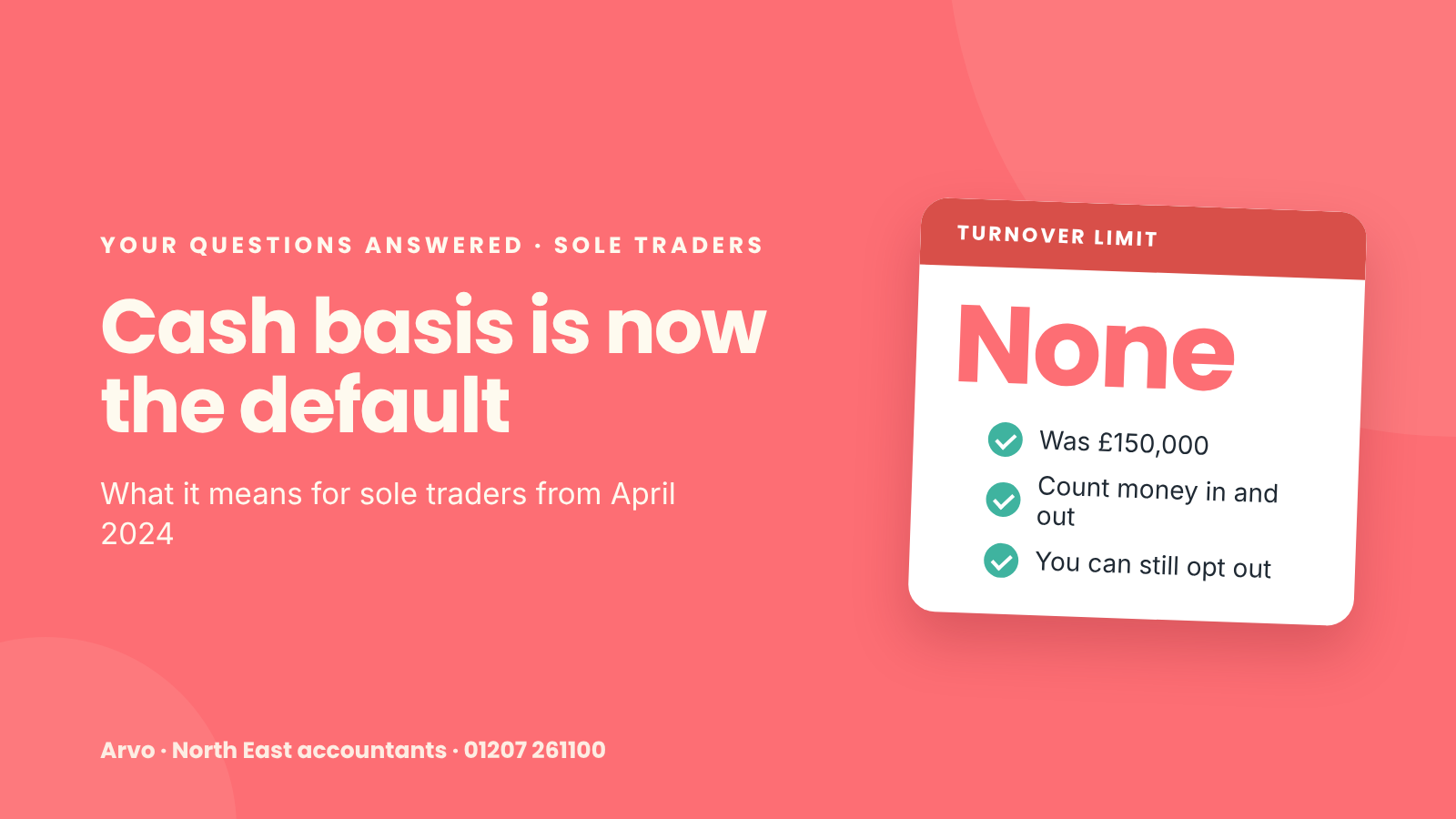
From the 2024/25 tax year, there's an important change to how most sole traders and partnerships work out their profits. The cash basis is now the default.
What is the cash basis?
With the cash basis, you count income when the money actually arrives and expenses when you actually pay them. It's how most people naturally think about their business.
The alternative is the accruals basis (also called traditional accounting), where you count income when you invoice and expenses when you're billed, even if no money has changed hands yet.
What's changed?
The cash basis is now automatic unless you choose otherwise
The £150,000 turnover limit has been removed, so larger businesses can use it too
Restrictions on losses have gone, so losses can be used more flexibly
The £500 limit on interest and bank charges has been removed
Who might want to opt out?
The accruals basis can still be better if you:
Hold a lot of stock
Invoice customers and wait a long time to be paid
Want your tax figures to match full accounts, for example for a mortgage or a loan
Are planning to become a limited company soon
You opt out by ticking a box on your tax return.
What about equipment?
Under the cash basis, most equipment purchases (except cars) can be deducted in full when you pay for them. That's simpler than claiming capital allowances.
Does it affect limited companies?
No. Companies must still use the accruals basis.
Related reads
Basis period reform: why your 2023/24 tax return will look different
Class 2 National Insurance has gone: what it means for your State Pension
How Arvo can help
We can look at your business and tell you whether the cash basis or accruals basis suits you better, and set up your bookkeeping to match.
Get in touch to arrange a free, no-obligation chat, or call us on 01207 261100.