
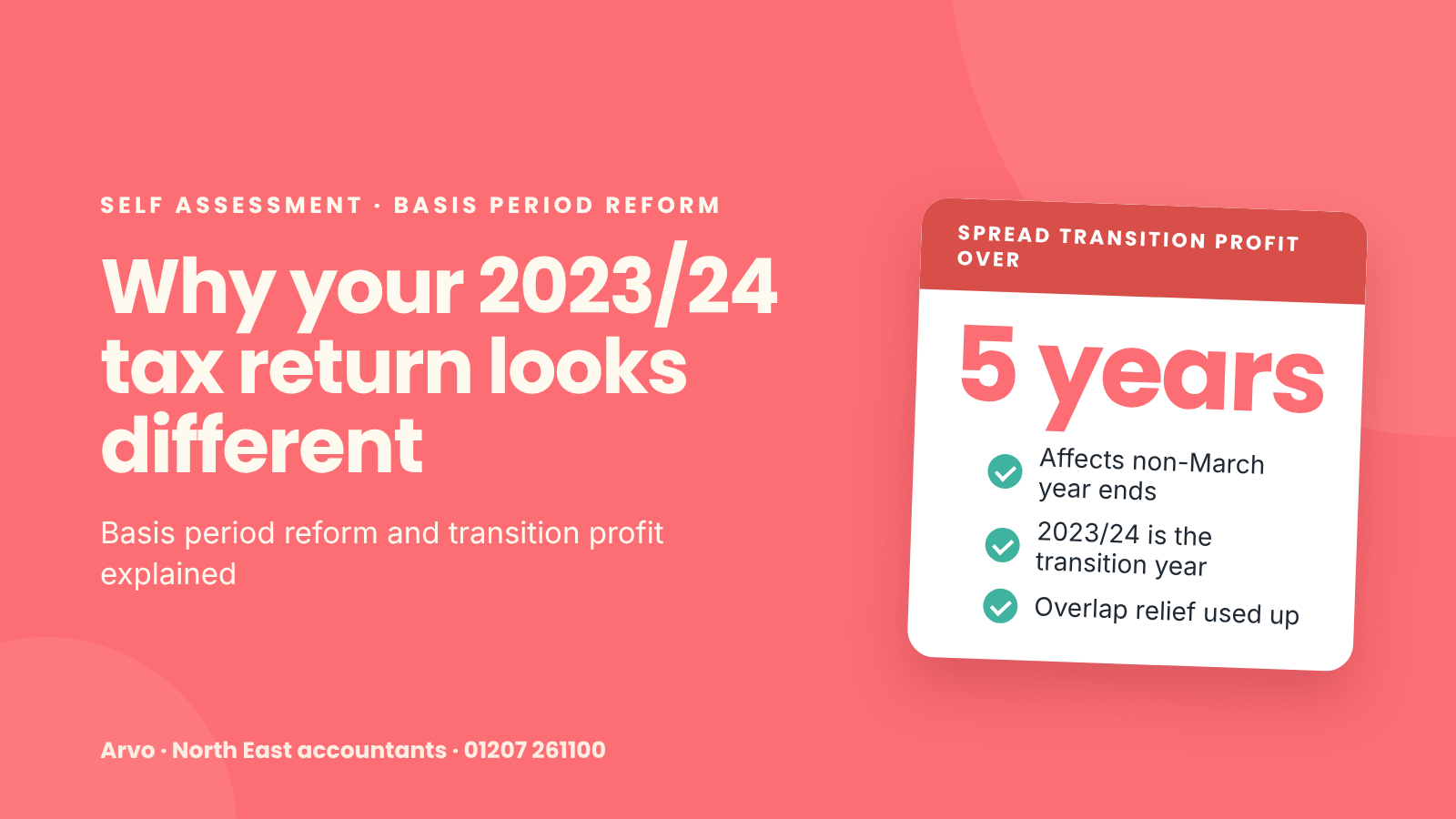
If you're a sole trader or partner and your accounting year doesn't end on 31 March or 5 April, your 2023/24 tax return will look different. That's because of basis period reform.
What's changing?
Until now, you were taxed on the profits of your accounting year that ended in the tax year. So if your year ended on 30 June 2022, those profits were taxed in 2022/23.
From 2024/25, everyone will be taxed on the profits made in the tax year itself (6 April to 5 April), whatever their accounting date.
The transition year
2023/24 is the transition year. To catch up, your 2023/24 return includes:
Your normal accounting year's profits, plus
The profits from the end of that year up to 5 April 2024
That extra slice is called transition profit.
Spreading it out
To avoid a big one-off bill, transition profit is spread over five years by default, from 2023/24 to 2027/28. You can choose to bring more of it forward if that suits you better.
Any overlap relief you've built up from your early years of trading is deducted from the transition profit.
Who's not affected?
If your accounting year already ends on 31 March or 5 April, nothing changes.
Should you change your year end?
Many businesses will find it simpler to move to a 31 March year end now. If you keep a different date, you'll need to apportion profits between tax years every year, and you may need to estimate figures.
Things to watch
Extra income could affect the Child Benefit charge or your Personal Allowance
It may increase your payments on account
You'll need your overlap relief figure, which HMRC can provide
Related reads
6 scary tax mistakes sole traders make (and how to avoid them)
Self-employed and applying for a mortgage? The documents lenders want
Cash basis is now the default for sole traders: what changes
How Arvo can help
We'll work out your transition profit, use your overlap relief, decide whether to spread or accelerate it, and advise on whether changing your year end makes sense.
Get in touch to arrange a free, no-obligation chat, or call us on 01207 261100.