
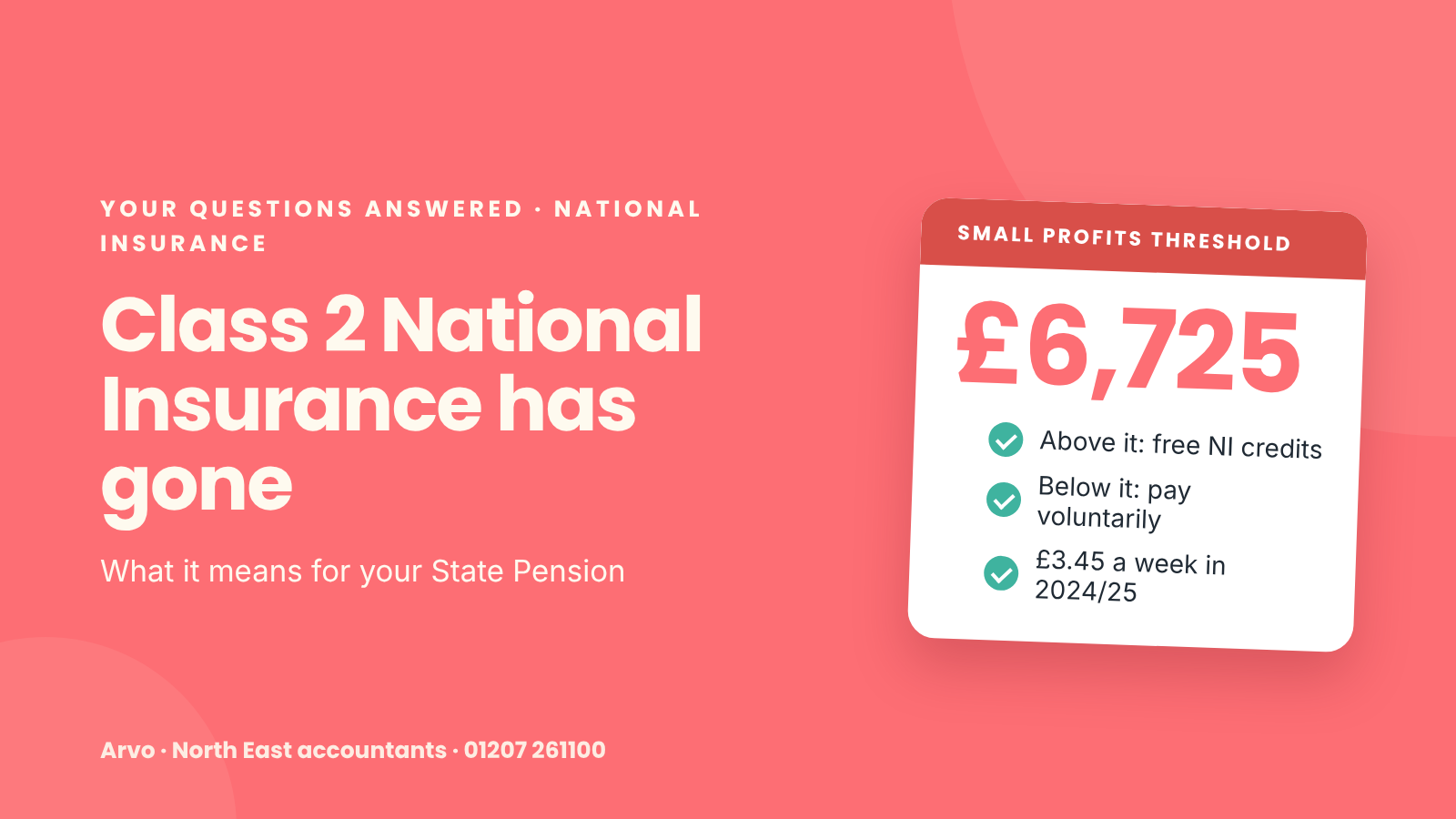
From 6 April 2024, self-employed people no longer have to pay Class 2 National Insurance. That's good news for most, but it's worth understanding how it affects your State Pension.
What was Class 2?
Class 2 was a flat weekly amount paid by the self-employed, collected through your tax return. It gave you a qualifying year on your National Insurance record, which counts towards your State Pension.
What happens now?
If your profits are above £6,725 (the small profits threshold), you automatically get National Insurance credits. Your record is protected without paying anything
If your profits are below £6,725, you won't get credits automatically. You can choose to pay voluntary Class 2 contributions of £3.45 a week (£179.40 a year)
Should you pay voluntarily?
If you're below the threshold and not getting credits another way, paying voluntarily is usually very good value. One extra qualifying year can add roughly £300 a year to your State Pension, for life.
You might already get credits if you:
Have a job as well, earning above the lower earnings limit
Claim Child Benefit for a child under 12
Are a carer or get certain benefits
Why your record matters
You usually need 35 qualifying years for the full new State Pension, and at least 10 years to get anything at all.
You can check your record in the HMRC app or through your personal tax account.
And Class 4?
Class 4 National Insurance on profits still applies, but the main rate has fallen to 6% from April 2024.
Related reads
Basis period reform: why your 2023/24 tax return will look different
Cash basis is now the default for sole traders: what changes
Working from home? What you can claim, employed or self-employed
How Arvo can help
We'll check whether you're getting credits, tell you if voluntary contributions are worth paying and include them on your tax return.
Get in touch to arrange a free, no-obligation chat, or call us on 01207 261100.