
The 2024/25 tax year started on Saturday 6 April. Here's a round-up of what's changed.
Employees
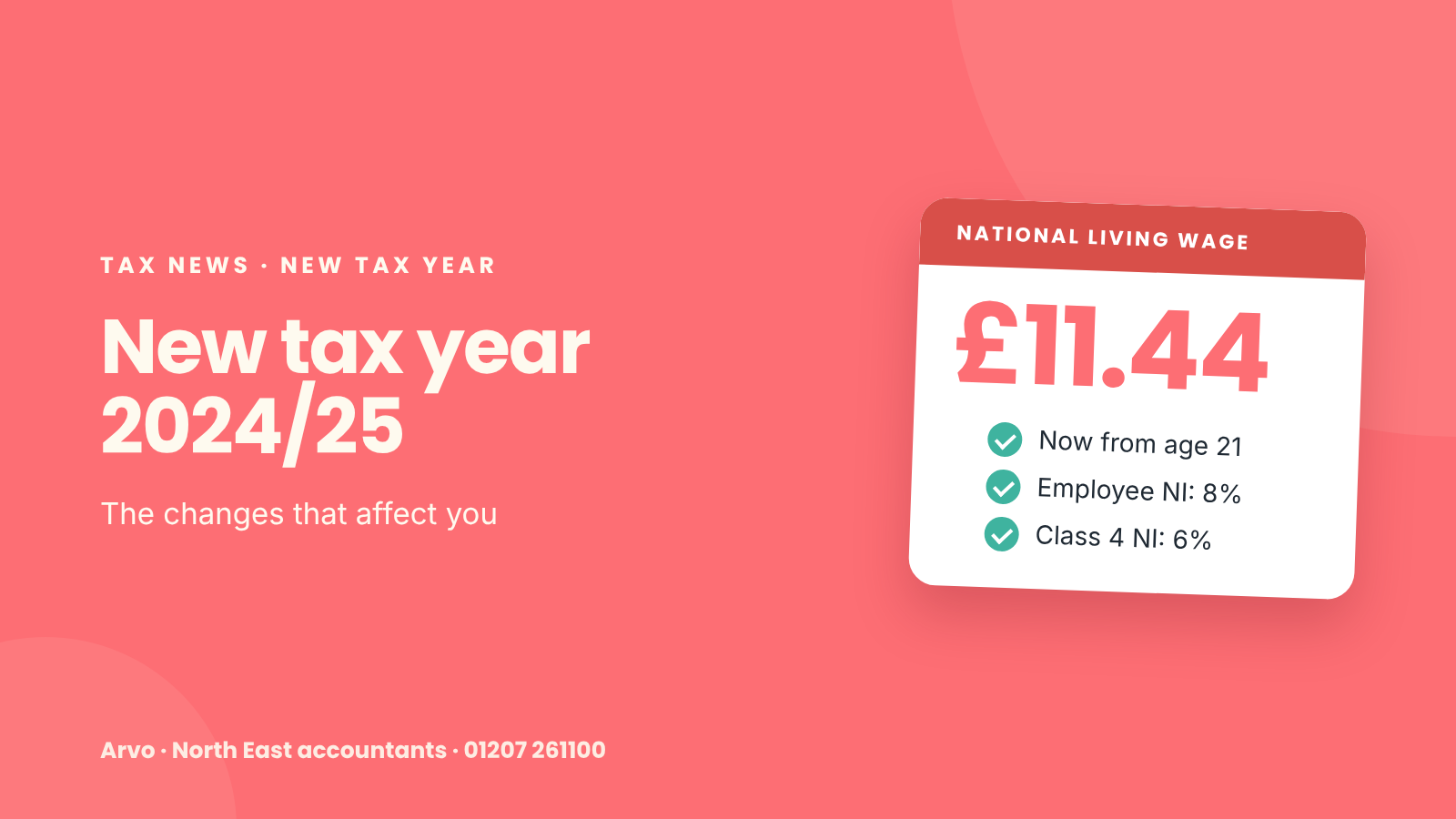
Employee National Insurance is now 8% (it was 12% a year ago)
The Personal Allowance stays at £12,570 and the higher rate threshold at £50,270
Self-employed
Class 4 National Insurance falls to 6% on profits between £12,570 and £50,270
Class 2 National Insurance is no longer compulsory
The cash basis is now the default way to work out profits for most sole traders
Company directors and investors
The tax-free dividend allowance halves to £500
The Capital Gains Tax allowance halves to £3,000
The higher CGT rate on residential property falls to 24%
Employers
The National Living Wage rises to £11.44 an hour and now applies from age 21
18 to 20 year olds: £8.60 an hour. Under 18s and apprentices: £6.40 an hour
Employer National Insurance stays at 13.8%
Families
The Child Benefit charge now starts at £60,000 and you lose all of it at £80,000
Working parents of 2-year-olds can now get 15 hours of funded childcare
Pensions
The lifetime allowance has been abolished
The State Pension rises by 8.5%
VAT
The registration threshold rose to £90,000 on 1 April
What to do now
Check your payslip in April to make sure the new rates have been applied
If you're an employer, update your pay rates
If you're a director, review your dividend plans with the lower allowance in mind
Related reads
How Arvo can help
We'll take these changes into account in everything we do for you this year. If you're not sure how they affect you, we're happy to talk it through.
Get in touch to arrange a free, no-obligation chat, or call us on 01207 261100.