
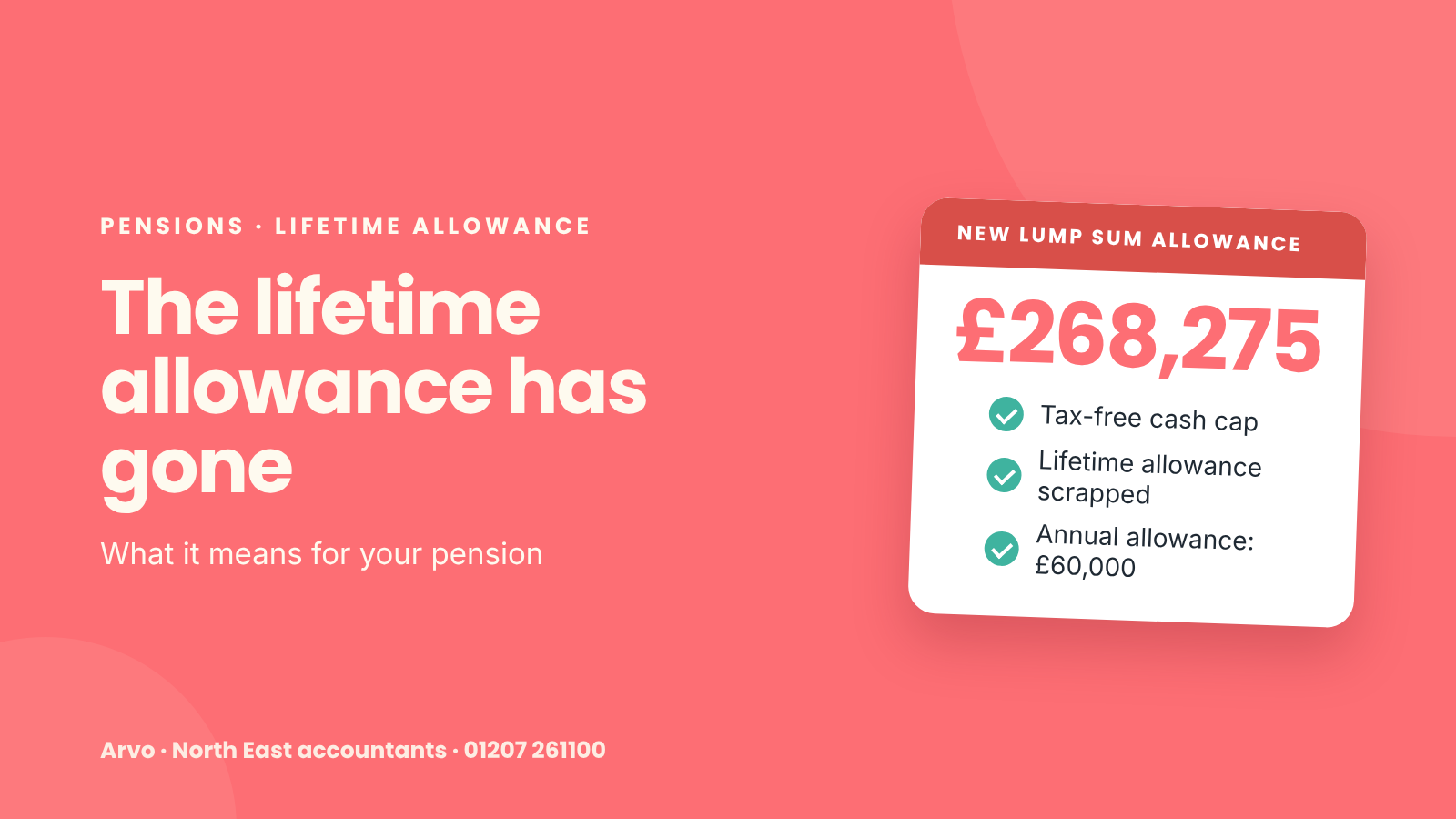
For years, the pension lifetime allowance limited how much you could build up in pensions before facing an extra tax charge. From 6 April 2024, it's gone.
What was it?
The lifetime allowance was a cap on the total value of your pensions, most recently £1,073,100. If your pensions went over it when you took benefits, you could face a tax charge.
The charge was removed in April 2023, and the allowance itself was abolished from April 2024.
What replaces it?
Two new allowances now limit how much you can take tax-free:
Lump sum allowance: £268,275. The most you can normally take as tax-free cash in your lifetime (25% of the old lifetime allowance)
Lump sum and death benefit allowance: £1,073,100. Covers tax-free lump sums in your lifetime and certain lump sums paid out on your death
Anything you take above these is taxed as income.
Who benefits?
People with larger pensions, who no longer face a cap on growth
Higher earners and directors who stopped contributing because of the old limit
Anyone with protection certificates, who may keep a higher tax-free cash limit
What hasn't changed?
The annual allowance is still £60,000 (or 100% of your earnings if lower)
The annual allowance tapers for very high earners
You can still carry forward unused allowance from the last three years
For company directors
Employer pension contributions from your company are a tax-efficient way to take money out. They're usually deductible for Corporation Tax and there's no National Insurance on them.
Review your plans
If you stopped paying in or changed your plans because of the old limit, it may be worth reviewing them. Pension decisions are long-term, so speak to a regulated financial adviser before making changes.
Related reads
Results week: first jobs, student loans and tax for school leavers
Child Benefit: the £60,000 threshold and why you might want to claim again
How Arvo can help
We can look at how pension contributions fit into your overall tax position, especially if you're a company director, and work alongside your financial adviser.
Get in touch to arrange a free, no-obligation chat, or call us on 01207 261100.