
A-level results come out this week, and lots of young people are about to start work, an apprenticeship or university. Tax can be confusing at first, so here are the basics to share with them.
The Personal Allowance
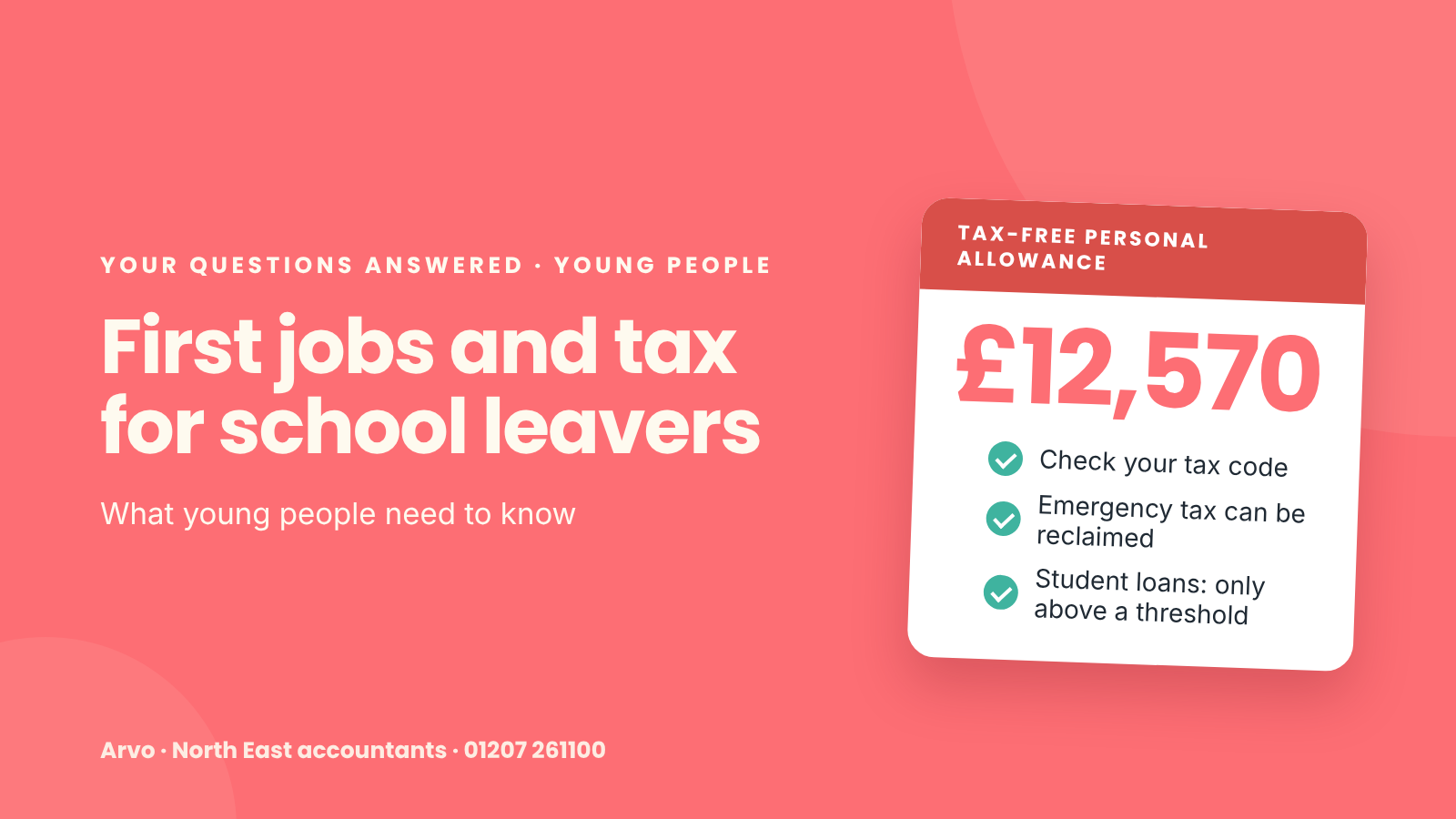
Everyone can earn up to £12,570 a year before paying Income Tax. Many students and part-time workers earn less than that and pay no tax at all.
Tax codes
Your employer uses your tax code to work out how much tax to take. The usual code for 2024/25 is 1257L.
If you start a job without a P45, you may be put on an emergency tax code (often with "W1", "M1" or "X" at the end) and pay too much for a while. It usually sorts itself out, but if not, you can claim it back.
National Insurance
You'll need a National Insurance number, which most people get by letter just before they turn 16. Employees pay 8% on earnings above £12,570 a year.
Student loans
If you're heading to university in England this September, you'll be on Plan 5. You only start repaying:
From the April after you finish your course
When your income is over £25,000 a year
At 9% of anything you earn above that
Repayments stop if your income drops below the threshold, and anything left is written off after 40 years.
Part-time and holiday jobs
If you earn under £12,570 over the year but have tax taken, you can usually claim it back. The quickest way is through the HMRC app or your personal tax account.
Self-employed?
If you start earning money from a side hustle, the first £1,000 a year is tax-free under the trading allowance. Above that, you'll need to register with HMRC.
Top tips
Keep your payslips and P60s
Download the HMRC app
Check your tax code when you start a new job
Related reads
Back to school: the new childcare support from September 2024
Inheritance tax basics: allowances, gifts and the seven-year rule
The lifetime allowance has gone: what it means for your pension
How Arvo can help
We're happy to help young people and their parents get to grips with tax, whether it's a first job, a refund or starting a small business.
Get in touch to arrange a free, no-obligation chat, or call us on 01207 261100.