
If you drive your own car or van for work, you can get tax relief on your business journeys. The question is which method to use.
HMRC's approved mileage rates
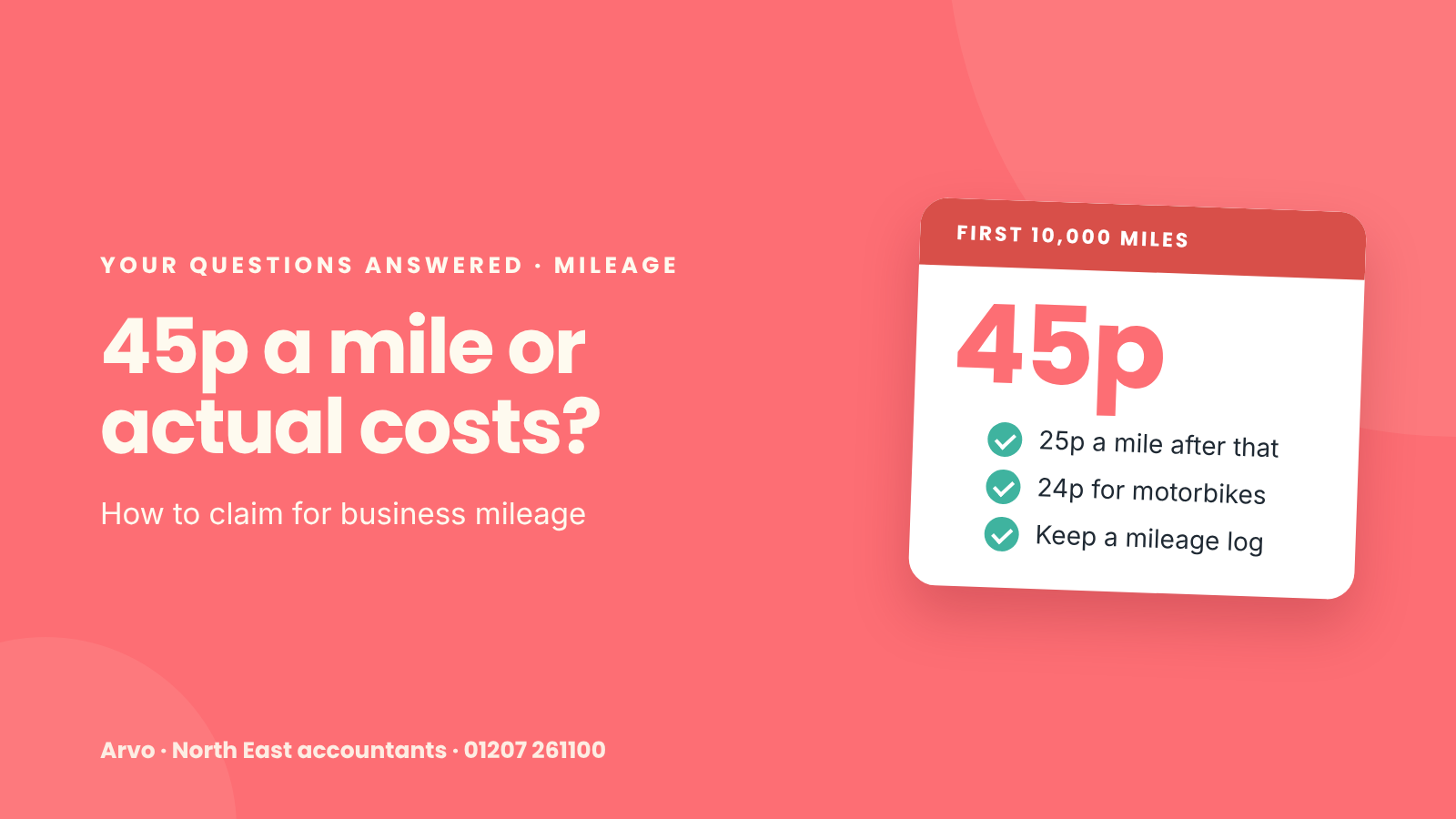
Cars and vans: 45p a mile for the first 10,000 business miles in a tax year, then 25p a mile
Motorbikes: 24p a mile
Bicycles: 20p a mile
The rates are meant to cover all your running costs: fuel, insurance, servicing, repairs and depreciation.
Sole traders
You can choose either:
Mileage rates, using the figures above, or
Actual costs, claiming the business share of all your vehicle costs plus capital allowances on the vehicle
Once you've chosen a method for a vehicle, you have to stick with it while you have that vehicle. Mileage rates are usually simpler and often better for cheaper, efficient cars. Actual costs can be better for vans or expensive vehicles with high running costs.
Employees and directors
If you use your own car for work, your employer (or your company) can pay you up to the approved rates tax-free. If they pay less, you can claim tax relief on the difference.
What counts as business mileage?
Driving to clients, customers or suppliers
Travel to a temporary workplace
Trips between different work sites
Your normal commute to a permanent workplace doesn't count.
Keep a log
HMRC expects a record of each business journey: the date, where you went, why and how many miles. An app or a simple notebook in the car works fine.
An example
A sole trader drives 12,000 business miles in the year. Their claim is (10,000 x 45p) + (2,000 x 25p) = £5,000.
Related reads
How Arvo can help
We'll help you decide which method gives the best result for your vehicle and make sure your records will stand up if HMRC asks.
Get in touch to arrange a free, no-obligation chat, or call us on 01207 261100.