
More local business owners are switching to electric cars. If you charge at home, here's how to get tax relief on the cost.
Company car, charged at home
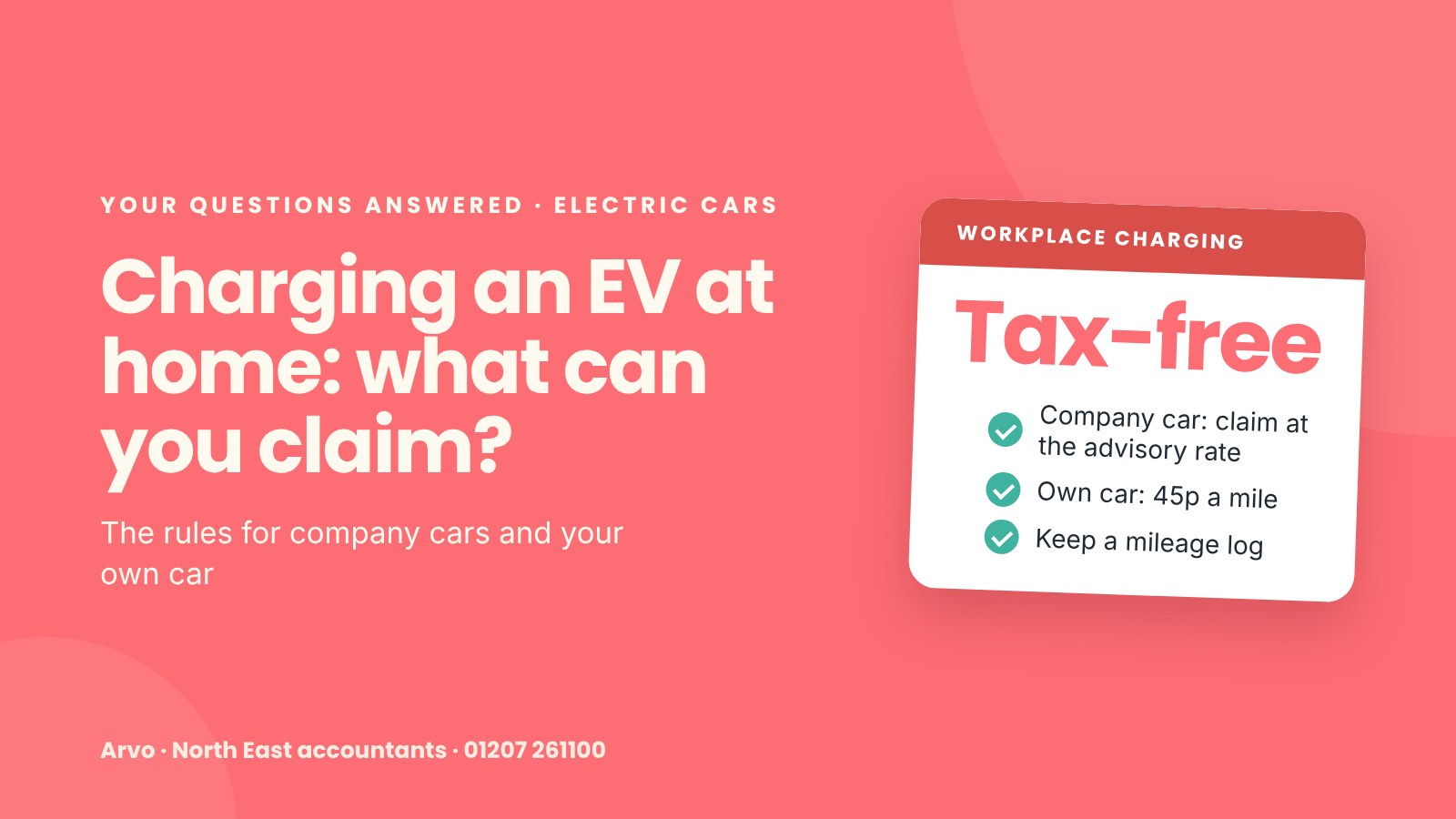
If your company provides an electric car and you charge it at home, your company can reimburse you for the electricity used on business journeys, using HMRC's advisory electricity rate. Paid at that rate, it's tax-free.
HMRC reviews the advisory rates every quarter, so check the current figure.
There's no separate "fuel benefit" for electricity used in a company car, which is another reason electric company cars are so tax-efficient.
Charging at work
Charging an electric car at your workplace is tax-free, whether it's a company car or your own.
Your own electric car
If you use your own electric car for business, the same mileage rates apply as for petrol or diesel cars: 45p a mile for the first 10,000 business miles, then 25p. That usually works out well, as electric cars are cheap to run.
Self-employed
Sole traders can use the 45p mileage rate or claim actual costs. With actual costs, you'd claim the business share of your home electricity used for charging, plus insurance, servicing and capital allowances on the car.
Working out the business share of home charging can be tricky without a separate meter, so most people find mileage rates simpler.
Home chargers
If your company pays for a charger to be installed at your home for a company car, it's generally covered by the car benefit rather than taxed separately. If it's for your own car, it may be a taxable benefit. Check before you agree to anything.
Keep records
Whichever method you use, keep a log of your business mileage. HMRC will want to see it if it ever asks.
Related reads
How Arvo can help
We can work out the most tax-efficient way to run an electric car through your business, and set up mileage claims that HMRC will accept.
Get in touch to arrange a free, no-obligation chat, or call us on 01207 261100.