
If you're a company director thinking about a car through your business, the tax rules strongly favour electric. Here's why.
How company car tax works
If your company provides a car you can use privately, you pay tax on a benefit in kind. It's worked out as a percentage of the car's list price, based on its CO2 emissions. Your company also pays Class 1A National Insurance on it.
Electric cars
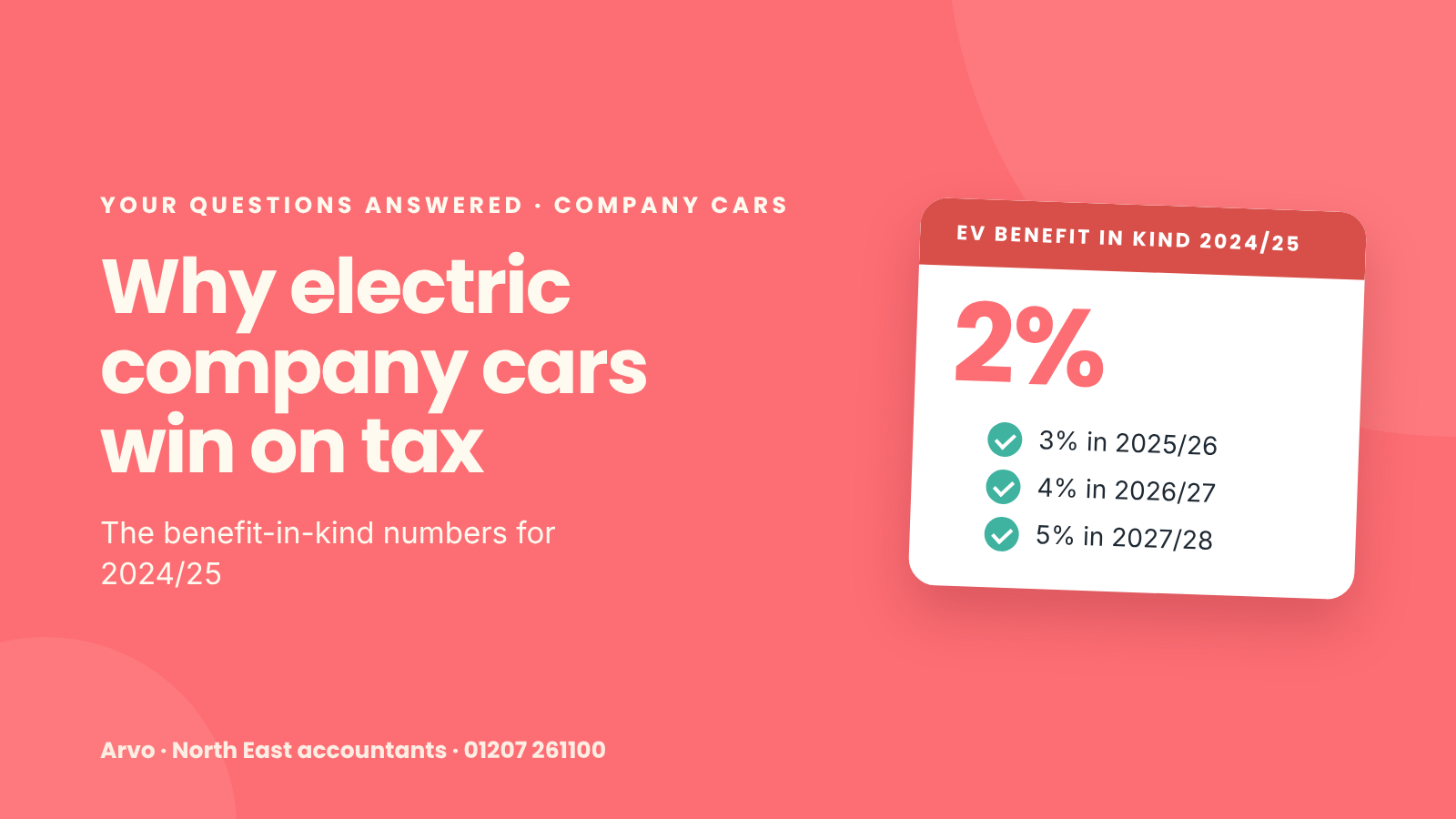
For 2024/25, the rate for a fully electric car is just 2%. It rises by 1% a year:
2025/26: 3%
2026/27: 4%
2027/28: 5%
An example
Take a car with a list price of £40,000:
Electric at 2%: benefit of £800. A higher rate taxpayer pays £320 a year
Petrol at around 30%: benefit of £12,000. A higher rate taxpayer pays £4,800 a year
That's a big difference, before you even think about fuel costs.
Buying through the company
Companies can usually claim a 100% first-year allowance on new, fully electric cars, deducting the full cost from profits in the year of purchase. Petrol and diesel cars get much slower allowances.
Charging
Charging at work is tax-free for employees
Your company can reimburse business mileage in an electric car at HMRC's advisory electric rate
A home charger can be provided in some cases, but check the rules first
Hybrids
Plug-in hybrids with very low emissions and a long electric range can also have low rates, but they're usually higher than a fully electric car.
Leasing or buying?
Both can work. Leasing spreads the cost, while buying gives you the first-year allowance. The right answer depends on your company's profits and cash flow.
Related reads
How Arvo can help
We can compare the costs of an electric car through your company with buying one personally, and handle the P11D reporting at the end of the year.
Get in touch to arrange a free, no-obligation chat, or call us on 01207 261100.