
Lots of businesses start with two people: friends, a couple, or colleagues going it alone together. A partnership is one simple way to do it.
What is a partnership?
An ordinary partnership is two or more people running a business together, sharing the profits. It's easy to set up and doesn't need registering at Companies House.
How is it taxed?
The partnership itself doesn't pay tax. Instead:
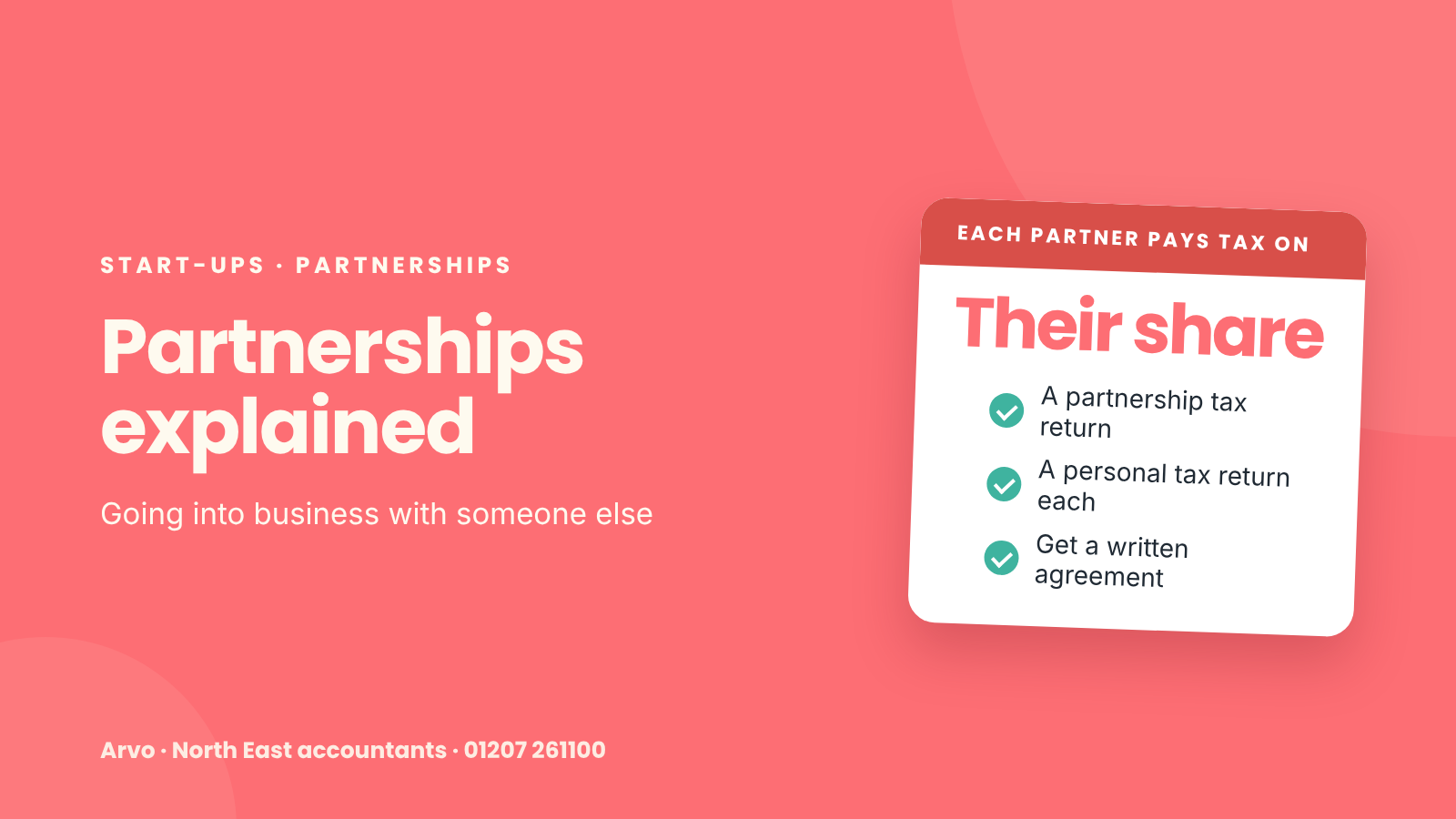
The partnership files a partnership tax return each year, showing the profits and how they're split
Each partner pays Income Tax and National Insurance on their share, through their own Self Assessment tax return
Profits don't have to be split equally. You can agree any split that reflects what each partner puts in.
Registering
You'll need to register the partnership with HMRC, and each partner needs to register for Self Assessment. One partner is named as the "nominated partner" who deals with the partnership return.
Watch out for liability
In an ordinary partnership, partners are personally responsible for the business's debts, including debts run up by the other partner. That's a big reason some people choose a limited company or a limited liability partnership (LLP) instead.
Get a partnership agreement
Without a written agreement, the law fills in the gaps, and the default rules may not be what you want. An agreement should cover:
How profits are shared
Who does what
What happens if someone wants to leave
How decisions are made
Partnership or limited company?
A partnership is simpler and cheaper to run. A limited company gives you limited liability and can be more tax-efficient once profits grow. It's worth looking at both before you start.
Related reads
How Arvo can help
We can help you choose the right structure, register with HMRC and look after the partnership return and each partner's tax return.
Get in touch to arrange a free, no-obligation chat, or call us on 01207 261100.