
Dog walking, selling crafts, a bit of photography, odd jobs at weekends: lots of people earn some money on the side. The trading allowance means small amounts can be completely tax-free.
What is it?
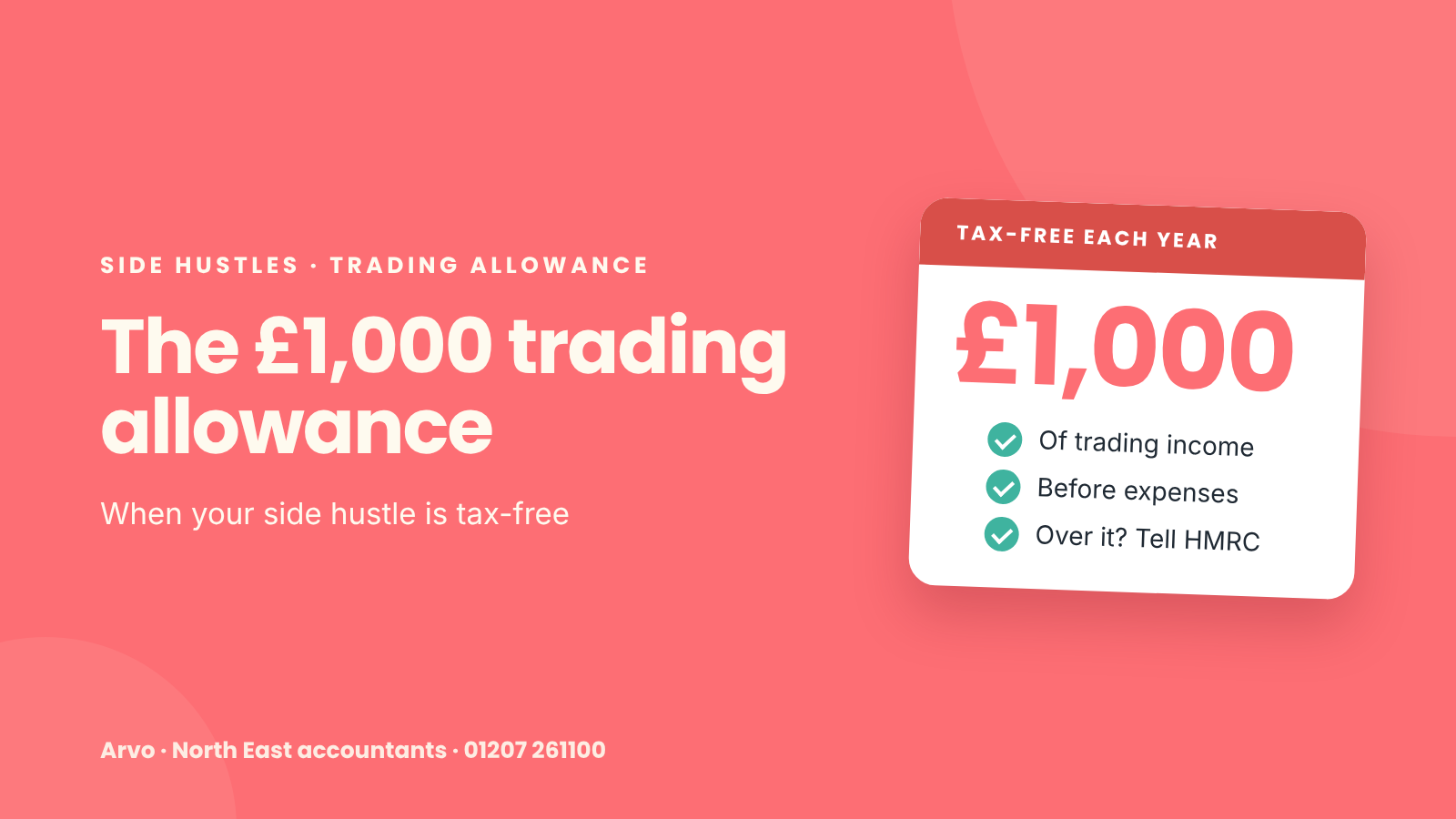
The trading allowance lets you earn up to £1,000 a year from self-employment or casual work without paying tax on it, or telling HMRC.
It's based on your income, not your profit. So if you earn £1,200 and spend £300, you're over the limit.
Over £1,000?
If your trading income is more than £1,000 in a tax year, you need to register for Self Assessment and file a tax return. You then have a choice:
Deduct the £1,000 allowance from your income instead of claiming expenses, or
Claim your actual expenses
If your costs are more than £1,000, claiming expenses is better. If they're less, the allowance is usually better.
When to register
If you started earning more than £1,000 in the 2023/24 tax year, you need to register for Self Assessment by 5 October 2024.
What it doesn't cover
Income from renting out property (there's a separate £1,000 property allowance)
Income from a business you run through a limited company
Selling your own unwanted things. Clearing out the loft isn't trading
Is it a hobby or a business?
If you're buying things to sell at a profit, or making things to sell regularly, HMRC may see it as trading. If you're unsure, it's worth asking.
Other income
The trading allowance is separate from your job. You can have a full-time job and still earn up to £1,000 from a side hustle tax-free.
Related reads
Working from home? What you can claim, employed or self-employed
Class 2 National Insurance has gone: what it means for your State Pension
How Arvo can help
If your side hustle is growing, we can register you with HMRC, help you decide between the allowance and actual expenses, and file your tax return.
Get in touch to arrange a free, no-obligation chat, or call us on 01207 261100.