
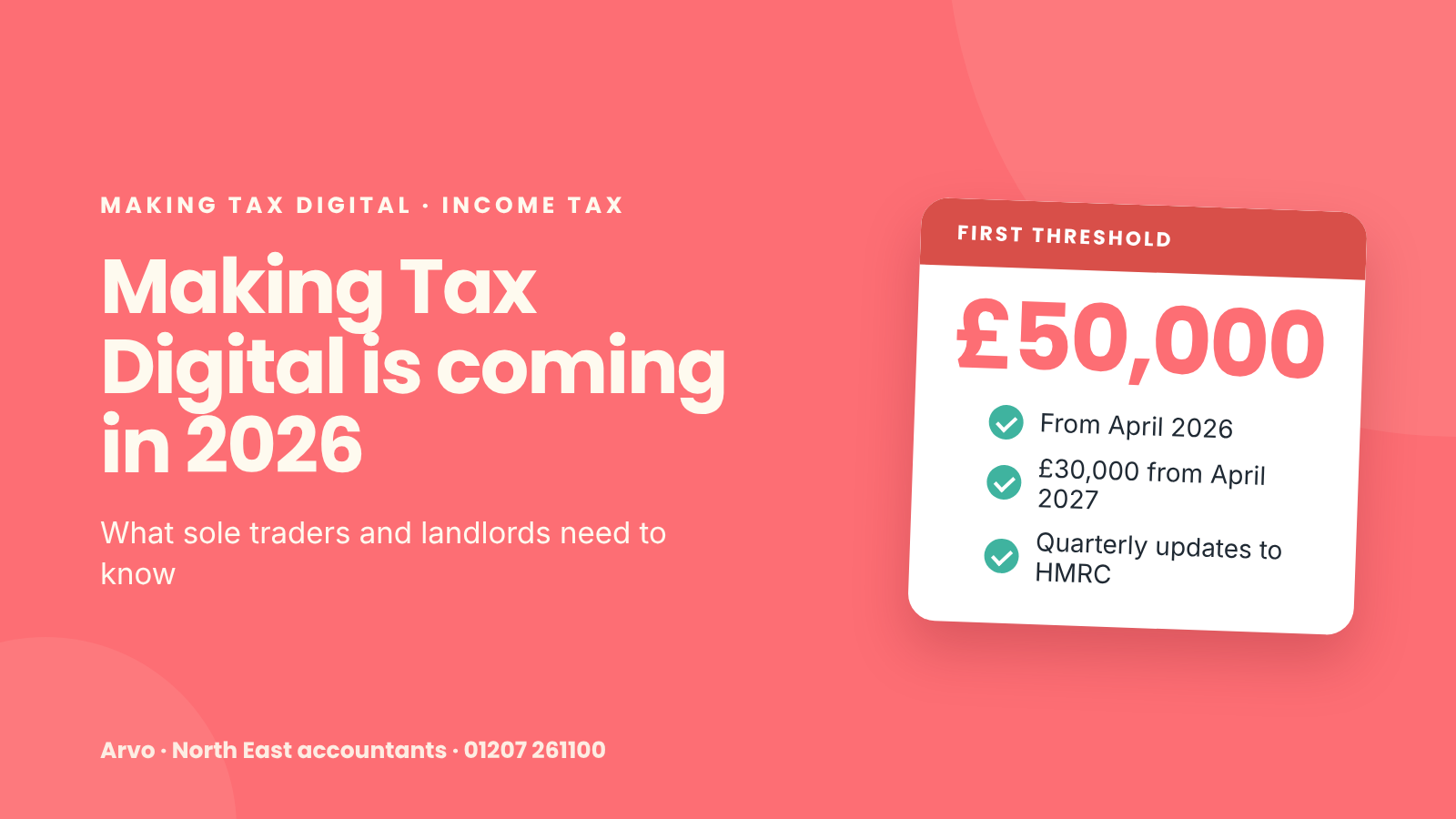
Making Tax Digital (MTD) for Income Tax is the biggest change to Self Assessment in decades. It's still nearly two years away, but it's worth understanding now.
Who does it affect?
MTD applies to sole traders and landlords based on their qualifying income, which is your total income from self-employment and property, before expenses:
Over £50,000: you join from 6 April 2026
Over £30,000: you join from 6 April 2027
The government hasn't yet decided on a date for those with income below £30,000. Partnerships will join later.
What will you need to do?
Keep digital records of your income and expenses using MTD-compatible software
Send quarterly updates to HMRC, summarising your income and expenses
Make a final declaration after the end of the tax year, which replaces the tax return
Your tax deadlines for payment don't change.
Quarterly updates
The updates are summaries, not full tax returns. If your bookkeeping is up to date, the software does most of the work. They'll be due a month after the end of each quarter.
What about paper records?
Spreadsheets will still be allowed if they connect to HMRC through "bridging" software. Shoeboxes of receipts won't.
Getting ready
Work out your qualifying income for 2024/25, as it's the year HMRC will look at for April 2026
Start using bookkeeping software now, so it's second nature by the time MTD starts
Open a separate business bank account if you don't have one
Is it definitely happening?
The dates have changed before, but this timetable was confirmed in late 2022. We'll keep you updated if anything changes after the election.
Related reads
How Arvo can help
We'll check whether MTD applies to you, help you choose and set up software and, once it starts, send your quarterly updates for you.
Get in touch to arrange a free, no-obligation chat, or call us on 01207 261100.