
From Black Friday to Christmas, online sellers can do a big share of their year's sales in a few weeks. Here's how to keep VAT under control.
Watch the threshold
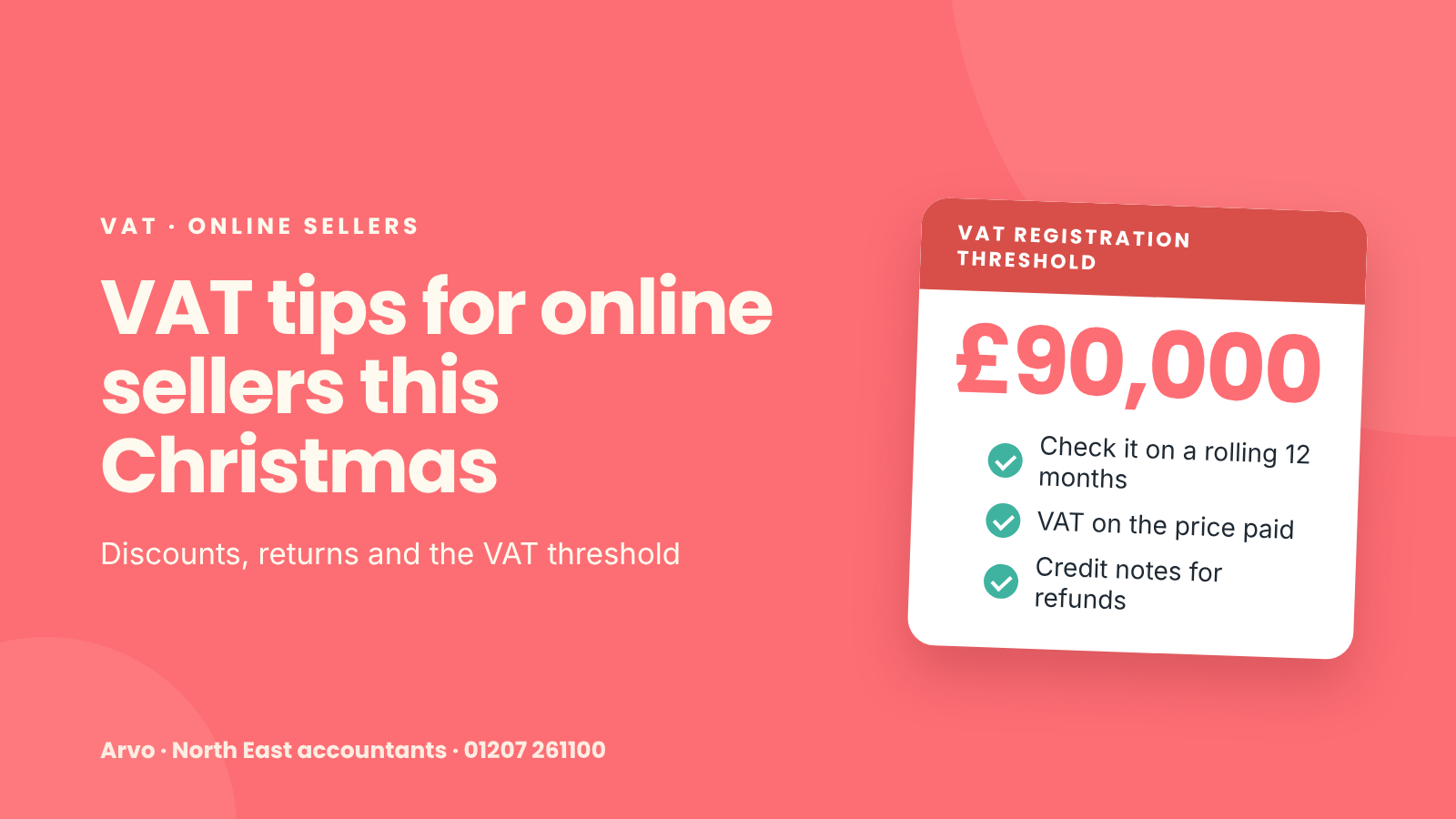
You must register for VAT if your taxable turnover goes over £90,000 in any rolling 12-month period, not just the tax year. A busy Christmas can push you over without you noticing.
You also need to register if you expect to go over £90,000 in the next 30 days alone. Check your figures monthly through the season.
Discounts
If you're VAT-registered, you pay VAT on the price the customer actually pays. A £60 item sold at £45 in a Black Friday sale means VAT is due on £45, not £60.
Vouchers and gift cards
Single-purpose vouchers, where the goods and VAT rate are known when the voucher is sold: VAT is due when you sell the voucher
Multi-purpose vouchers, which can be spent on items with different VAT rates: VAT is due when the voucher is spent
Returns and refunds
When a customer returns an item and you refund them, you can reduce the VAT you owe. Keep a credit note or refund record for each one. January returns can be large, so make sure they're recorded properly.
Selling on marketplaces
If you're based in the UK and sell through Amazon, eBay or Etsy, you're usually responsible for your own VAT. Marketplace fees often have VAT charged on them too, which you may be able to reclaim.
Postage
If you charge customers for delivery, it's usually part of the sale and has VAT at the same rate as the goods.
Keep good records
Match marketplace payouts to your sales and fees. The figure that lands in your bank is not your turnover.
Related reads
Making Tax Digital is here: what to do if your income is over £50,000
Making Tax Digital for Income Tax: what's coming in April 2026
How Arvo can help
We help online sellers keep track of the VAT threshold, register at the right time and file accurate VAT returns.
Find out more about our VAT returns service.
Get in touch to arrange a free, no-obligation chat, or call us on 01207 261100.