
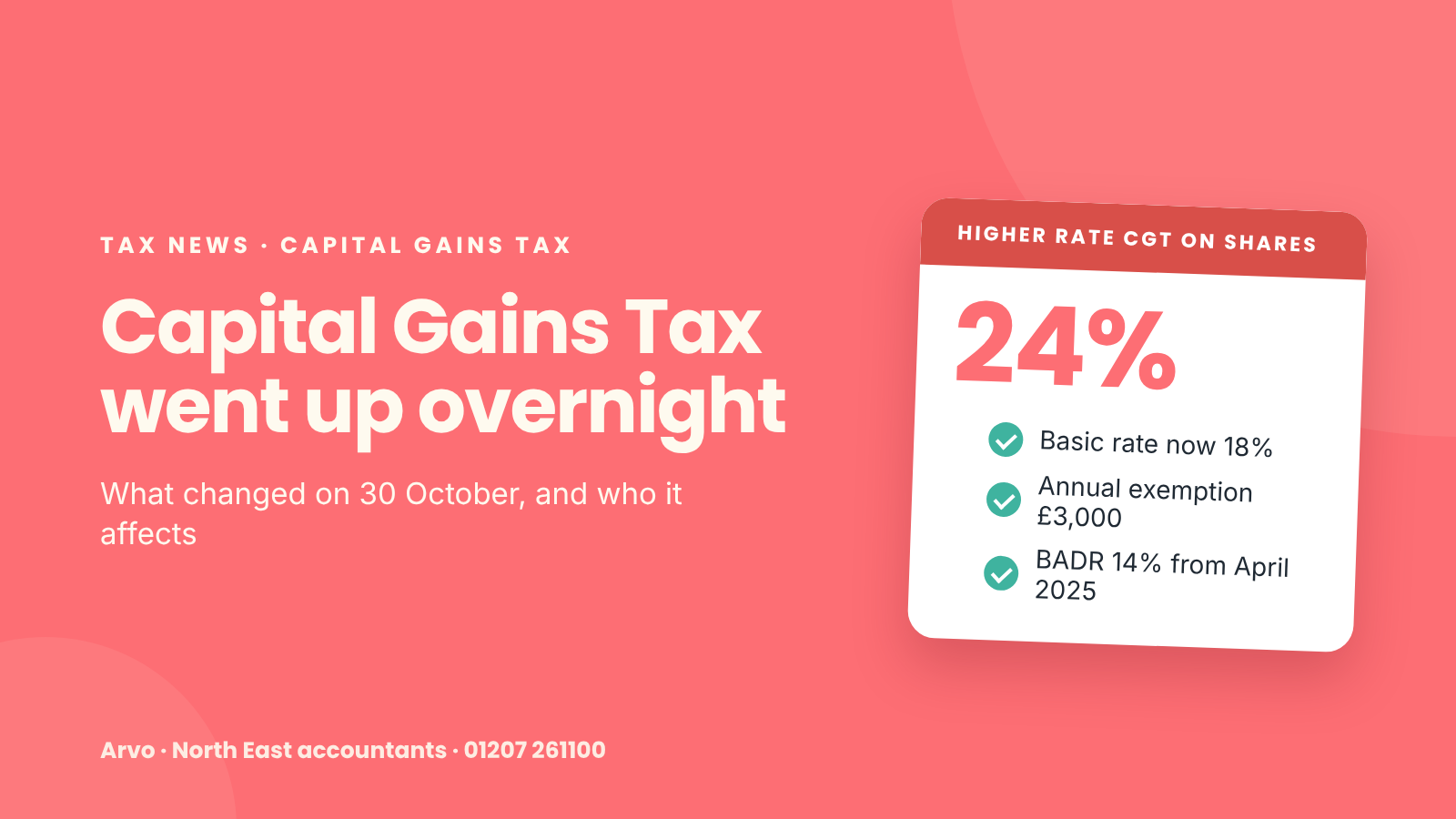
Most Budget changes start the following April. Capital Gains Tax (CGT) was different: the new rates applied from 30 October 2024, the day of the Budget.
The new rates
For gains on assets like shares, business assets and second-hand valuables:
Basic rate taxpayers: 10% up to 18%
Higher and additional rate taxpayers: 20% up to 24%
Gains on residential property were already taxed at 18% and 24%, so those rates haven't changed. The rates are now the same for all types of asset.
The annual exemption
The tax-free annual exempt amount stays at £3,000. It was £12,300 as recently as 2022/23, so many more people now pay CGT.
Selling a business
Business Asset Disposal Relief (BADR) reduces the rate on qualifying business sales, up to a lifetime limit of £1 million. The rate is rising:
10% until 5 April 2025
14% from 6 April 2025
18% from 6 April 2026
If you're thinking about selling your business, timing could make a real difference. Don't let tax drive the decision, but it's worth planning for.
Who's affected?
Investors selling shares outside an ISA or pension
Business owners selling up or selling shares
Anyone selling valuable items, like art or classic cars
Ways to reduce CGT
Use your £3,000 exemption each year
Transfer assets to a spouse or civil partner to use their exemption and lower rate band
Use ISAs and pensions for future investments
Offset losses against gains
Reporting
You may need to report gains through Self Assessment, and UK residential property sales must be reported and paid within 60 days.
Related reads
Farms and family businesses: the inheritance tax changes from April 2026
Inheritance tax basics: allowances, gifts and the seven-year rule
Directors: why pension contributions through your company are so tax-efficient
How Arvo can help
We can work out your CGT position, help you plan the timing of a sale and report your gains correctly.
Get in touch to arrange a free, no-obligation chat, or call us on 01207 261100.