
If you run your own limited company, you can pay into your pension personally, or have the company pay in for you as an employer contribution. For most directors, the company route is far more tax-efficient.
How it works
The company pays directly into your pension. As long as the total package is reasonable for the work you do, the contribution is a business expense, so it reduces your Corporation Tax bill.
There's also no National Insurance on employer pension contributions, for you or the company, and no Income Tax when it goes in.
A worked comparison
Say your company has £10,000 of profit left and you're a higher rate taxpayer.
Taken as a dividend:
Corporation Tax at 25%: £2,500
Dividend of £7,500, taxed at 33.75%: £2,531
You keep: £4,969
Paid into your pension:
No Corporation Tax, as it's an expense
No Income Tax or NI when it goes in
Into your pension: £10,000
You'll pay Income Tax when you take money out of your pension later, but usually 25% of it can be taken tax-free, and many people pay a lower rate in retirement.
How much can you pay in?
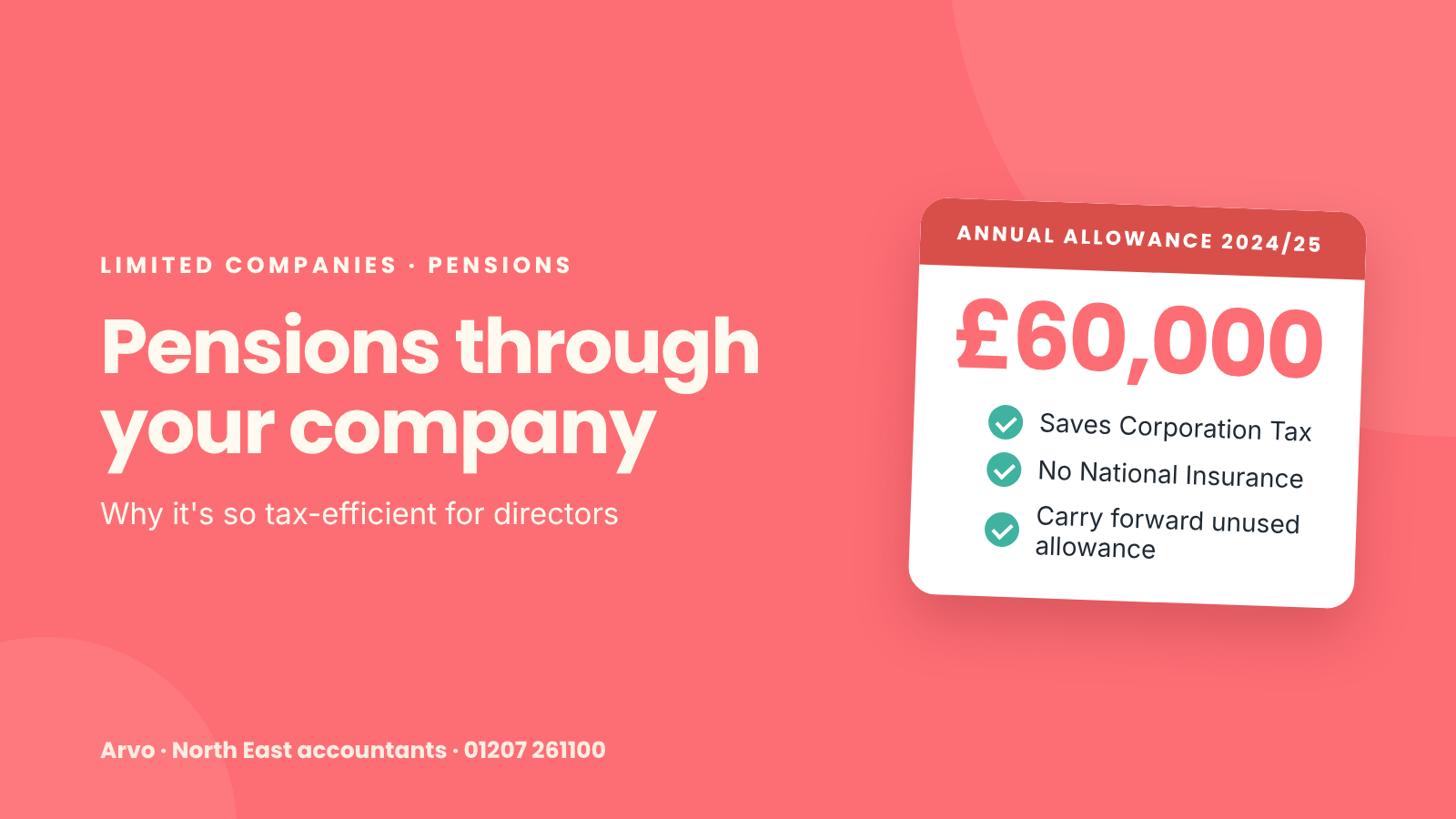
The annual allowance is £60,000 a year, including what you and your company pay. You can also carry forward unused allowance from the previous three tax years, if you were in a registered pension scheme.
Unlike personal contributions, employer contributions aren't limited by your salary. That's useful for directors who take a small salary and dividends.
Things to bear in mind
Pension money usually can't be accessed until age 55, rising to 57 from 2028
Contributions must be paid in the accounting period you want relief for
High earners may have a lower, tapered allowance
Related reads
Selling your business? The BADR rate rises to 14% on 6 April
Farms and family businesses: the inheritance tax changes from April 2026
Passing on the family business: planning for the next generation
How Arvo can help
We can work out how much to pay in before your company's year end, and how it fits with your salary and dividends. We'll work alongside your financial adviser on the investment side.
Find out more about our director pay and tax planning service.
Get in touch to arrange a free, no-obligation chat, or call us on 01207 261100.