
The Budget announced that from 6 April 2025, employers will pay more National Insurance on their staff's wages. Here's how much more, and why many small businesses will be less affected than they fear.
What's changing
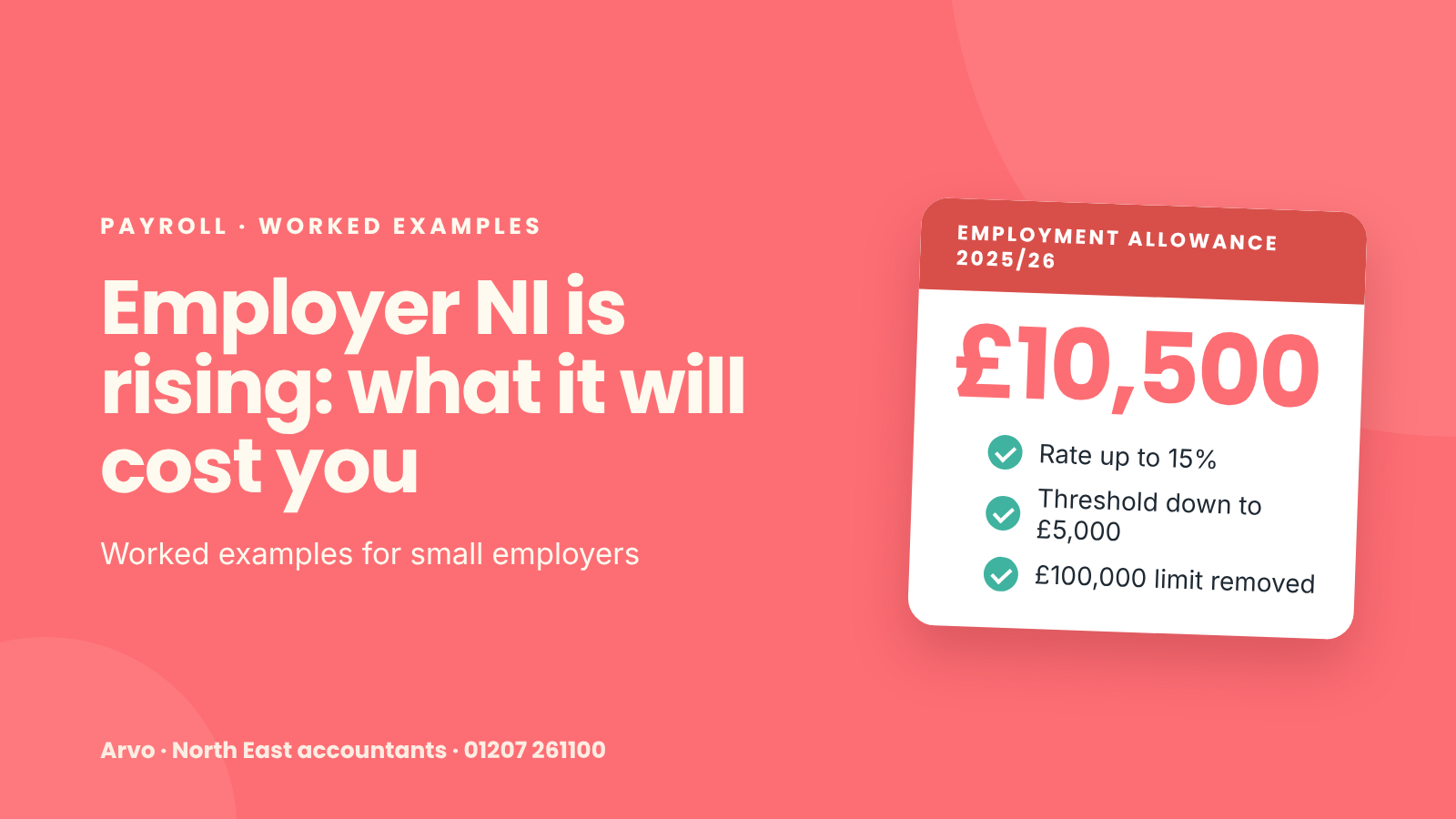
The rate goes up from 13.8% to 15%
The threshold where employer NI starts falls from £9,100 to £5,000 a year
The Employment Allowance, which reduces your employer NI bill, rises from £5,000 to £10,500
One employee on £25,000
2024/25: (£25,000 minus £9,100) x 13.8% = £2,194
2025/26: (£25,000 minus £5,000) x 15% = £3,000
That's around £806 more per employee, before the Employment Allowance.
A team of four on £25,000 each
2024/25: £8,777 of employer NI, less the £5,000 allowance = £3,777 to pay
2025/26: £12,000 of employer NI, less the £10,500 allowance = £1,500 to pay
So this business actually pays less next year, because the allowance has more than doubled. The tipping point depends on your wages and headcount, so it's worth working out your own figures.
Who doesn't get the Employment Allowance?
Limited companies where a director is the only employee paid above the threshold can't claim it. If that's you, the changes may affect how you pay yourself, and we'll look at your salary and dividend mix before April.
Planning ahead
Update your budgets and cash flow for April 2025
Factor the new National Living Wage of £12.21 in too
Consider salary sacrifice for pensions, which can save employer NI
Check you're claiming the Employment Allowance if you're eligible
Related reads
Employer NI goes up in April: 5 ways small employers can soften the blow
National Living Wage rises to £12.21 in April: what employers need to do
Taking on an apprentice: the costs and the support available
How Arvo can help
We can work out exactly what the changes will cost your business, look at ways to reduce the impact and handle your payroll for you.
Get in touch to arrange a free, no-obligation chat, or call us on 01207 261100.