
Inheritance tax (IHT) used to be seen as a tax for the very wealthy. With house prices and allowances frozen, it now affects more families. Here are the basics.
The allowances
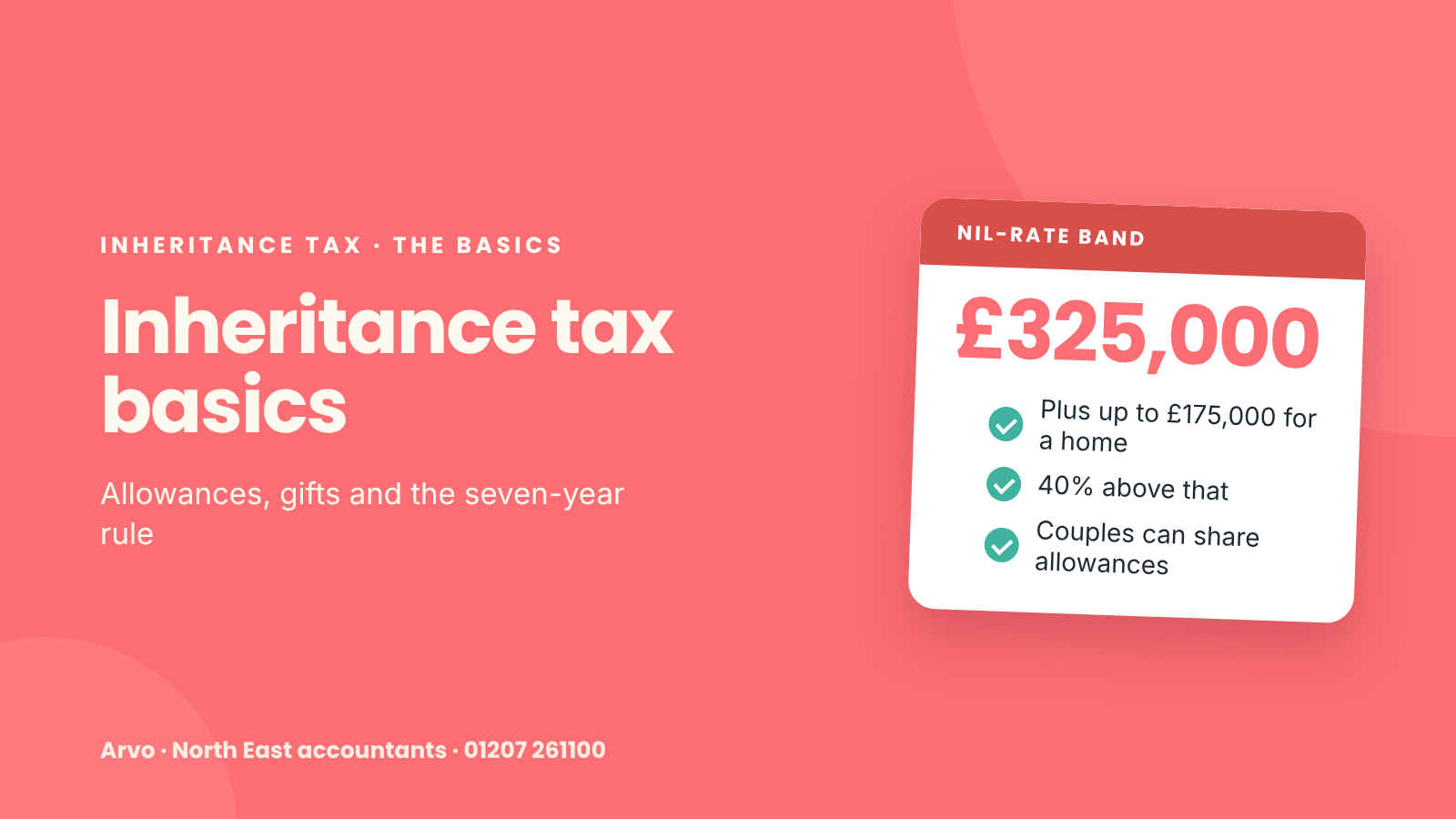
Nil-rate band: the first £325,000 of an estate is tax-free
Residence nil-rate band: up to £175,000 more if your home goes to your children or grandchildren
Anything above the allowances is taxed at 40%
The residence nil-rate band is gradually lost for estates over £2 million.
Married couples and civil partners
Anything left to a spouse or civil partner is tax-free. Any unused allowances pass to them too, so a couple can leave up to £1 million tax-free between them.
Gifts that are exempt straight away
£3,000 a year annual exemption (you can carry one unused year forward)
£250 small gifts to as many people as you like
Wedding gifts: £5,000 to a child, £2,500 to a grandchild, £1,000 to anyone else
Regular gifts out of income, as long as they don't affect your standard of living
Gifts to charities
The seven-year rule
Other gifts, such as the Bank of Mam and Dad helping with a house deposit, are usually free of IHT if you live for seven years after making them. If you die within seven years, the gift may be taxed, with taper relief reducing the tax on gifts made between three and seven years before death.
Keep records
Keep a simple note of gifts you make: who, when and how much. It makes things much easier for your family later.
Charity
If you leave at least 10% of your estate to charity, the IHT rate on the rest can fall to 36%.
Making a will
A will doesn't just decide who gets what. It can make a big difference to the tax your family pays.
Related reads
Back to school: the new childcare support from September 2024
Capital Gains Tax went up overnight: what changed on 30 October
Farms and family businesses: the inheritance tax changes from April 2026
How Arvo can help
We can help you understand your potential IHT position and work alongside your solicitor or financial adviser on planning.
Get in touch to arrange a free, no-obligation chat, or call us on 01207 261100.