
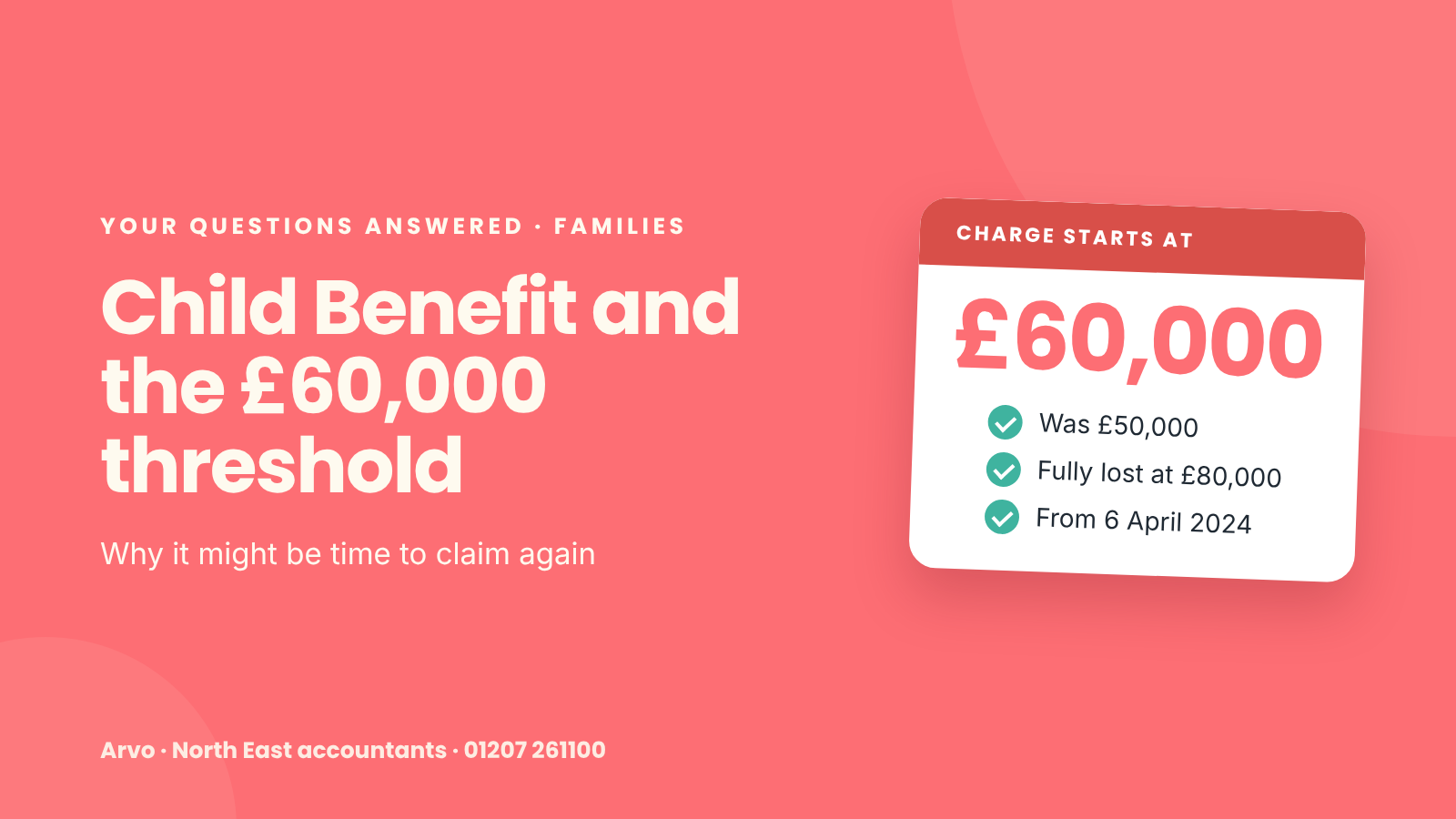
Thousands of families stopped claiming Child Benefit because of the High Income Child Benefit Charge. From 6 April 2024, the rules change, and many of them could be better off claiming again.
What's changing
The charge applies when one parent earns over a set amount (it's based on the higher earner's "adjusted net income", not household income):
Until 5 April 2024: the charge starts at £50,000 and you lose all of it at £60,000
From 6 April 2024: the charge starts at £60,000 and you lose all of it at £80,000
The charge now tapers at 1% of your Child Benefit for every £200 over £60,000, so it's much more gradual.
Who's better off?
If the higher earner is on £50,000 to £60,000, you'll keep all your Child Benefit from April
If they're on £60,000 to £80,000, you'll keep some of it
Over £80,000, nothing changes
For a family with two children, Child Benefit is worth over £2,000 a year, so the difference can be significant.
Should you restart your claim?
If you opted out of payments because of the charge, you can ask to restart them. You can also claim for a new baby even if you don't want the money, which protects the non-working parent's National Insurance record.
Do you need a tax return?
If the higher earner's income is over £60,000 and you keep receiving Child Benefit, they'll need to pay the charge, usually through Self Assessment.
Ways to reduce the charge
Pension contributions and Gift Aid donations reduce adjusted net income. A pension contribution could bring your income below £60,000 and save tax at the same time.
Related reads
National Insurance has dropped to 10%: what it means for your payslip
Married or in a civil partnership? The £252 tax break most couples miss
How Arvo can help
We can work out whether you're better off claiming, check if you need to file a tax return and look at ways to reduce the charge.
Get in touch to arrange a free, no-obligation chat, or call us on 01207 261100.