
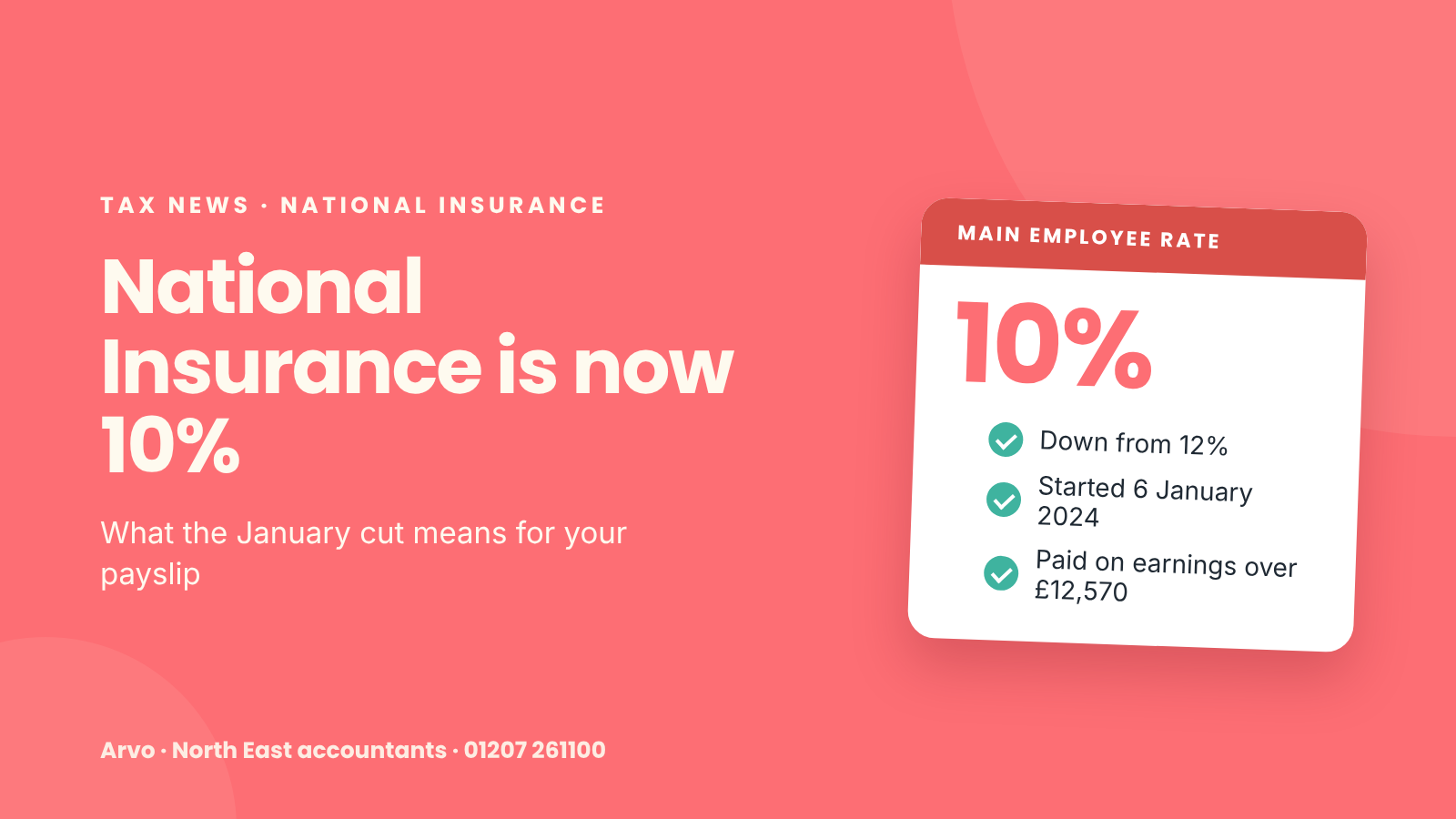
If you're employed, you may have noticed your take-home pay went up slightly in January. That's because the main rate of employee National Insurance fell from 12% to 10% on 6 January 2024.
What changed
Employees pay Class 1 National Insurance on their earnings:
10% (was 12%) on earnings between £12,570 and £50,270 a year
2% on earnings above £50,270 (unchanged)
The cut was announced in the Autumn Statement in November and applied from January, partway through the tax year.
How much does it save?
The saving is 2% of your earnings between £12,570 and £50,270. Over a full year that's roughly:
£249 on a salary of £25,000
£349 on a salary of £30,000
£649 on a salary of £45,000
£754 at £50,270 or above
For this tax year, you'll only see the saving from January to March.
Check your payslip
Your employer's payroll software should have applied the new rate automatically. To check:
Look at the National Insurance figure on your January or February payslip
Compare it with December's. It should be a little lower if your pay hasn't changed
If it hasn't changed at all, ask your payroll team
What about directors and the self-employed?
Company directors on a salary get the same cut. Directors' National Insurance is worked out on an annual basis, so it shows up differently
Employers still pay 13.8%. The cut only applies to the employee's share
Self-employed changes are planned from April, and we'll cover them in a separate post
Related reads
Married or in a civil partnership? The £252 tax break most couples miss
Child Benefit: the £60,000 threshold and why you might want to claim again
How Arvo can help
We run payroll for small businesses across the North East and can make sure everyone's being taxed correctly. If you're a director, we can also look at whether your salary and dividend mix still makes sense.
Get in touch to arrange a free, no-obligation chat, or call us on 01207 261100.