
The 2023/24 tax year ends on Friday 5 April. Most allowances work on a "use it or lose it" basis, and two of them are halving from April. Here's what to check.
1. Use your ISA allowance
You can put up to £20,000 into ISAs this tax year. Interest and gains inside an ISA are tax-free, and the allowance doesn't roll over.
2. Top up your pension
Pension contributions get tax relief at your highest rate. The annual allowance is £60,000 (or 100% of your earnings if lower), and you may be able to use unused allowance from the last three years.
3. Use your Capital Gains Tax allowance
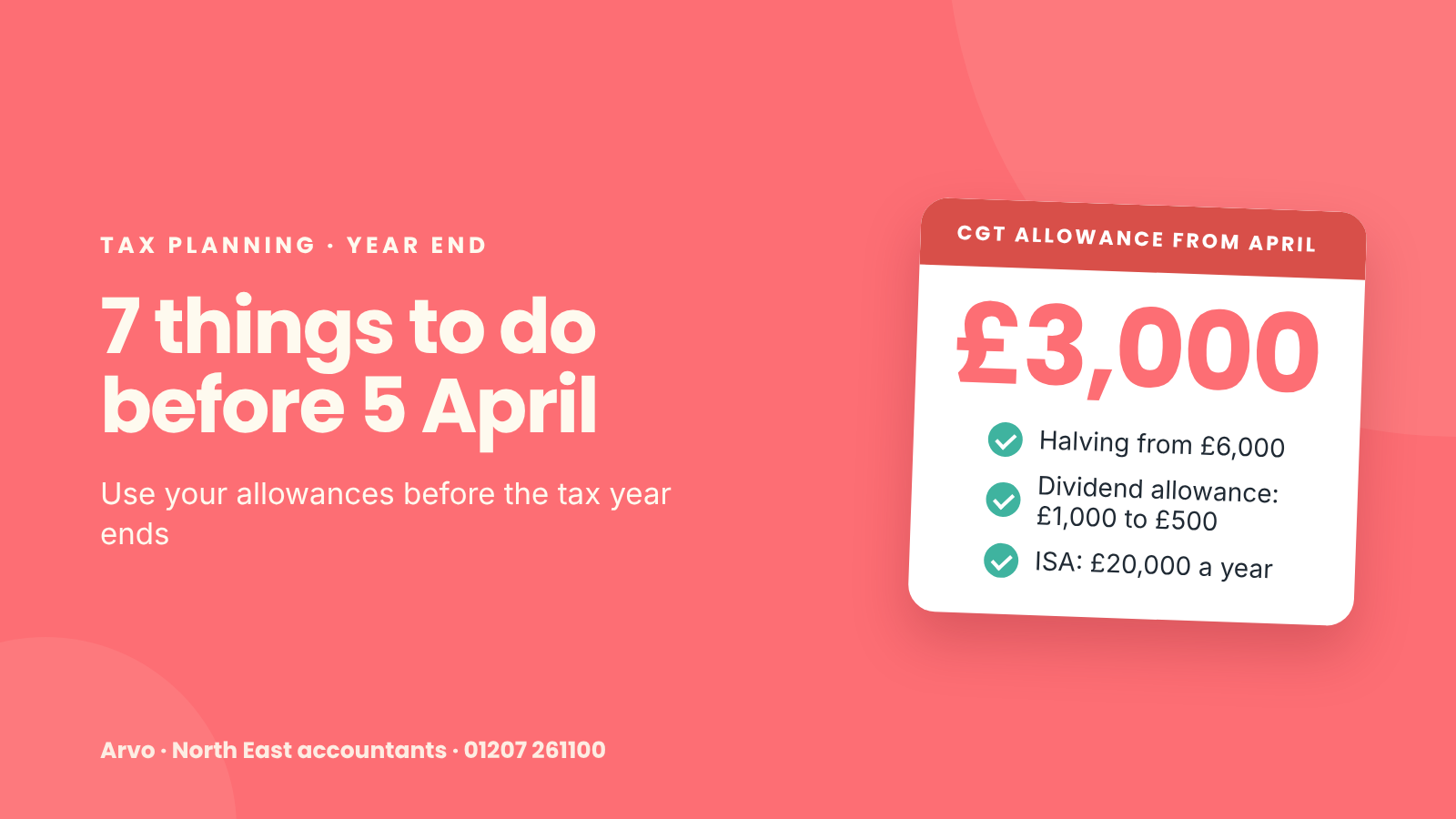
You can make £6,000 of gains tax-free this year. From 6 April it falls to £3,000. If you're planning to sell shares or other investments, selling some before 5 April could save tax.
4. Think about dividends
If you run a limited company, the tax-free dividend allowance is £1,000 this year, halving to £500 from April. Taking dividends before 5 April (if your company has the profits) could help.
5. Claim Marriage Allowance
If one of you earns under £12,570 and the other is a basic rate taxpayer, you could save up to £252 a year. You can backdate claims four years.
6. Gift Aid and charity
Gift Aid donations made by 5 April can be included on your 2023/24 tax return. Higher rate taxpayers can claim extra relief.
7. Earning around £100,000?
Between £100,000 and £125,140, you lose your Personal Allowance, giving an effective tax rate of 60%. Pension contributions or Gift Aid can bring your income back below £100,000.
Before you act
Everyone's situation is different, so check before you move money around. Pension and investment decisions in particular are worth getting proper advice on.
Related reads
Child Benefit: the £60,000 threshold and why you might want to claim again
National Insurance has dropped to 10%: what it means for your payslip
Married or in a civil partnership? The £252 tax break most couples miss
How Arvo can help
We can review your position before the year ends and make sure you're using the allowances that matter to you.
Get in touch to arrange a free, no-obligation chat, or call us on 01207 261100.