
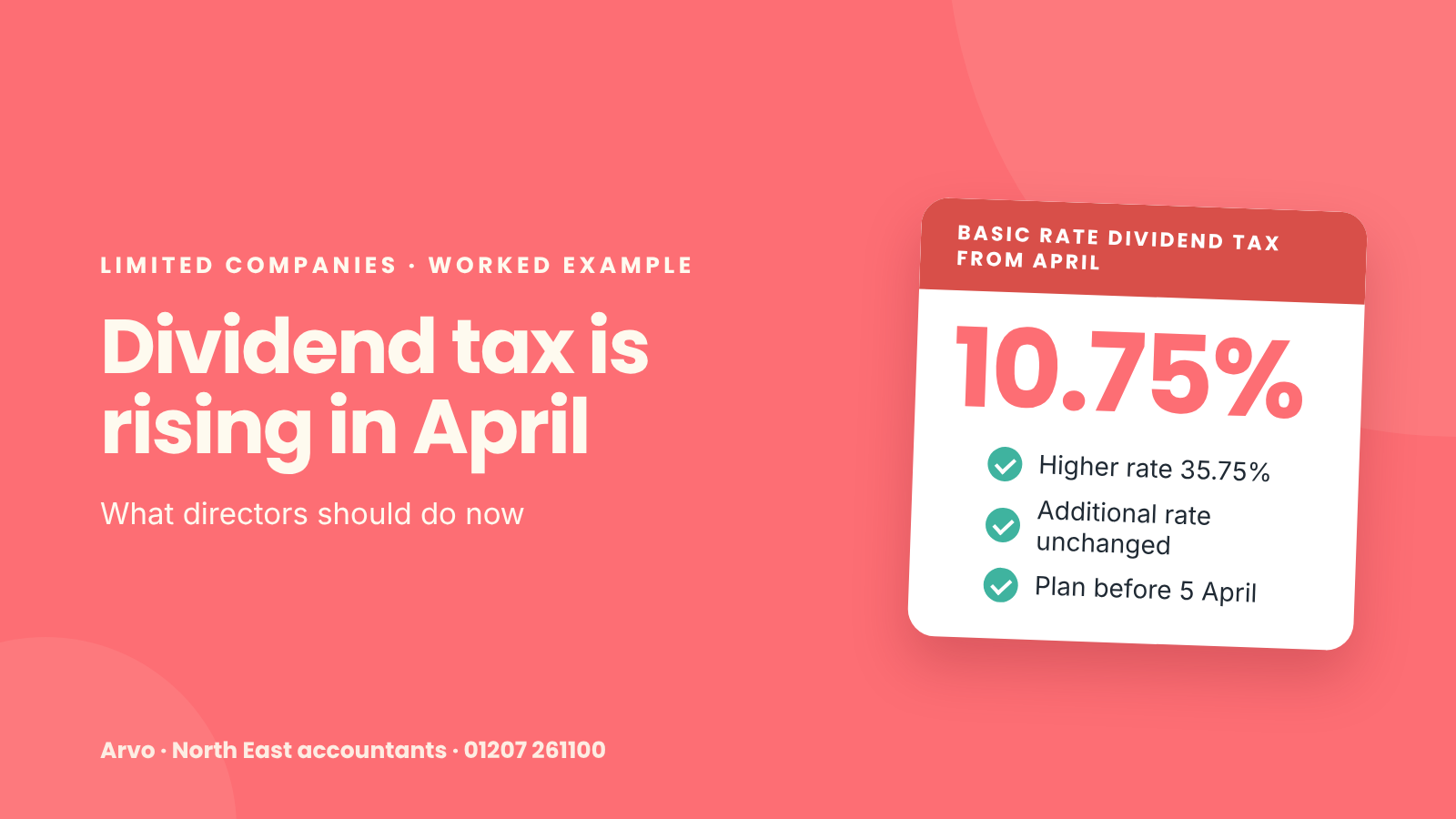
The Budget confirmed that dividend tax rises from 6 April 2026. If you pay yourself through dividends from your own company, here's what it means.
The new rates
Basic rate: 8.75% up to 10.75%
Higher rate: 33.75% up to 35.75%
Additional rate: stays at 39.35%
The £500 dividend allowance stays the same.
What it costs
A basic rate taxpayer taking £30,000 of dividends pays around £590 more a year
A higher rate taxpayer taking an extra £20,000 in the higher rate band pays £400 more
It's not huge for most small company owners, but it adds up over time.
Should you bring dividends forward?
If your company has enough retained profits, paying extra dividends before 6 April 2026 means they're taxed at this year's rates. But think carefully:
Don't push yourself into a higher tax band this year to save 2% next year
Watch the £100,000 level, where you start to lose your Personal Allowance
Make sure the company can afford it, and keep enough cash for tax and running costs
Dividends must be properly declared with minutes and vouchers
Review your pay mix
With dividend tax rising, other ways of extracting profit look better:
Employer pension contributions remain free of tax and National Insurance, and save Corporation Tax
A salary at the right level still makes sense for many directors
Tax-free benefits like an electric company car or a mobile phone
Spouses and shareholders
If your spouse or partner owns shares and pays tax at a lower rate, dividends to them may be more efficient. The shares must really belong to them, and the rules on income shifting need care.
Related reads
Paying yourself as a company director in 2026/27: salary vs dividends
Business Asset Disposal Relief rises to 18% in April: last chance at 14%
How Arvo can help
We'll review your salary, dividends and pension contributions before 5 April and work out the most efficient mix for 2025/26 and 2026/27.
Find out more about our director pay and tax planning service.
Get in touch to arrange a free, no-obligation chat, or call us on 01207 261100.