
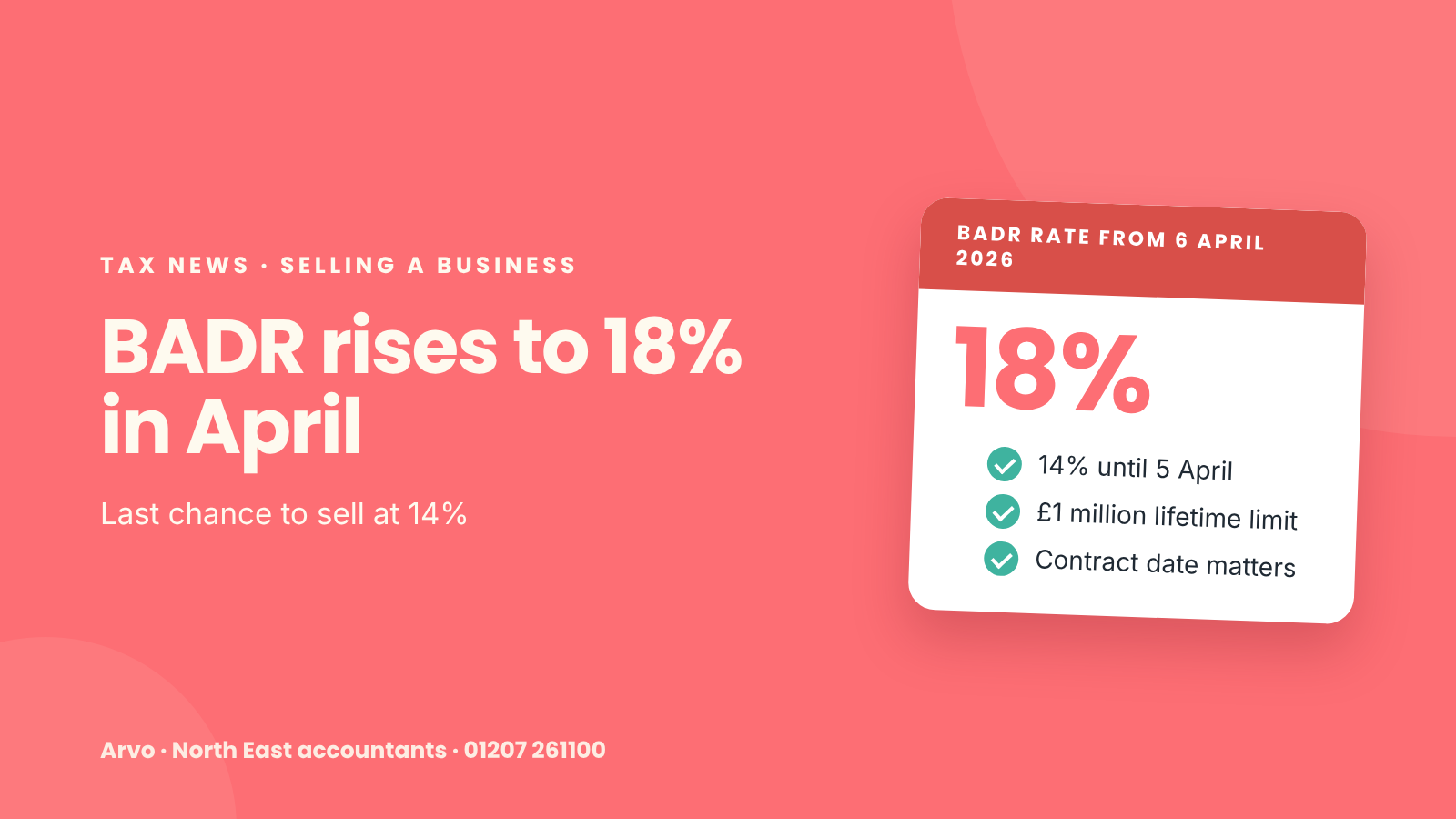
Business Asset Disposal Relief (BADR) has risen in two steps since the October 2024 Budget. The final step comes on 6 April 2026, when the rate goes from 14% to 18%.
What it costs
On a qualifying gain of £1 million, the lifetime limit:
At 14%: £140,000
At 18%: £180,000
That's £40,000 more. On a £500,000 gain, it's £20,000 more.
At 18%, BADR is still lower than the 24% higher rate of Capital Gains Tax that would otherwise apply.
Who qualifies?
Usually, for at least two years before the sale, you must have:
Been a sole trader or partner in the business, or
Owned at least 5% of a trading company's shares and votes, and worked for the company as an officer or employee
The contract date
For Capital Gains Tax, the sale usually happens when an unconditional contract is signed, not when the money arrives. But anti-forestalling rules mean a contract signed before 6 April that completes much later may not lock in the old rate. Take advice before signing.
Should you rush?
Selling a business is a big decision. A 4% difference matters, but not as much as finding the right buyer at the right price, on the right terms. Don't let tax force a poor deal. If a sale was already happening, though, the timing is worth a conversation.
Other options
Selling to an Employee Ownership Trust can still bring tax benefits, though the relief was reduced in the Budget
Spouses who both qualify each have their own £1 million limit
Retiring partners and those selling assets after closing a business may still qualify
Related reads
Farms and family businesses: the inheritance tax changes start on 6 April
Passing on the family business: planning for the next generation
How Arvo can help
We can check whether you qualify, work out the tax under each rate and work with your solicitor on timing.
Get in touch to arrange a free, no-obligation chat, or call us on 01207 261100.