
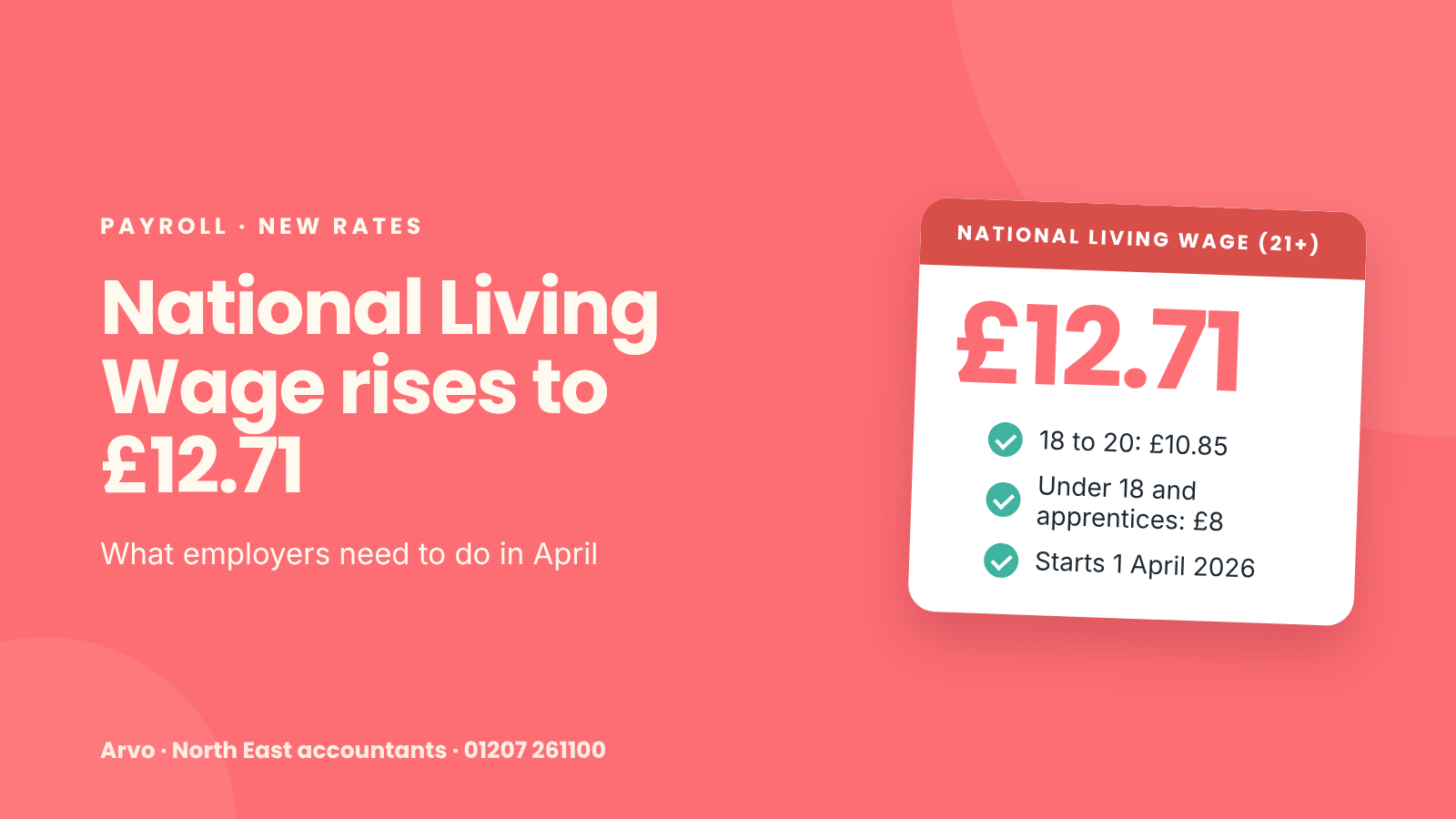
The minimum wage rates go up on 1 April 2026. Here's what's changing.
The new rates
21 and over (National Living Wage): £12.71, up from £12.21
18 to 20: £10.85, up from £10.00
Under 18: £8.00, up from £7.55
Apprentices: £8.00, up from £7.55
The apprentice rate applies to apprentices under 19, or in the first year of their apprenticeship. After that, they move onto the rate for their age.
What it costs
For a full-time worker on 37.5 hours a week, the 50p rise adds around £975 a year in pay. With employer National Insurance at 15% and pension contributions on top, the real cost is higher.
The bigger rise for 18 to 20-year-olds reflects the government's plan to bring their rate closer to the adult rate.
What to do
Update payroll so the new rates apply from 1 April
Check ages. Anyone turning 18 or 21 moves up a rate
Check salaried staff. Their pay divided by hours worked must be at least the minimum
Review pay differences for supervisors and experienced staff
Update your budgets and prices
Common mistakes
Uniform or equipment deductions that take pay below the minimum
Unpaid time for training, travel between jobs or opening up
Forgetting an apprentice has moved onto the full rate
Employers who underpay must repay staff and can face penalties of up to 200% of the arrears, as well as being publicly named.
Employment Allowance
Remember, the £10,500 Employment Allowance can reduce your employer NI bill, if you're eligible.
Related reads
How Arvo can help
We run payroll for local employers and make sure the right rates apply from day one.
Find out more about our payroll and pensions service.
Get in touch to arrange a free, no-obligation chat, or call us on 01207 261100.