
Lots of small businesses in the North East are family affairs. A partner who does the books, a son who helps on site, a daughter who answers the phones in the school holidays. Paying them properly can be tax-efficient, as long as you follow the rules.
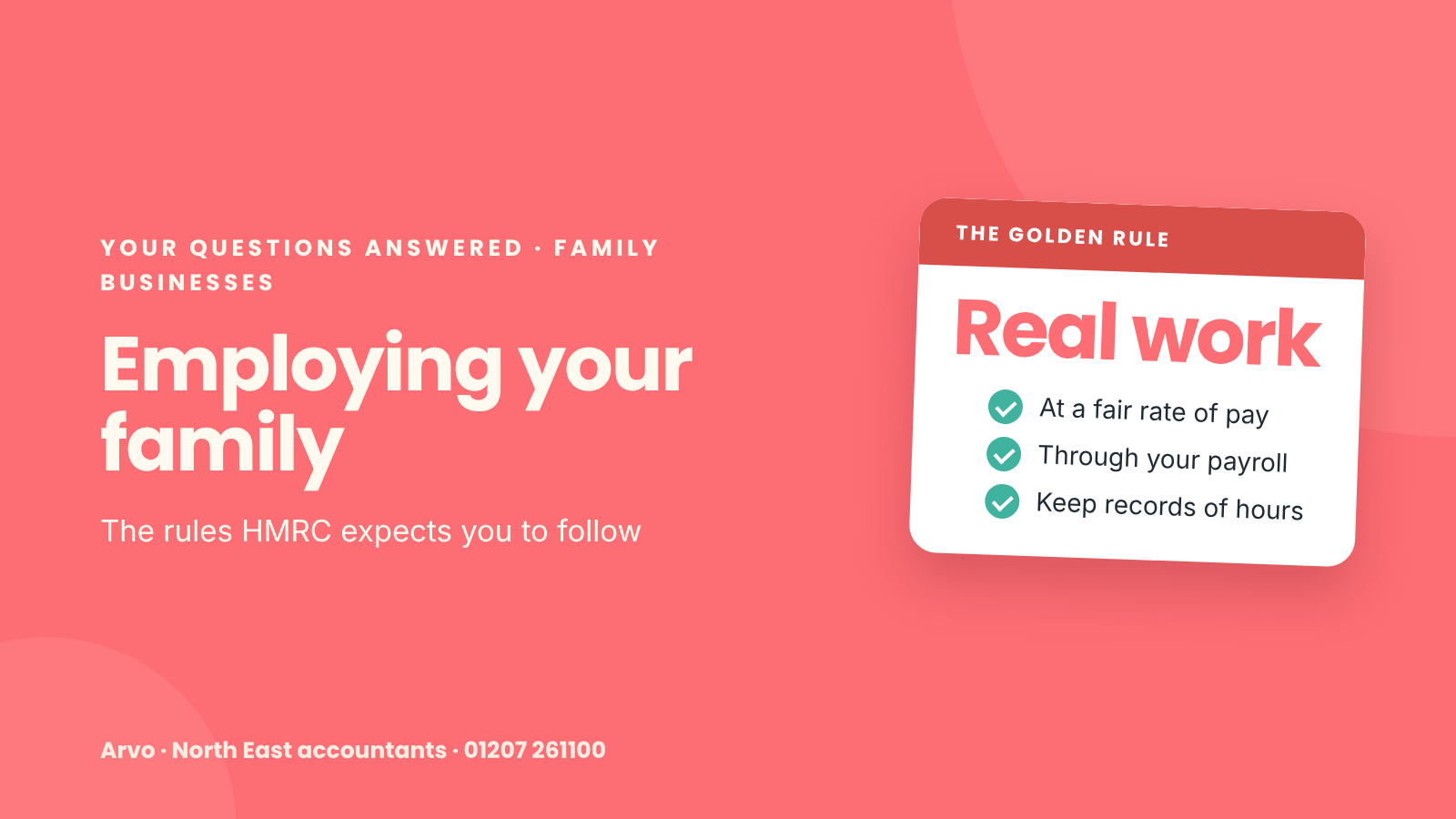
The golden rule
The pay must be for real work, at a fair rate for the job. HMRC looks closely at family wages, and will challenge payments that are more than the work is worth, or where no real work is done.
Why it can save tax
If your family member pays less tax than you, paying them a wage moves income to them. For example, a partner with no other income can earn up to £12,570 without paying Income Tax, and the wage is a business expense for you.
Getting it right
Put them on payroll. Report their pay to HMRC like any other employee.
Pay the minimum wage. It applies to family members who are employees, unless they're a company director with no employment contract.
Actually pay them. The money should go into their own bank account, not stay in yours.
Keep records. Note what they do and the hours they work.
Give them a contract. Even a simple one helps show it's a genuine job.
Children
Children can work for the business, but there are strict rules on the hours and type of work for under 16s, and your local council may require a permit. Pay must still be reasonable for what they do.
Limited companies
If you run a limited company, family members can also be shareholders and receive dividends. This can be tax-efficient, but HMRC has rules on income shifting between spouses, so take advice first.
Pensions
Employer pension contributions for a family member can be another tax-efficient option, as long as their total pay package is reasonable for the work they do.
How Arvo can help
We're a local accountancy practice in Stanley, County Durham, and we work with lots of family businesses. We'll help you pay family members in a way that's tax-efficient and stands up to HMRC.
Get in touch to arrange a free, no-obligation chat, or call us on 01207 261100.