
If you're employed, student loan repayments come out of your wages automatically. When you work for yourself, it works differently, and it catches lots of people out.
How it works
If you're self-employed, your student loan repayments are worked out on your Self Assessment tax return and added to your tax bill. They're due by 31 January, along with your Income Tax and National Insurance.
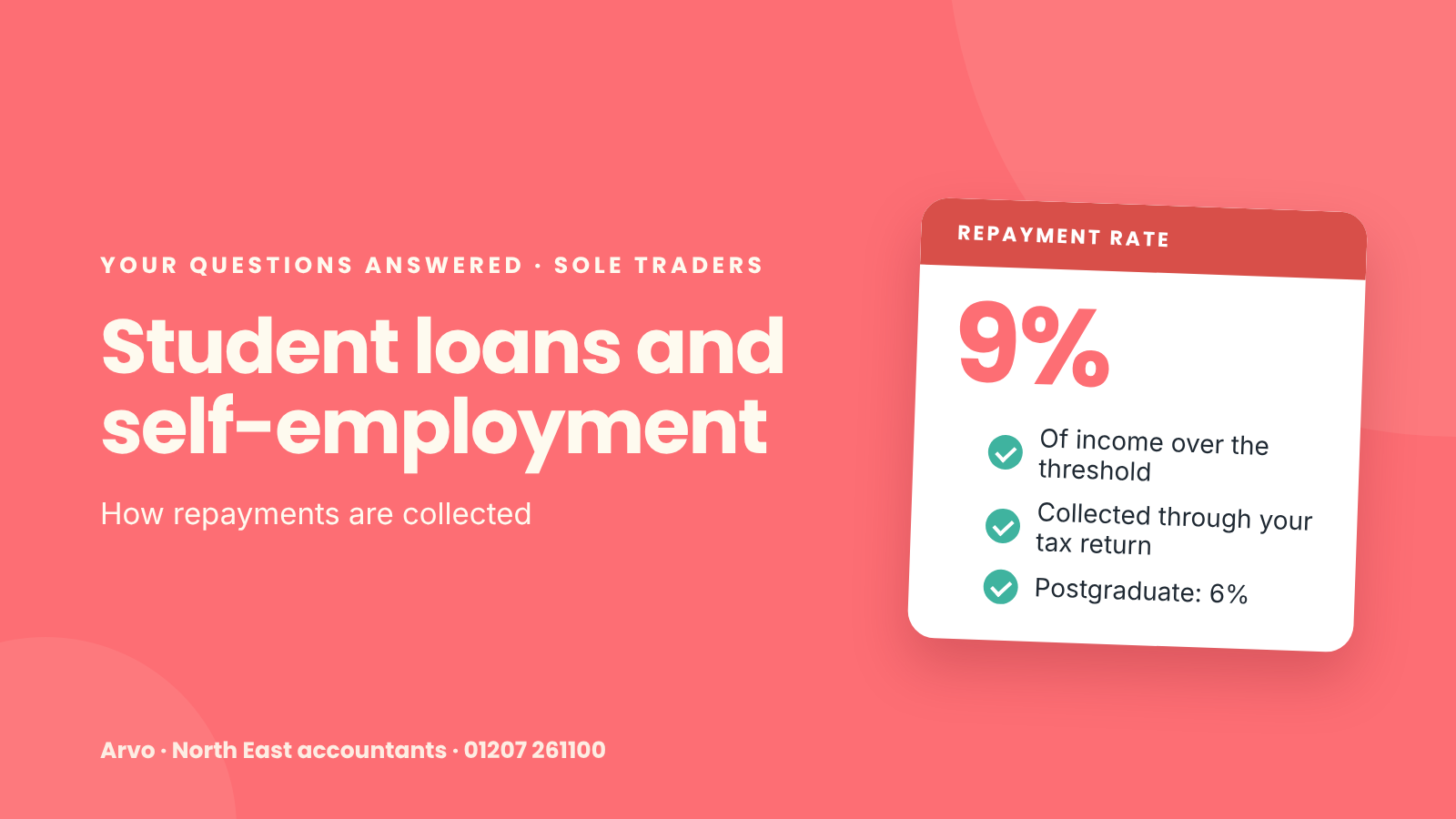
Repayments are 9% of your income over the threshold for your plan (6% for postgraduate loans).
Thresholds for 2026/27
Plan 1: £26,900
Plan 2: £29,385
Plan 4 (Scotland): £33,795
Plan 5: £25,000
Postgraduate: £21,000
Your income includes self-employed profits, wages and some other income, like rental profits and savings interest over £2,000.
No payments on account
The good news is that student loan repayments aren't included in your payments on account. The bad news is that it means the whole year's repayment lands in one go on 31 January.
An example
If you're on Plan 2 and your self-employed profit is £39,385, you're £10,000 over the threshold. Your repayment would be 9% of £10,000, which is £900, added to your tax bill.
Employed and self-employed?
If you have a job as well, your employer takes repayments from your wages. Your tax return then works out whether you owe more on your other income, and takes off what's already been paid.
Budget for it
Set aside money for your student loan along with your tax. A separate savings pot makes January much easier.
How Arvo can help
We're a local accountancy practice in Stanley, County Durham. We'll make sure your student loan repayments are worked out correctly and tell you how much to put aside.
Get in touch to arrange a free, no-obligation chat, or call us on 01207 261100.