
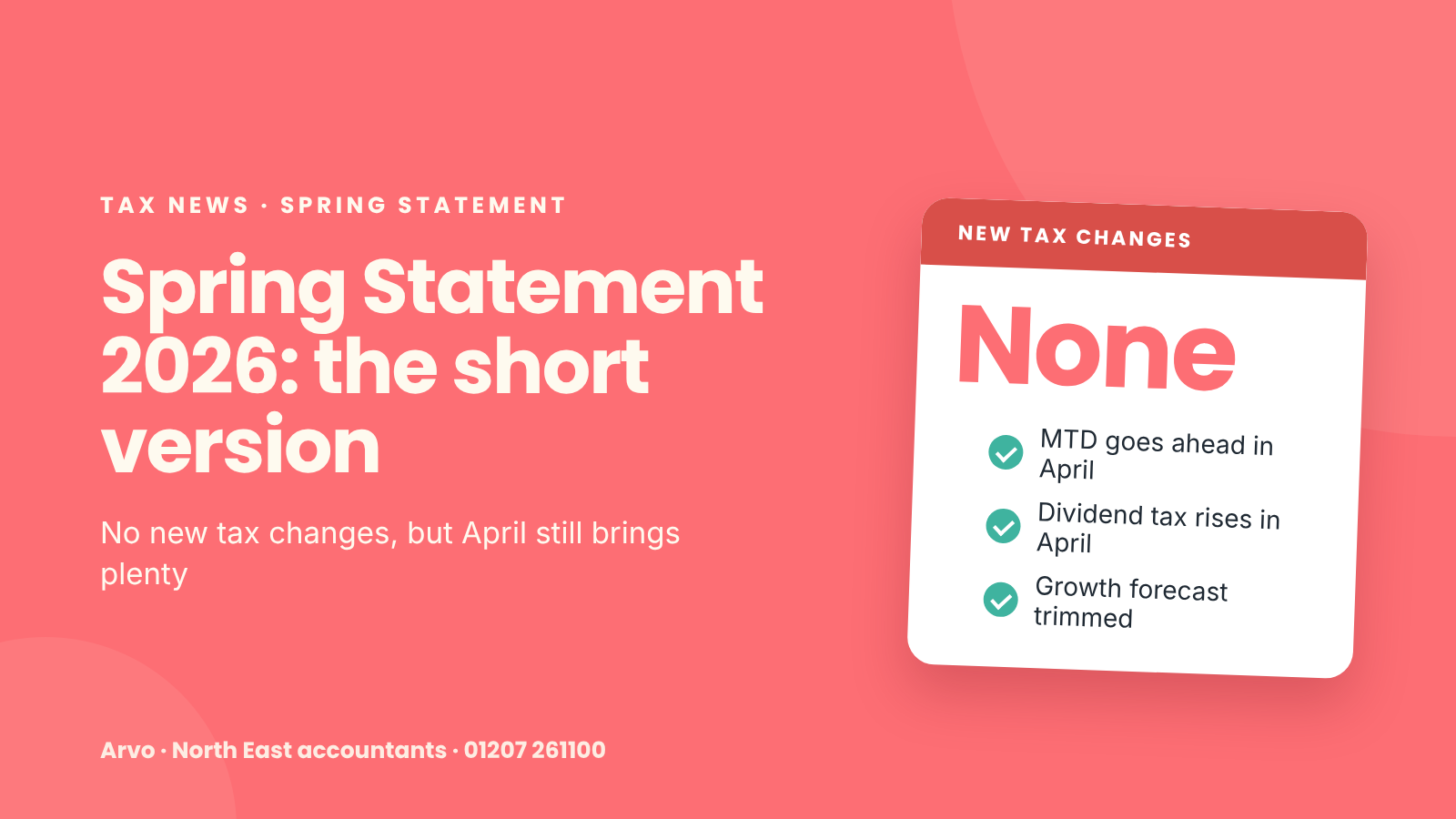
The Chancellor gave the Spring Statement on 3 March 2026. The government now holds one main fiscal event a year, in the autumn, so this was an update on the economy rather than a Budget.
No new tax changes
There were no new tax rises or cuts. The changes announced in the November 2025 Budget still go ahead.
The economy
The Office for Budget Responsibility trimmed its growth forecast for 2026 to around 1.1%, with growth expected to pick up a little in later years. Inflation is expected to fall back towards the 2% target by the end of 2026.
What's already coming in April
Making Tax Digital for Income Tax starts on 6 April for sole traders and landlords with qualifying income over £50,000, with no delay
Dividend tax rises to 10.75% and 35.75%
Business Asset Disposal Relief rises to 18%
The National Living Wage rises to £12.71, with £10.85 for 18 to 20-year-olds and £8 for under-18s and apprentices
Corporation Tax late filing penalties double, to £200 for an initial late return
Business rates bills in England reflect the new revaluation, with lower rates for retail, hospitality and leisure premises
Income Tax and National Insurance thresholds stay frozen
What it means for you
For most of our clients, the Spring Statement itself changes nothing. The focus should be on the April changes, especially Making Tax Digital and, for company directors, dividend tax.
Related reads
How Arvo can help
If you'd like to talk through how the April changes affect you, or get ready for Making Tax Digital, we're here to help.
Get in touch to arrange a free, no-obligation chat, or call us on 01207 261100.