
The Chancellor delivered the Budget on 26 November 2025. The main rates of Income Tax, employee National Insurance and VAT didn't change, but there were plenty of other rises. Here's what matters most.
Frozen thresholds
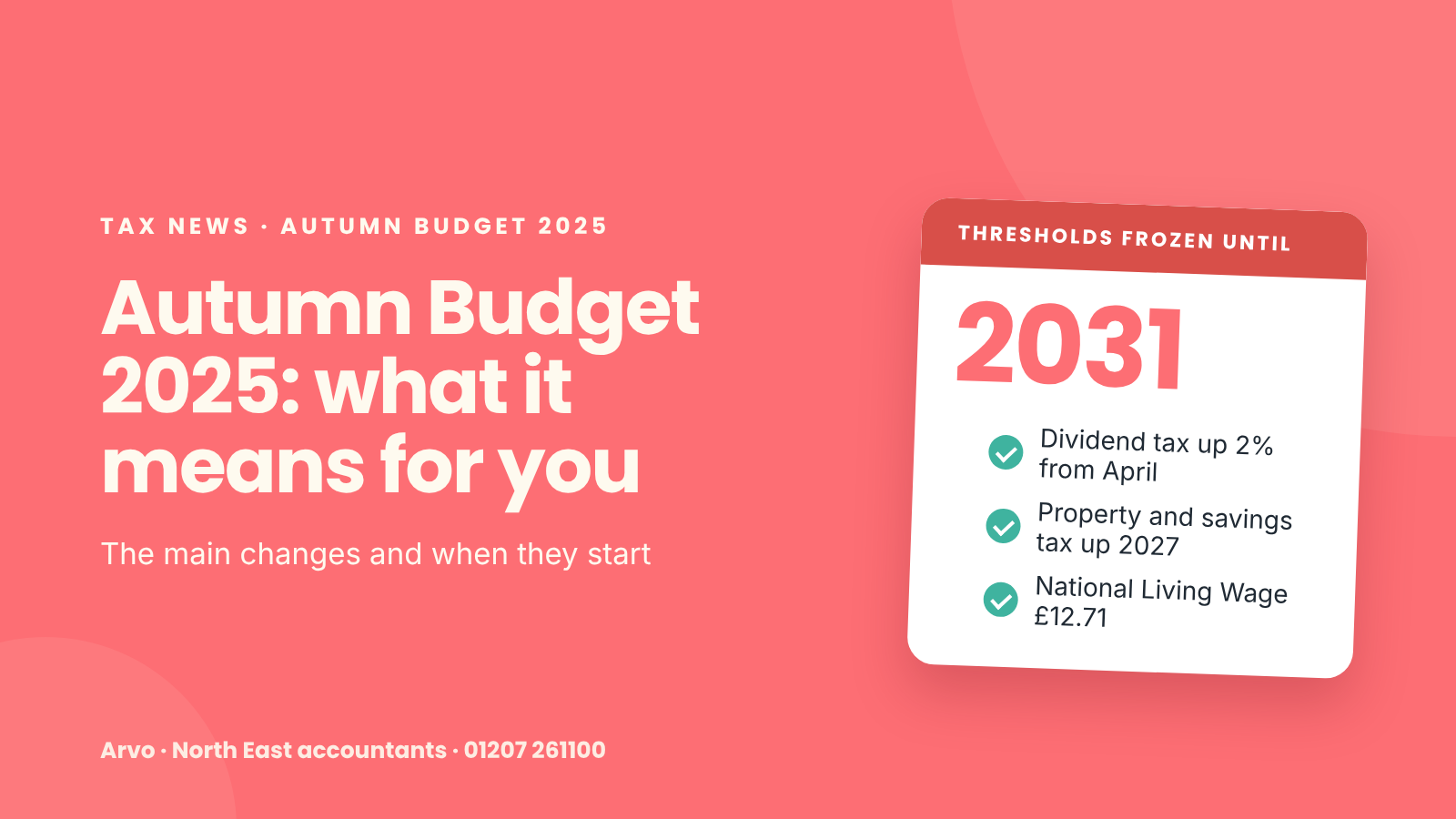
The freeze on Income Tax thresholds, including the £12,570 Personal Allowance, has been extended by three years to 2031. As wages rise, more people will pay tax, and at higher rates.
Company directors and investors
Dividend tax rises by 2 percentage points from 6 April 2026: to 10.75% for basic rate and 35.75% for higher rate taxpayers. The additional rate stays at 39.35%
Savings income tax rises by 2 points across all bands from April 2027
Landlords
From April 2027, property income will have its own tax rates of 22%, 42% and 47%. The tax credit for mortgage interest will be given at 22%.
Employers
The National Living Wage rises to £12.71 an hour from April 2026
From April 2029, only the first £2,000 a year of pension salary sacrifice will be free of National Insurance
Businesses
A new 40% first-year allowance for main-rate plant and machinery from January 2026, including for unincorporated businesses
The main writing down allowance falls from 18% to 14% from April 2026
No penalty points for late MTD quarterly updates in the first year, 2026/27
Property and cars
A new council tax surcharge on homes worth over £2 million from April 2028
Electric cars will pay 3p a mile from April 2028, with plug-in hybrids paying 1.5p
Savings and inheritance tax
The cash ISA limit will fall to £12,000 from April 2027 for under-65s, within the overall £20,000 ISA allowance
The new £1 million allowance for business and agricultural property relief will be transferable between spouses and civil partners
What didn't change
Corporation Tax stays at 25%, and fuel duty stays frozen until September 2026.
Related reads
How Arvo can help
We'll be covering the biggest changes over the coming weeks. If you'd like to know how they affect you, get in touch.
Get in touch to arrange a free, no-obligation chat, or call us on 01207 261100.