
Salary sacrifice is a popular way to save into a pension. The Budget announced a change, but not until April 2029.
How salary sacrifice works now
An employee gives up part of their salary and the employer pays the same amount into their pension. Because it's no longer salary:
The employee pays no Income Tax or National Insurance on it
The employer pays no employer National Insurance on it
Many employers pass some or all of their NI saving into the pension too.
What's changing
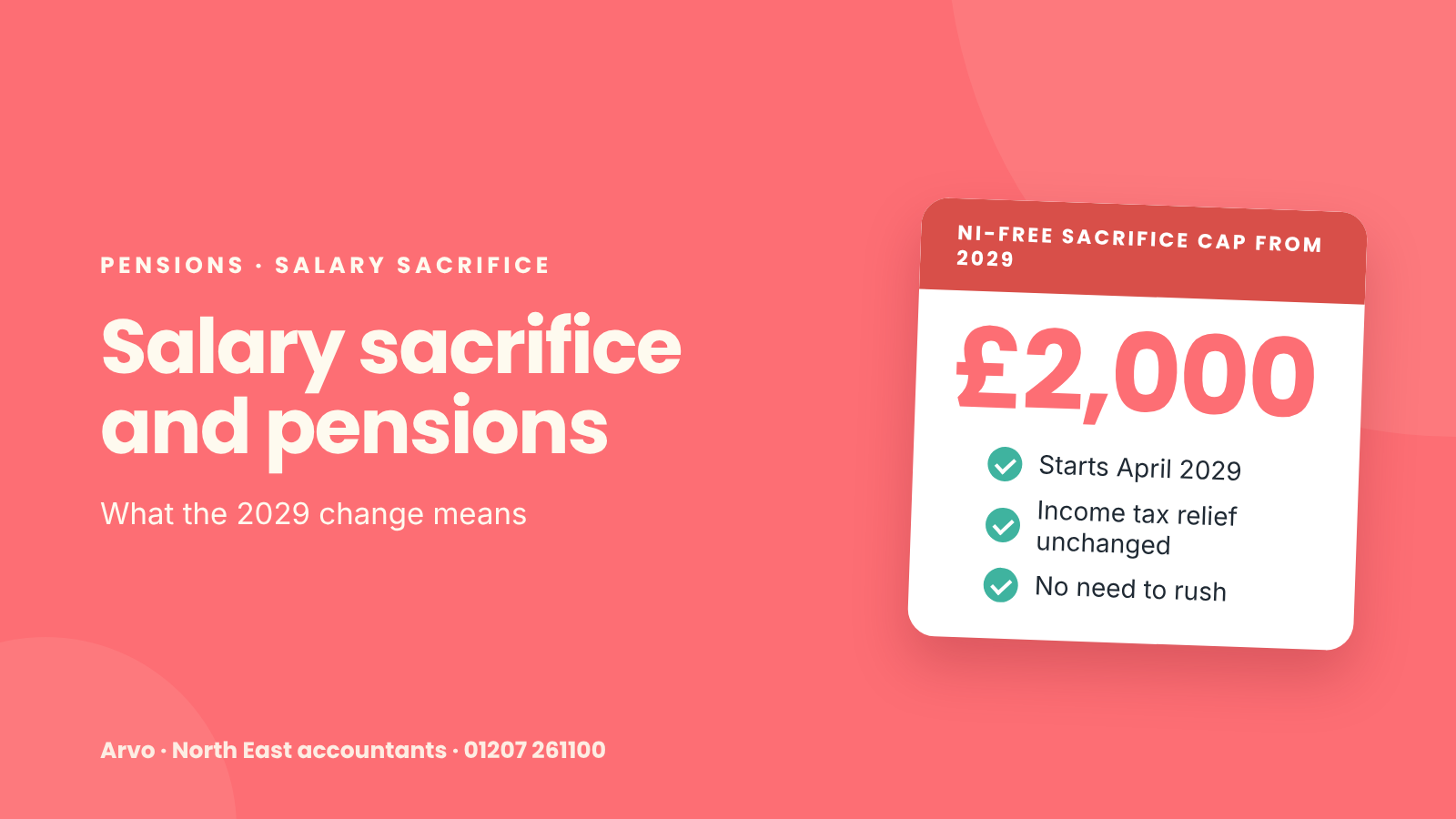
From 6 April 2029, only the first £2,000 a year of pension contributions made through salary sacrifice will be free of National Insurance. Anything above that will have NI charged, for both employee and employer, as if it were salary.
What isn't changing
Income Tax relief on pension contributions stays the same
Ordinary employer pension contributions, not made through salary sacrifice, aren't affected
Personal contributions still get tax relief as now
Who's affected?
Mostly employees who sacrifice more than £2,000 a year, which is around £167 a month. A basic rate employee sacrificing £5,000 would lose NI savings on £3,000, costing them around £240 a year at 8%. Their employer would pay £450 more at 15%.
Company directors
Directors who pay into a pension through employer contributions from their company, rather than salary sacrifice, aren't affected by this change.
What to do
There's no need to change anything now. The change is more than three years away and the details may change. But it's worth:
Employers reviewing schemes nearer the time
Employees remembering that pension saving is still very tax-efficient
Related reads
National Insurance has dropped to 10%: what it means for your payslip
Tax year-end checklist 2025/26: what to do before 5 April 2026
How Arvo can help
We can review your payroll and pension arrangements and help you plan well before 2029.
Find out more about our financial planning service.
Get in touch to arrange a free, no-obligation chat, or call us on 01207 261100.