
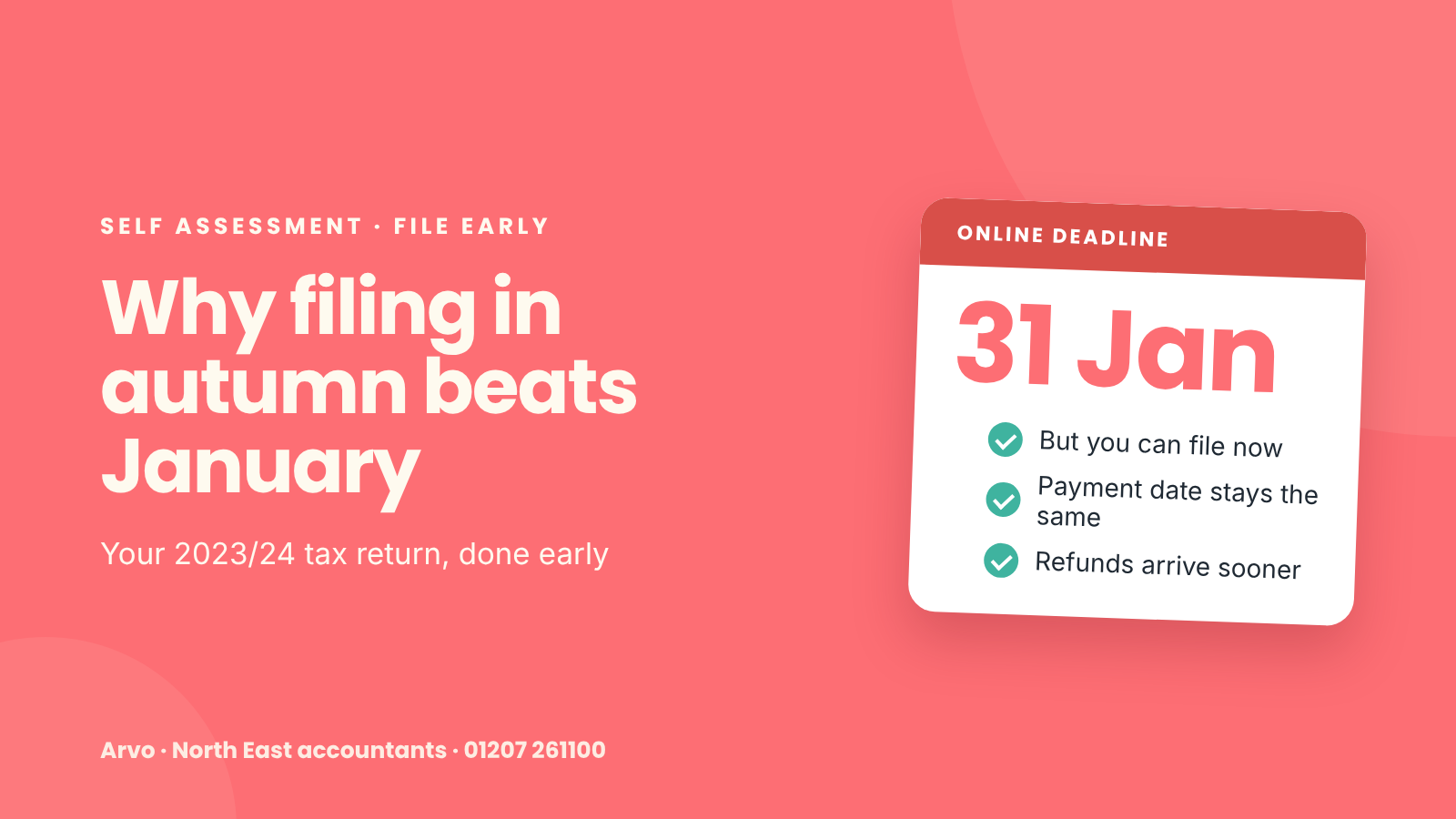
The deadline for your 2023/24 tax return is 31 January 2025. But there's no rule that says you have to wait until then. Here's why filing in the autumn is a good idea.
1. You'll know your bill early
Filing now tells you exactly how much you owe, months before you have to pay it. That gives you time to plan and save, rather than getting a surprise in January.
2. You still pay on the same date
Filing early doesn't mean paying early. Your tax is still due by 31 January 2025, however early you file.
3. Refunds come sooner
If you're owed money, for example as a CIS subcontractor, filing early means your refund arrives months sooner.
4. You can spread the cost
Once you know the bill, you can save towards it monthly, or set up a budget payment plan with HMRC.
5. It's less stressful
January is busy for everyone. Gathering paperwork, chasing missing information and fixing mistakes is much easier when there's no deadline looming.
6. Payments on account
If your income has dropped, filing early lets you reduce your payments on account. If it's gone up, you'll know in advance that your bill will be bigger.
Paying through your tax code
If you're employed and owe less than £3,000, you can ask for the tax to be collected through your tax code over the next year, as long as you file online by 30 December.
What to gather
P60 and P11D from any employment
Self-employed income and expense records
Rental income and costs
Bank and savings interest
Pension contributions and Gift Aid
Any CIS statements
Related reads
How Arvo can help
We're filing 2023/24 returns now. Send us your paperwork and we'll get yours done well ahead of the January rush.
Get in touch to arrange a free, no-obligation chat, or call us on 01207 261100.