
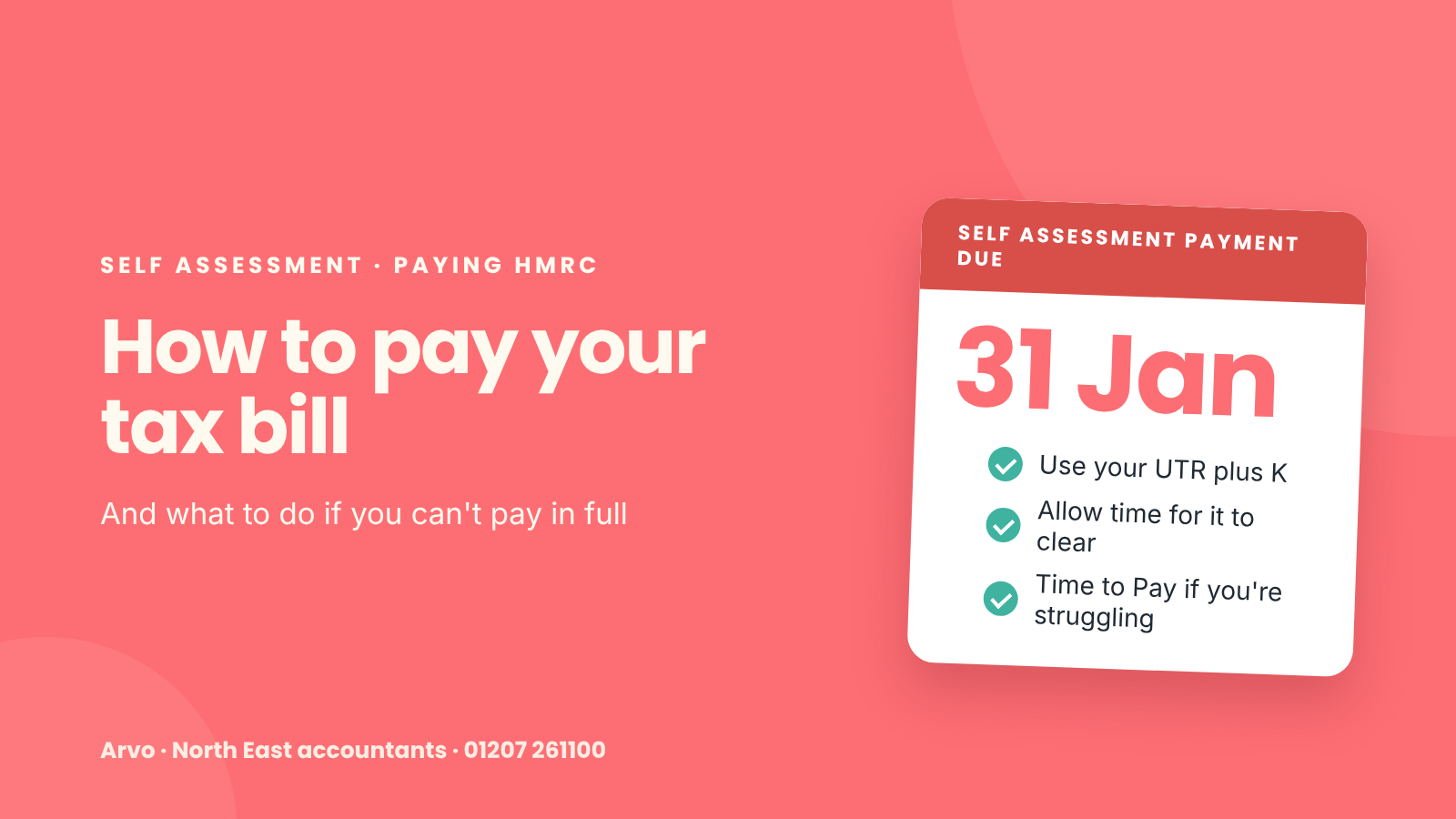
Your Self Assessment tax bill for 2023/24, plus any first payment on account for 2024/25, is due by 31 January 2025. Here's how to pay, and what to do if money is tight.
Ways to pay
Online or telephone banking (Faster Payments usually arrive the same or next day)
Debit card or corporate credit card online (personal credit cards aren't accepted)
The HMRC app
Direct Debit, set up at least five working days before the deadline for a one-off payment
At your bank or building society, if you have a paying-in slip from HMRC
Use the bank details on HMRC's "Pay your Self Assessment tax bill" page.
Your payment reference
Your reference is your 10-digit Unique Taxpayer Reference (UTR), followed by the letter K. Using the wrong reference can delay your payment being matched to your account.
Paying in advance
You can make payments towards next year's bill through a budget payment plan, paying weekly or monthly by Direct Debit. It's a good way to avoid a big January bill.
If you can't pay in full
Don't ignore it, and still file your return on time. Late filing penalties are separate from late payment penalties.
You may be able to set up a Time to Pay arrangement online if:
You've filed your tax return
You owe £30,000 or less
You don't have other payment plans or debts with HMRC
It's within 60 days of the payment deadline
If you owe more, or need longer, you can call HMRC to agree a plan.
Interest and penalties
Interest is charged on late tax from 1 February, at the Bank of England base rate plus 2.5%. Late payment penalties of 5% of the unpaid tax apply at 30 days, six months and 12 months, but a Time to Pay arrangement set up in time can stop them.
Related reads
How Arvo can help
We'll tell you what you owe in good time, check whether your payments on account can be reduced and help you deal with HMRC if you need more time.
Get in touch to arrange a free, no-obligation chat, or call us on 01207 261100.