
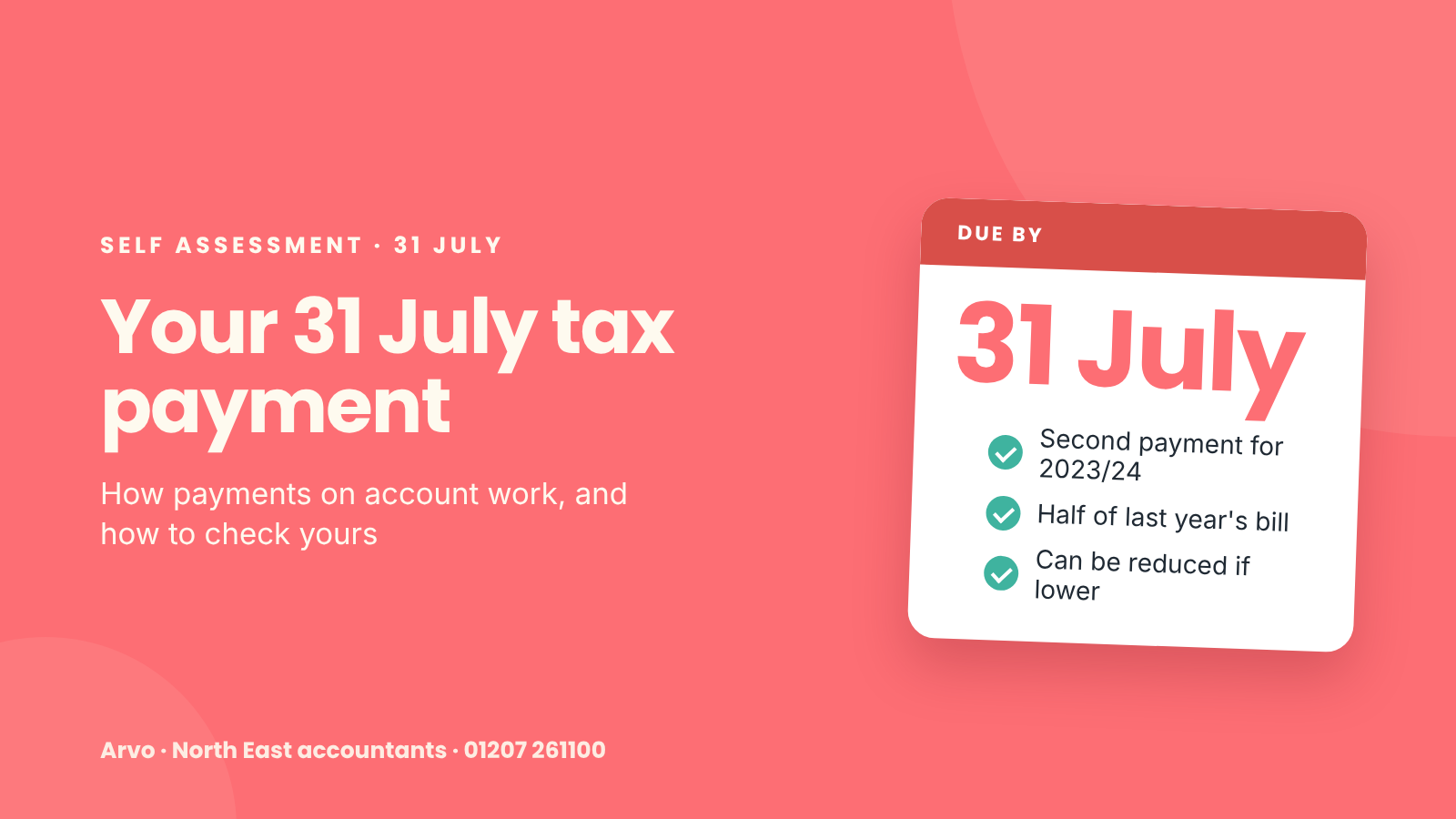
If you're self-employed or a landlord, you may have a tax payment due by 31 July 2024. It's your second payment on account for the 2023/24 tax year.
What are payments on account?
They're advance payments towards your tax bill. If your last Self Assessment bill was over £1,000 (and less than 80% of your tax was taken at source, for example through PAYE), HMRC asks you to pay towards the next year's bill in two instalments:
31 January, during the tax year
31 July, after the tax year ends
Each is half of the previous year's bill. So your 2023/24 payments on account are each half of your 2022/23 bill.
Then a balancing payment
When you file your 2023/24 tax return, you'll see your actual bill. If you've paid too little, you pay the balance by 31 January 2025. If you've paid too much, you get a refund.
Can you reduce it?
Yes. If your income for 2023/24 was lower than the year before, you can ask HMRC to reduce your payments on account. You can do this online or by filling in form SA303.
Be careful not to reduce them too far. If you underpay, HMRC charges interest on the difference.
The quickest way to know
File your 2023/24 tax return now. Then you'll know your exact bill, and whether the July payment is right, too high or too low.
How to pay
You can pay by bank transfer, online or through the HMRC app. Use your Unique Taxpayer Reference followed by the letter K as the payment reference.
Can't pay?
Contact HMRC before the deadline. You may be able to set up a Time to Pay arrangement.
Related reads
How Arvo can help
We can file your return early, check your payments on account and reduce them if your income has dropped.
Get in touch to arrange a free, no-obligation chat, or call us on 01207 261100.