
Profitable businesses can still run out of cash. A simple cash flow forecast shows you what's coming, so you can act before it's a problem.
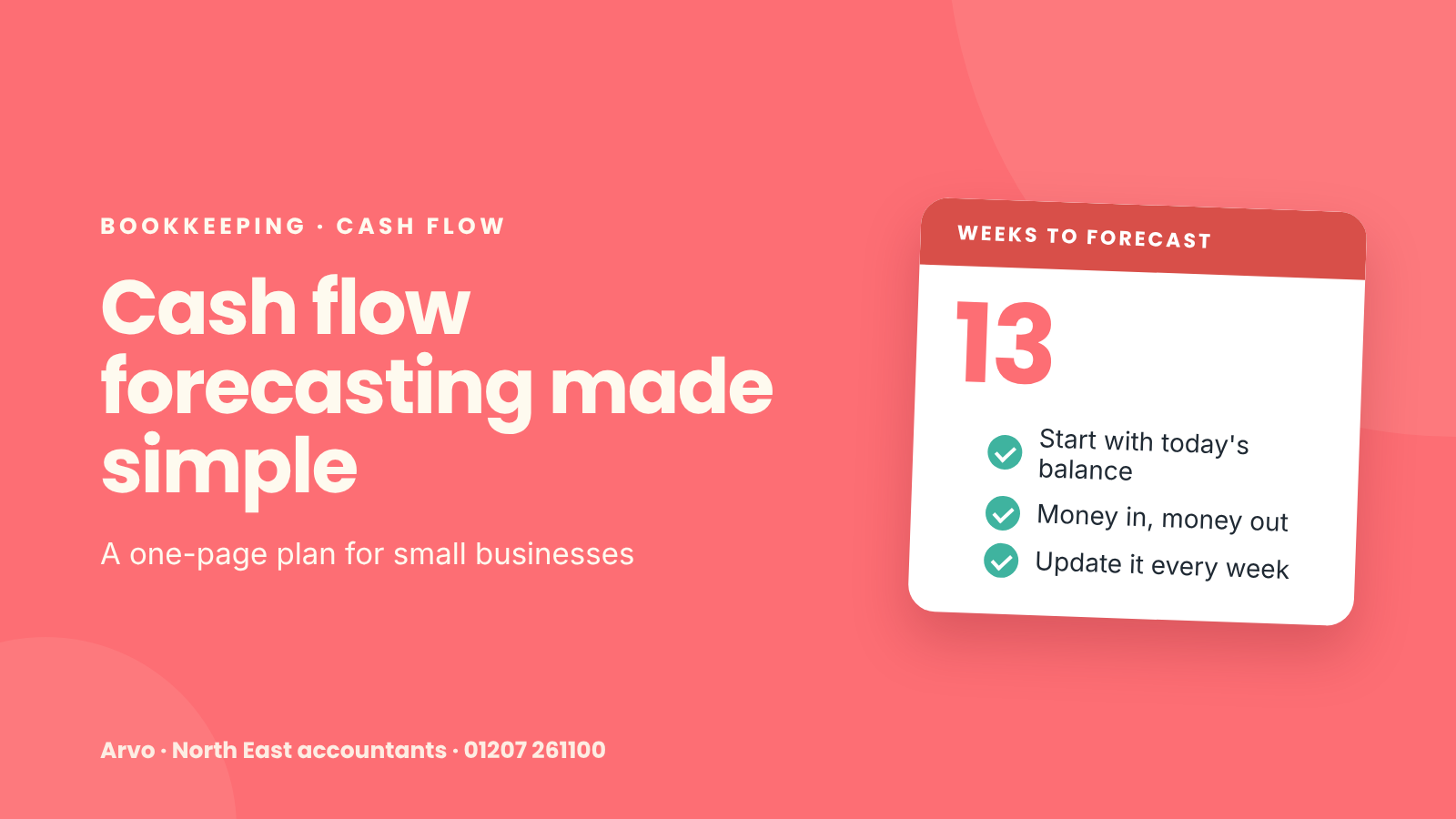
Why 13 weeks?
Thirteen weeks is a quarter. It's long enough to spot problems and short enough to be accurate. It also covers a VAT quarter and the main tax dates.
Set it up
In a spreadsheet, put weeks across the top and these rows down the side:
Opening bank balance
Money in: customer payments, other income, VAT refunds
Money out: wages, rent, suppliers, loan repayments, VAT, PAYE, Corporation Tax or Self Assessment, your own drawings
Net cash flow for the week
Closing balance, which becomes next week's opening balance
Fill it in
Start with today's real bank balance
Enter money in when you expect to receive it, not when you invoice
Put in fixed costs first, then variable costs
Don't forget the big, irregular payments, like insurance, annual software and tax bills
Use it every week
Each week, replace the forecast with what actually happened and add a new week at the end. It takes 15 minutes once it's set up.
Warning signs
The closing balance dips below zero, or below a safety buffer
Customers are paying later than you'd planned
Tax bills land in the same week as other big costs
What to do if cash looks tight
Chase overdue invoices and offer easy ways to pay
Agree payment terms with suppliers
Delay non-essential spending
Talk to HMRC early about Time to Pay if a tax bill is the problem
Speak to your bank before you need an overdraft
Your software can help
Xero, QuickBooks and FreeAgent all have cash flow tools that use your real invoices and bills.
Related reads
When a customer won't pay: bad debts and getting your VAT back
Keeping business and personal money separate: why it matters
How Arvo can help
We can build a cash flow forecast for your business, show you how to keep it up to date and help you plan for tax bills.
Get in touch to arrange a free, no-obligation chat, or call us on 01207 261100.