
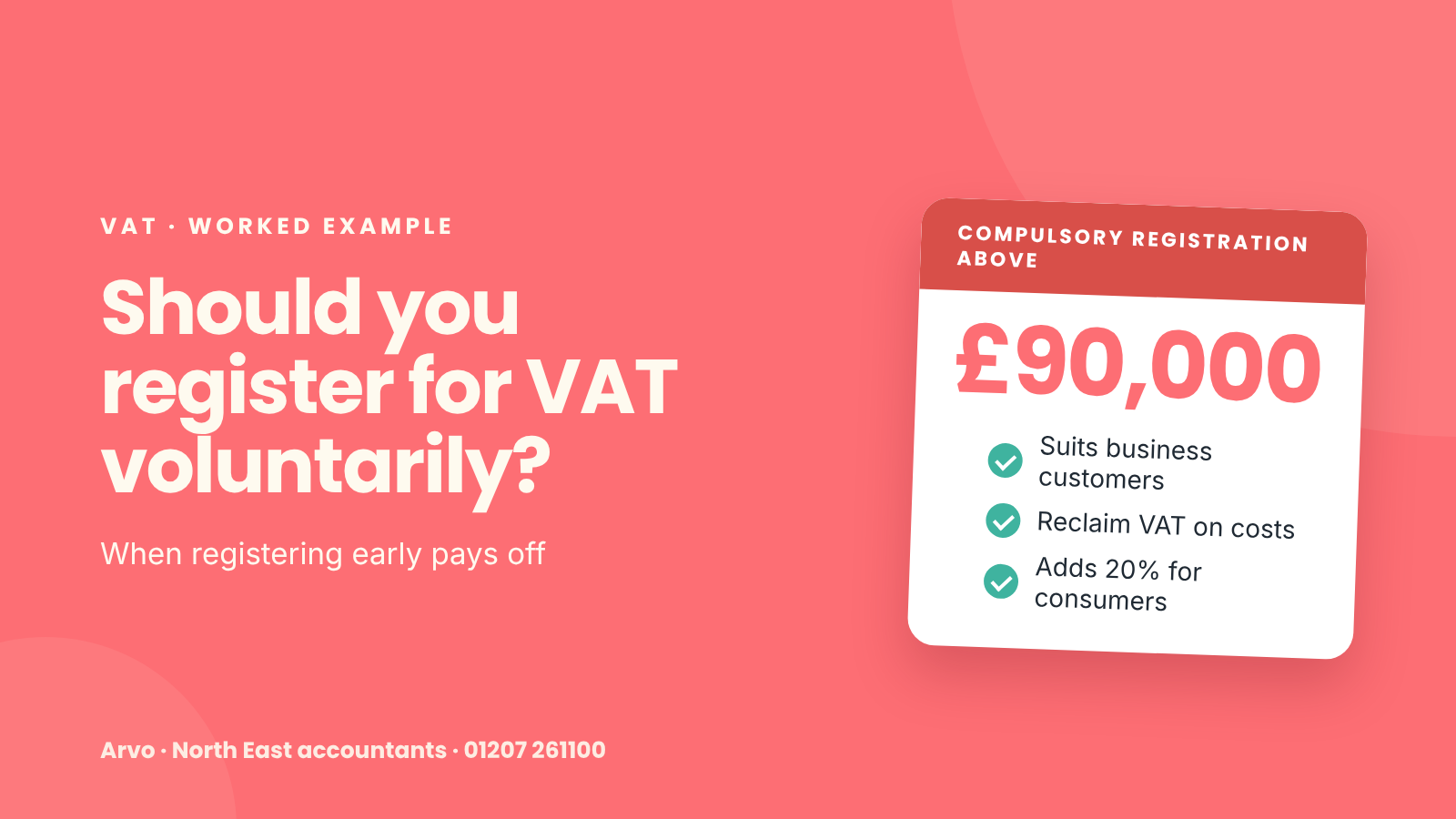
You must register for VAT once your taxable turnover goes over £90,000 in a rolling 12 months. But you can choose to register earlier. For some businesses, it's a smart move.
When it makes sense
Your customers are VAT-registered businesses. They can reclaim the VAT you charge, so your prices don't really go up for them
You have big VAT-able costs, like equipment, stock, vans or materials. You can reclaim the VAT on them
You sell zero-rated goods, like most food or children's clothes. You charge no VAT, but can reclaim VAT on costs, so you may get regular refunds
You're about to make a big purchase, and want to reclaim the VAT
When it doesn't
Your customers are mainly the public. They can't reclaim VAT, so you'd either raise prices by 20% or absorb it
Your costs have little VAT on them, like wages or insurance
You don't want the extra admin of VAT returns and Making Tax Digital for VAT
A worked example
A joiner sells £60,000 of work a year to building firms, and spends £15,000 plus VAT on materials and tools.
Not registered: pays £3,000 VAT on costs and can't reclaim it
Registered: charges £12,000 VAT, which the building firms reclaim, and reclaims £3,000 on costs
Registering puts £3,000 a year back in the joiner's pocket, at no real cost to their customers.
Reclaiming VAT from before you registered
When you register, you can usually reclaim VAT on goods bought in the last four years that you still have, and services from the last six months.
Other benefits
Some larger customers prefer to work with VAT-registered suppliers, and it can make a small business look more established.
Think about the schemes
The Flat Rate Scheme or cash accounting may make VAT simpler or better for cash flow.
Related reads
How Arvo can help
We can compare your figures with and without VAT, register you and handle your VAT returns.
Find out more about our VAT returns service.
Get in touch to arrange a free, no-obligation chat, or call us on 01207 261100.