
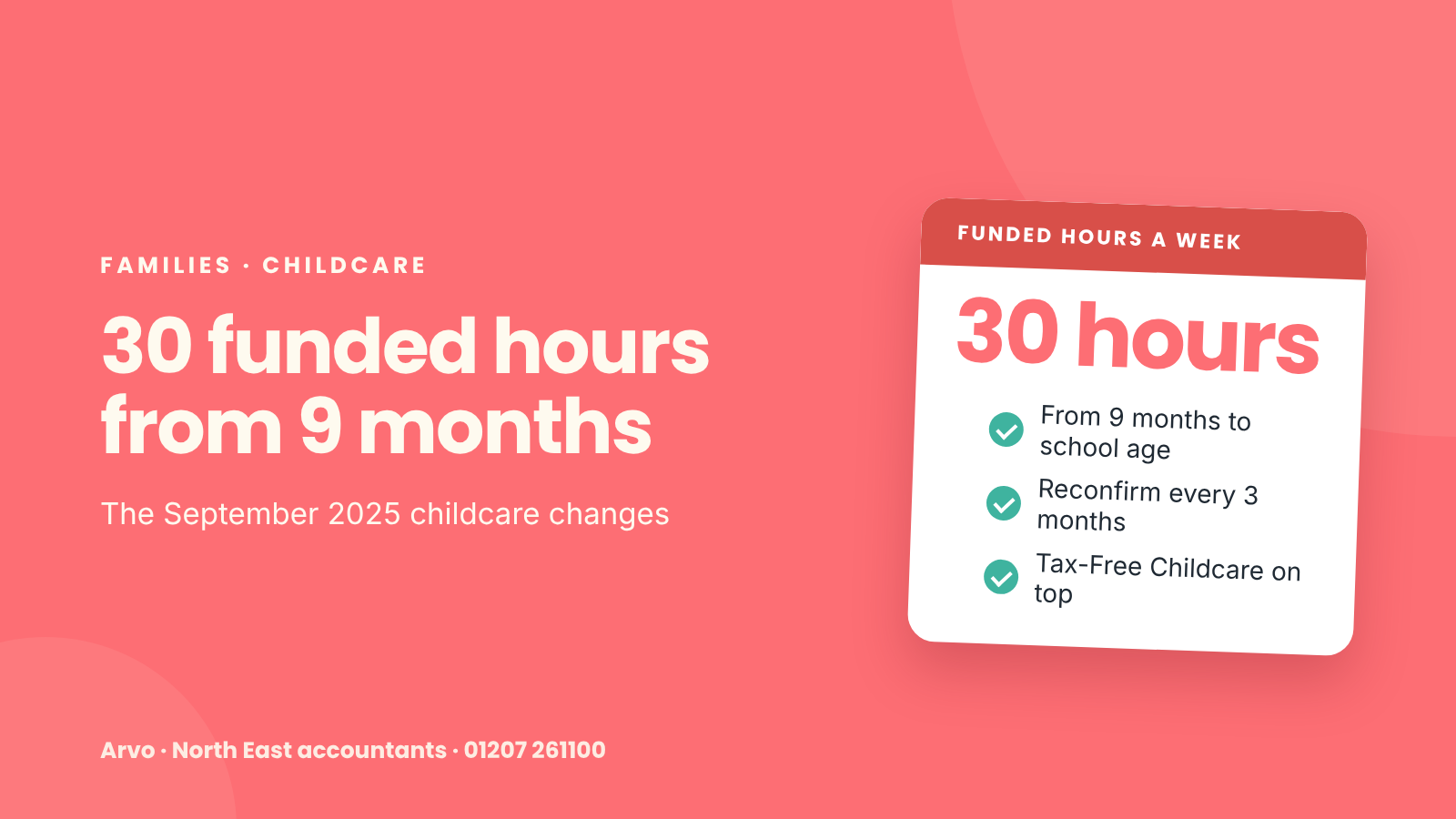
The final stage of the childcare rollout in England starts this month. From September 2025, eligible working parents can get 30 hours of funded childcare a week from when their child is 9 months old until they start school.
Who qualifies?
You, and your partner if you have one, usually need to:
Each expect to earn at least the equivalent of 16 hours a week at the National Minimum Wage or National Living Wage, averaged over three months
Each have adjusted net income under £100,000 a year
Live in England
There are exceptions, for example if one parent is on certain benefits or unable to work because of a disability or caring responsibilities.
The self-employed
Self-employed parents can usually use their expected profit over the next three months. If you started your business in the last 12 months, you don't need to meet the minimum earnings test.
How it works
The 30 hours are usually for 38 weeks a year, or fewer hours spread across more weeks
You apply through the Childcare Service and get a code to give your provider
You must reconfirm your details every three months, or you could lose your place
Providers may charge for extras like meals, nappies or trips.
Tax-Free Childcare
You can also use Tax-Free Childcare. For every £8 you pay in, the government adds £2, up to £2,000 a year per child, or £4,000 for a disabled child. It can help pay for hours on top of the funded ones.
Near £100,000?
If your income is just over £100,000, you lose both the funded hours and Tax-Free Childcare. A pension contribution can bring your adjusted net income back under the limit. It also helps with the tapering of your Personal Allowance.
Related reads
How Arvo can help
We can work out your adjusted net income, help self-employed parents with the earnings test and look at whether a pension contribution would help.
Get in touch to arrange a free, no-obligation chat, or call us on 01207 261100.