
The Chancellor delivered the Spring Statement on 26 March 2025. It was mainly about spending and the economy, but there were a few tax announcements worth knowing about.
No major tax rises
There were no big changes to Income Tax, National Insurance, VAT or Corporation Tax. The changes announced in the October Budget still start on 6 April as planned, including the rise in employer NI.
Making Tax Digital
Making Tax Digital for Income Tax is coming in stages for sole traders and landlords:
April 2026: qualifying income over £50,000
April 2027: over £30,000
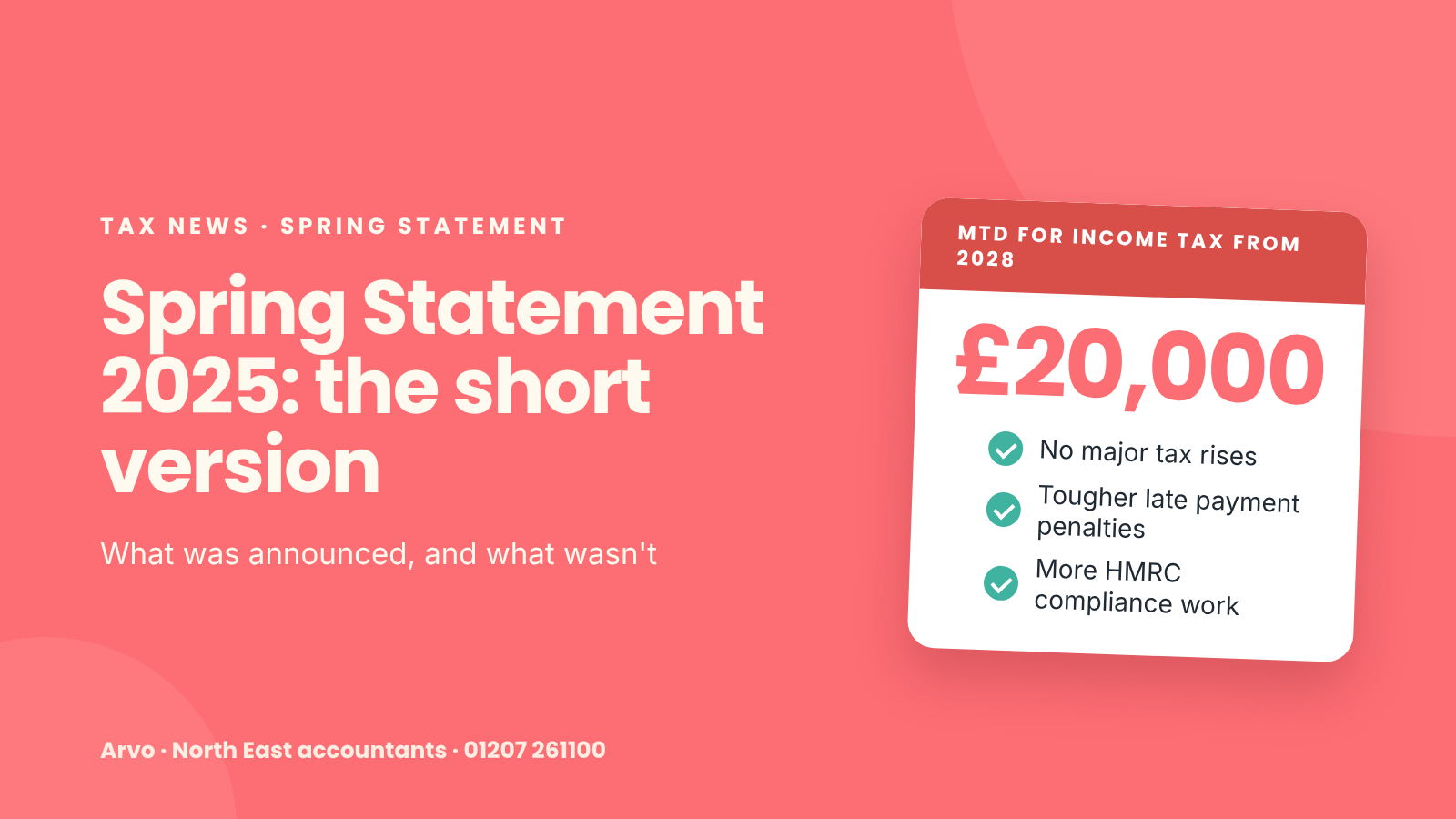
April 2028: over £20,000, newly confirmed in the Spring Statement
Qualifying income means your total income from self-employment and property, before expenses. If you're affected, you'll need software and quarterly updates.
Tougher late payment penalties
Late payment penalties are going up for VAT from April 2025, and for Making Tax Digital for Income Tax from 2026:
3% of tax unpaid at 15 days
Another 3% at 30 days
Then 10% a year on tax still unpaid
Paying on time, or agreeing a Time to Pay arrangement early, matters more than ever.
HMRC compliance
The government announced more investment in HMRC to collect tax that's owed, including more compliance staff and more use of data. Expect more letters and checks.
The economy
The growth forecast for 2025 was halved to 1%, though growth is expected to pick up in later years.
What it means for you
If you're a sole trader or landlord with income over £20,000, now's a good time to move your records onto software, ready for Making Tax Digital.
Related reads
How Arvo can help
We can tell you when Making Tax Digital will apply to you and help you get set up in plenty of time.
Get in touch to arrange a free, no-obligation chat, or call us on 01207 261100.