
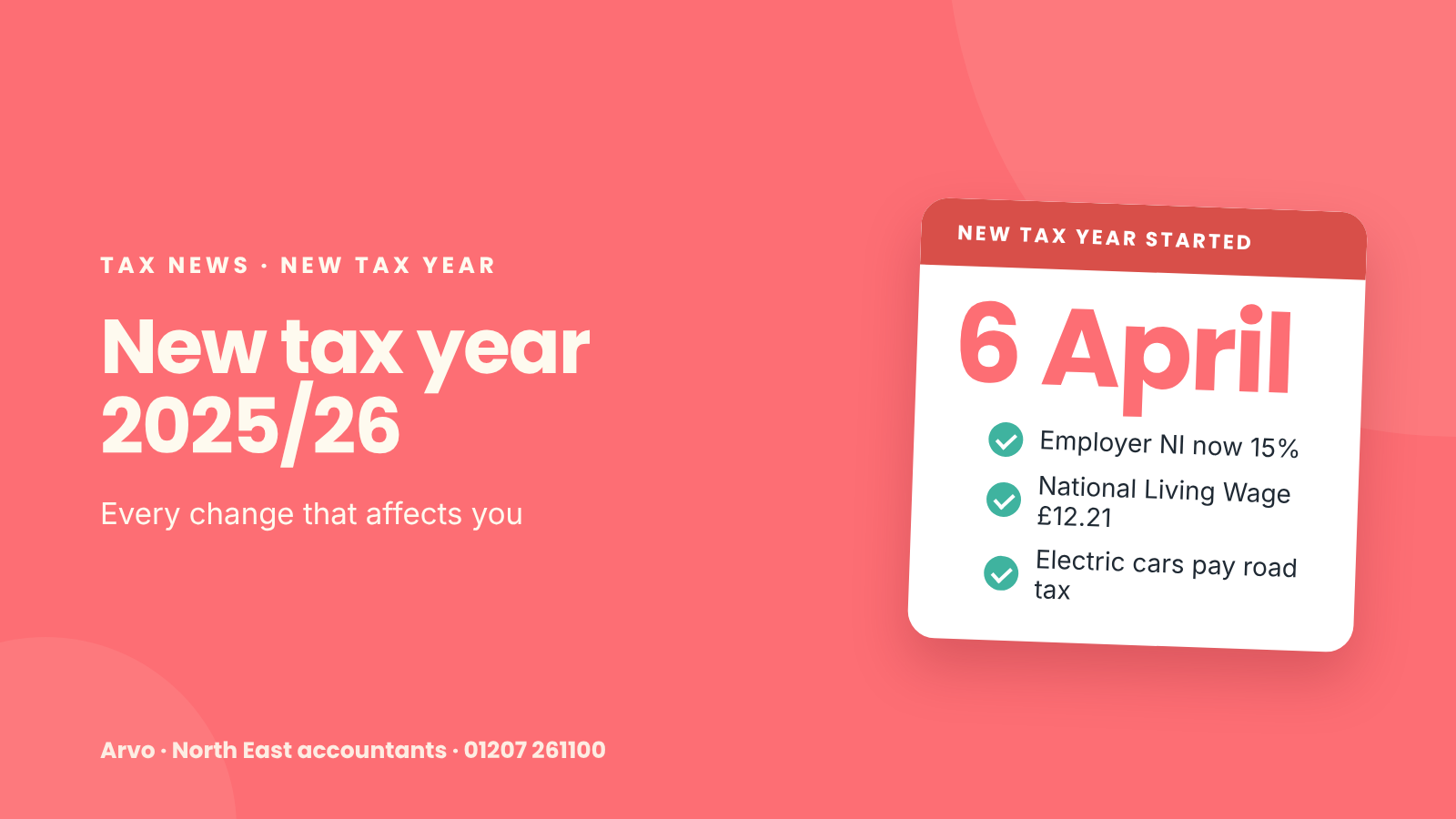
The 2025/26 tax year started on Sunday 6 April 2025, and it brings more changes than most years. Here's the round-up.
Employers
Employer National Insurance is now 15%, starting at £5,000 a year of earnings
The Employment Allowance is now £10,500, and more businesses can claim it
The National Living Wage is £12.21 an hour
Business owners
Business Asset Disposal Relief is now 14%, rising to 18% in April 2026
The furnished holiday lettings rules have ended, so holiday lets are taxed like other rental property
Double cab pick-ups are now treated as cars for most tax purposes, with transitional rules for some vehicles
Property
Stamp Duty thresholds fell on 1 April: the nil-rate band is now £125,000, or £300,000 for first-time buyers
The 5% surcharge on additional homes continues
Cars
Electric cars now pay Vehicle Excise Duty (road tax)
Company car tax on electric cars rises to 3% of list price for 2025/26, and will go up by one percentage point a year until 2027/28
Interest on late tax
HMRC's late payment interest rate is now 4% above the Bank of England base rate, up from 2.5%.
What hasn't changed
Income Tax rates and thresholds are frozen, with the Personal Allowance at £12,570
The £500 dividend allowance and £3,000 Capital Gains Tax exemption stay the same
Corporation Tax stays at 19% for small profits and 25% for profits over £250,000
Coming in April 2026
Making Tax Digital for Income Tax starts for sole traders and landlords with qualifying income over £50,000. If that's you, it's time to get ready.
Related reads
How Arvo can help
We can explain how the new tax year affects you and make sure your payroll, pricing and plans are up to date.
Get in touch to arrange a free, no-obligation chat, or call us on 01207 261100.