
When staff spend their own money on business costs, paying them back is usually tax-free. But some payments count as earnings, and need to go through payroll. Here's how to get it right.
Mileage
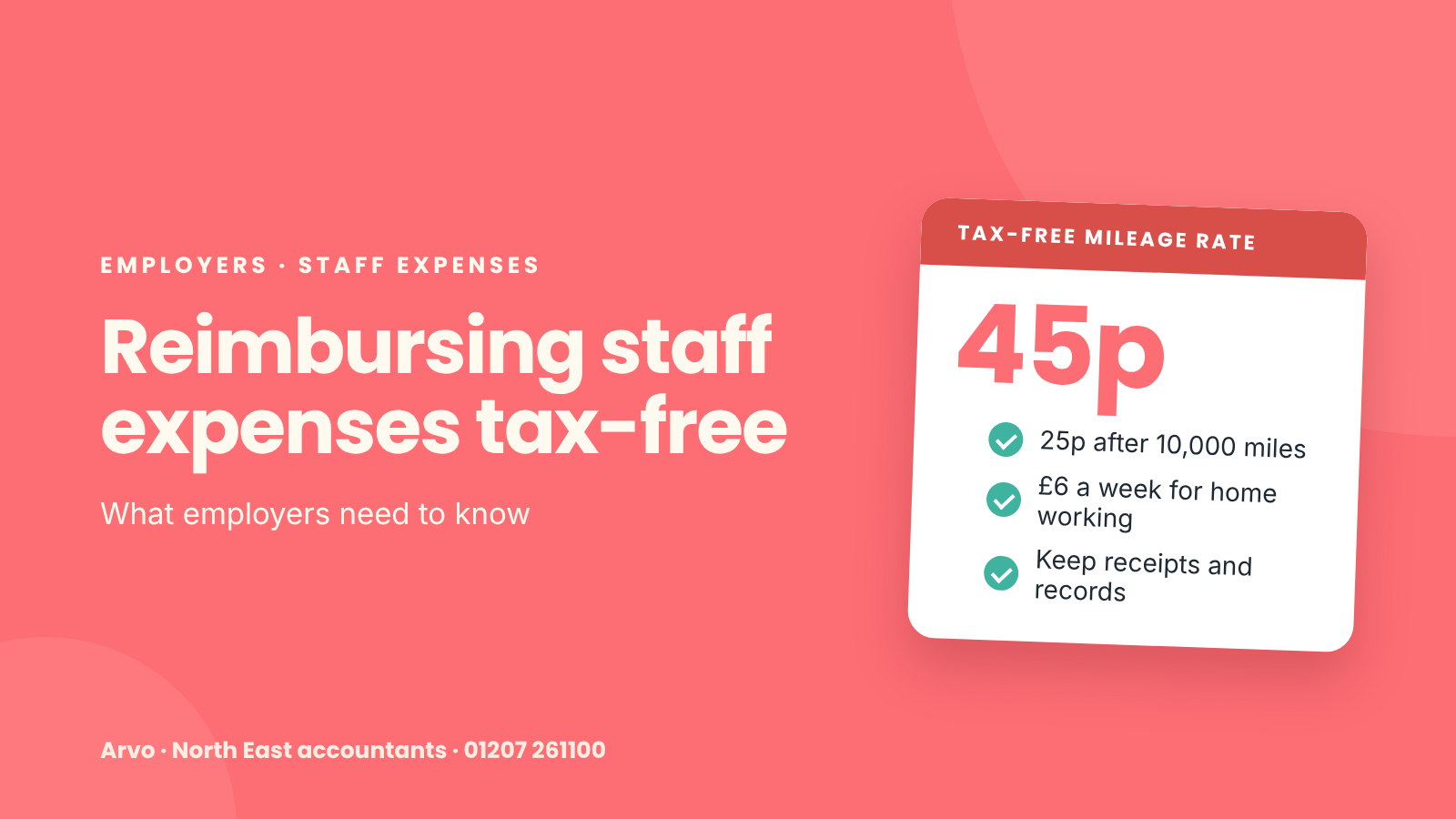
If staff use their own car for business journeys, you can pay up to:
45p a mile for the first 10,000 miles in the tax year
25p a mile after that
24p a mile for motorbikes and 20p for bicycles
Pay more and the extra is taxable. Pay less and the employee can claim tax relief on the difference.
Remember, the commute to a normal workplace isn't a business journey.
Travel and subsistence
You can reimburse the actual cost of travel, meals and hotels on business trips, or use HMRC's benchmark scale rates for meals. Keep receipts or a record of the trip.
Working from home
If staff have to work from home, you can pay up to £6 a week tax-free without needing evidence of their costs.
Equipment
Equipment you provide mainly for work, like a laptop or tools, isn't taxable. One mobile phone per employee can also be provided tax-free.
Trivial benefits
Small gifts that cost £50 or less, aren't cash and aren't a reward for work, like a birthday bottle of wine, are tax-free. Directors of close companies are limited to £300 a year.
What's taxable?
Paying for ordinary commuting
Round-sum allowances not linked to actual costs
Personal bills, like an employee's home broadband for private use
These need to go through payroll, or sometimes a PAYE Settlement Agreement.
Keep records
You don't need to report tax-free expenses to HMRC, but you must be able to show they were for business. A simple expenses policy and a claim form help a lot.
Related reads
How Arvo can help
We can help you set up an expenses policy, check what's taxable and handle anything that needs to go through payroll.
Find out more about our payroll and pensions service.
Get in touch to arrange a free, no-obligation chat, or call us on 01207 261100.