
Lots of rental properties are owned by couples, family members or friends. With Making Tax Digital for Income Tax (MTD) starting on 6 April 2026, here's how it works when you own a property jointly.
The £50,000 test
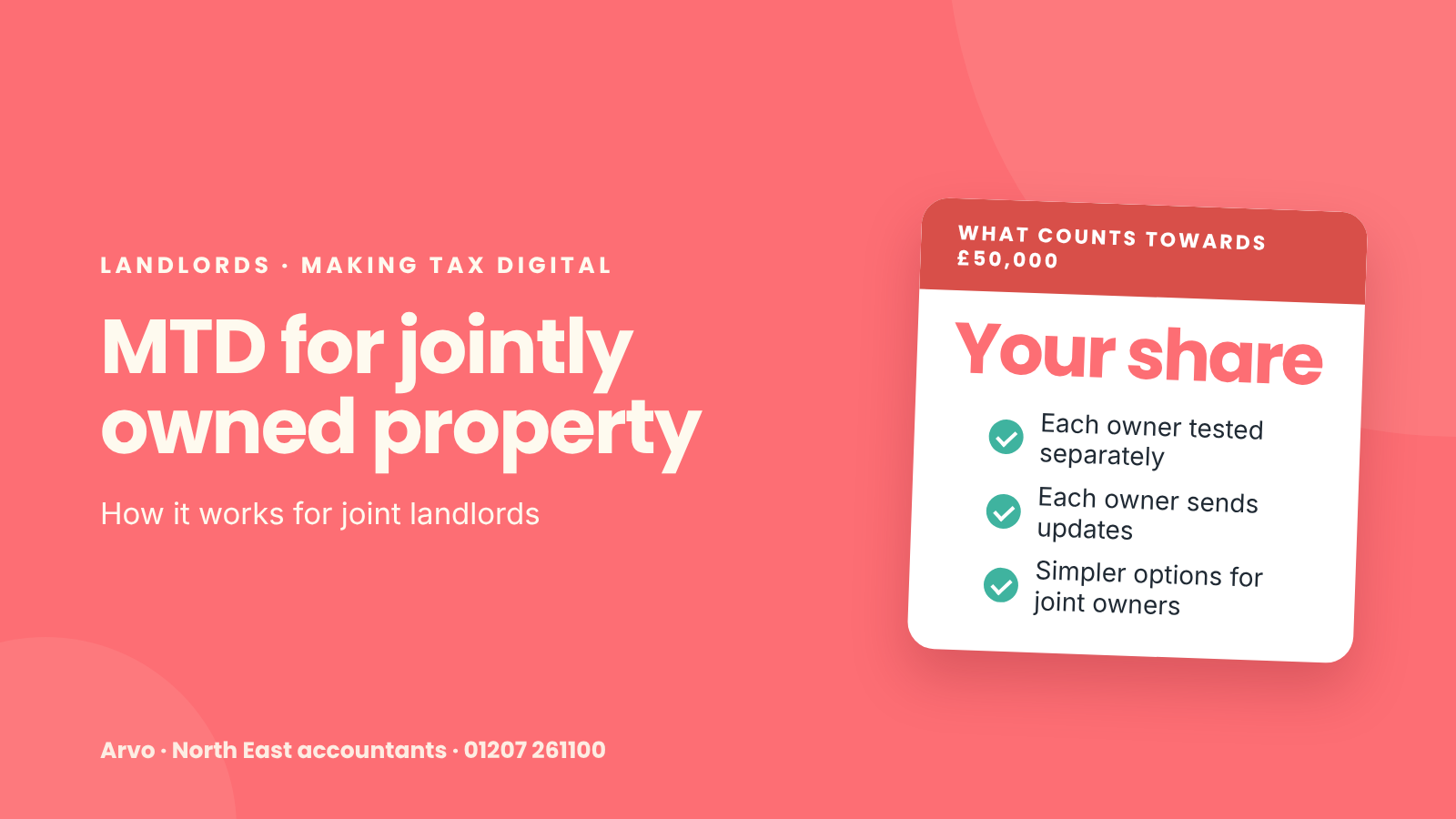
Each owner is tested separately. Only your share of the gross rent counts towards your qualifying income, along with any self-employment income you have.
For example, a couple who own a property 50/50 with £30,000 of rent each have £15,000 of property income. If neither has other qualifying income, neither is in MTD from April 2026.
But if one of them also has a business with £40,000 of income, their total is £55,000, so they're in, even though the other owner isn't.
Who sends the updates?
Each owner who's in MTD sends their own quarterly updates, for their share of the income and expenses. An owner who isn't in MTD carries on with a normal tax return.
Easements for joint owners
HMRC recognises that joint owners can find it hard to get figures quickly from each other or a letting agent. It has said joint owners can choose to send simpler quarterly updates, with the detail of expenses added at the year end. Check the latest HMRC guidance or ask your accountant how this applies to you.
Ownership shares
Income is usually split according to ownership. Married couples and civil partners are normally taxed 50/50, unless they own the property in unequal shares and have made a declaration to HMRC.
Practical tips
Agree who keeps the records, and how you'll share them
Use a dedicated bank account for the property
Ask your letting agent for regular statements
Make sure both owners' software uses the same figures
Related reads
Landlords: Making Tax Digital starts in April 2026 if your rent is over £50,000
Making Tax Digital is here: what to do if your income is over £50,000
How Arvo can help
We can work out whether each owner is in MTD, set up records that work for both of you and send the updates.
Get in touch to arrange a free, no-obligation chat, or call us on 01207 261100.