
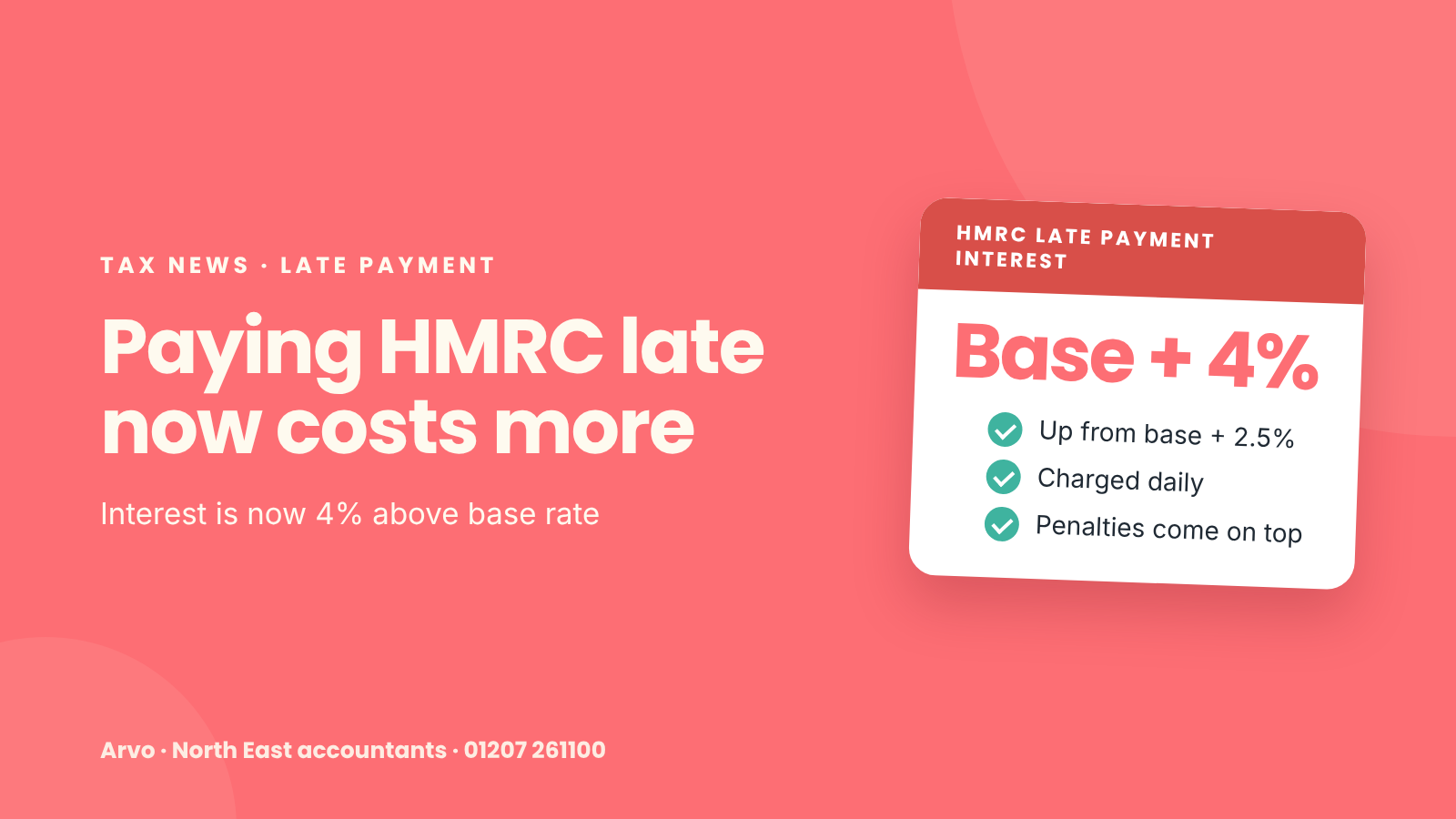
From 6 April 2025, the interest HMRC charges on late tax went up from 2.5% to 4% above the Bank of England base rate. With the base rate at 4.5% when the change came in, that's 8.5% a year.
Which taxes?
It applies to most taxes and duties, including:
Self Assessment Income Tax and Capital Gains Tax
Corporation Tax
VAT
PAYE and National Insurance
What it costs
Say you owe £10,000 and pay it six months late. At 8.5%, interest is around £425. That's on top of any late payment penalties.
Interest is charged daily and isn't tax-deductible for individuals, so it's an expensive way to borrow.
What about repayments?
When HMRC owes you money, it pays interest at base rate minus 1%, with a minimum of 0.5%. So the gap between what HMRC charges and what it pays is wide.
Penalties on top
Late payment penalties apply as well as interest. For Self Assessment, that's 5% of the tax still unpaid at 30 days, six months and 12 months. For VAT, the penalties have also gone up.
How to avoid it
Pay on time. Set reminders well before 31 January and 31 July
Save as you go. Put money aside for tax each month
Use a budget payment plan to spread payments
Reduce payments on account if your income has dropped
Ask for Time to Pay early. Interest still applies, but penalties can be avoided
Related reads
How Arvo can help
We'll tell you what you owe well before the deadline, check whether payments on account can be reduced and help you agree a plan with HMRC if you need one.
Get in touch to arrange a free, no-obligation chat, or call us on 01207 261100.