
If you run a limited company and need a vehicle, the choice between a car and a van can make a big difference to your tax bill.
Company cars
If a company car is available for private use, you pay tax on a benefit in kind, based on the car's list price and CO2 emissions:
Electric cars: 3% of the list price in 2025/26
Petrol and diesel cars: up to 37%
A £35,000 diesel car at 37% creates a benefit of £12,950. A higher rate taxpayer pays around £5,180 a year in tax, and the company pays employer NI on top.
Company vans
Vans have a flat benefit, whatever their price:
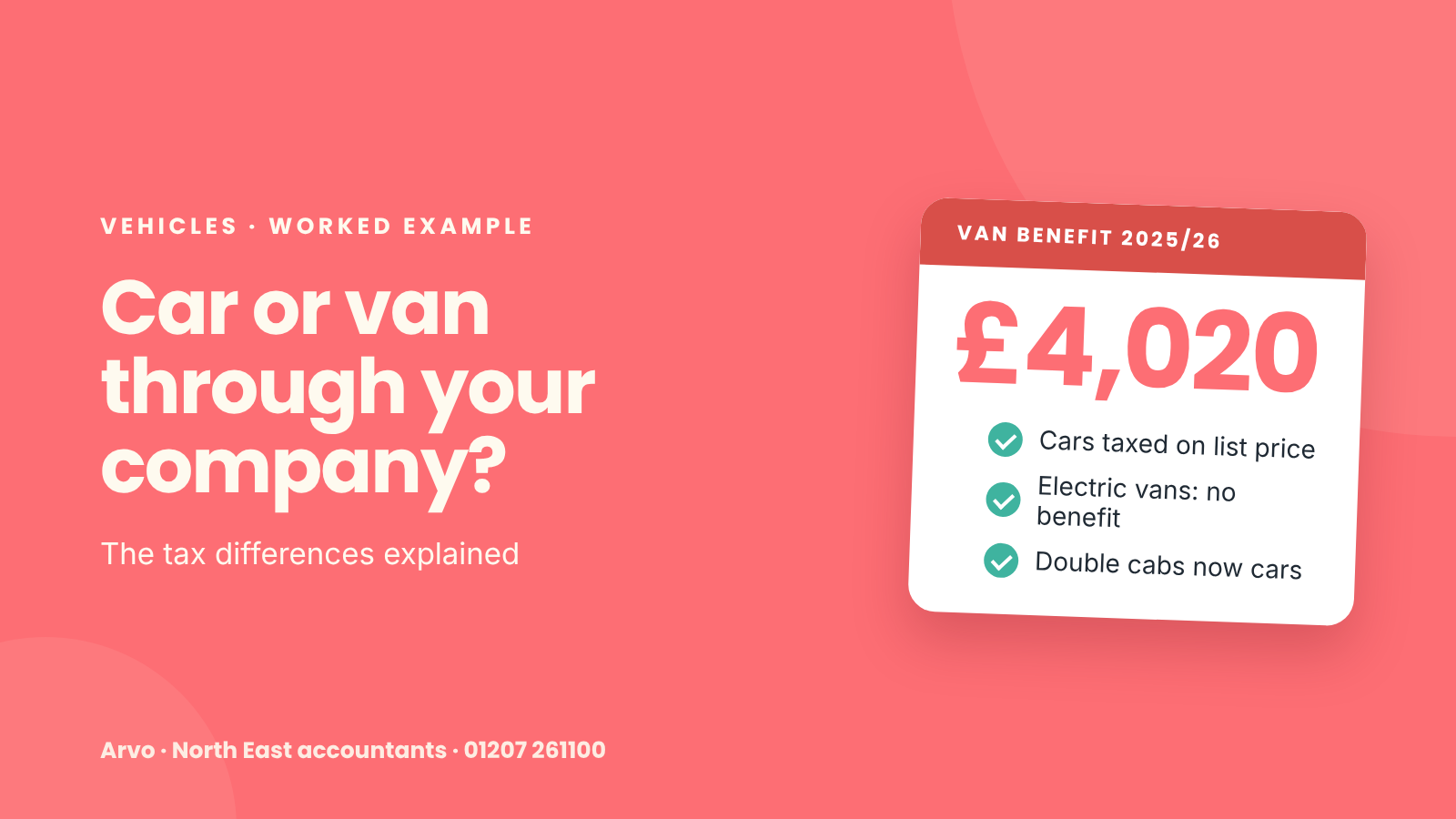
Van benefit: £4,020 for 2025/26
Van fuel benefit: £769, if the company pays for private fuel
Zero-emission vans: no van benefit
A higher rate taxpayer pays around £1,608 a year on a van, plus £308 if private fuel is provided.
If private use is insignificant, there's no benefit at all. Commuting to work doesn't count as private use for vans.
Capital allowances
Vans usually qualify for the Annual Investment Allowance, giving 100% tax relief in the year you buy
New electric cars get a 100% first-year allowance
Other cars get 18% or 6% a year, depending on emissions
VAT
VAT-registered companies can usually reclaim VAT on vans. On cars, VAT usually can't be reclaimed unless there's no private use at all.
Double cab pick-ups
From 6 April 2025, double cab pick-ups with a payload of a tonne or more are treated as cars for benefit in kind and capital allowances. There are transitional rules for vehicles bought or ordered before then.
Which is right?
If you really need a vehicle for work, a van is usually more tax-efficient. If you want a car, electric is hard to beat.
Related reads
Corporation Tax marginal relief: profits between £50,000 and £250,000
Dividend tax is rising in April 2026: what directors should do now
Buying equipment before your year end: capital allowances explained
How Arvo can help
We can compare the options using your figures before you buy, and handle the P11D reporting afterwards.
Get in touch to arrange a free, no-obligation chat, or call us on 01207 261100.