
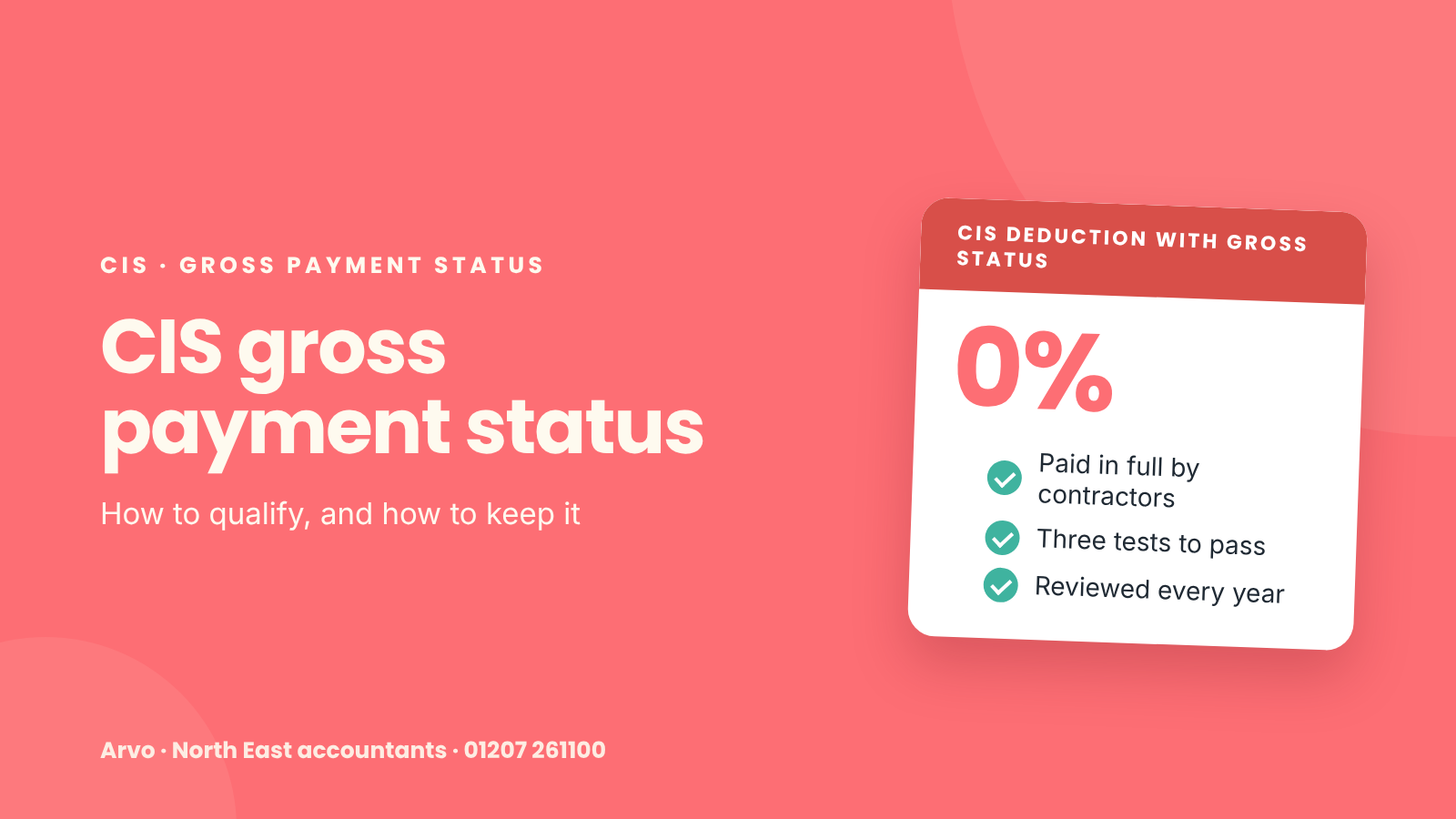
If you work under the Construction Industry Scheme (CIS), contractors normally take 20% from your labour before paying you. With gross payment status, they pay you in full, and you settle your tax through your tax return instead.
Why it helps
Better cash flow. You get all your money when the work is done, not months later as a refund
Less admin chasing statements to reclaim deductions
More appealing to contractors who'd rather not handle deductions
The three tests
1. The business test
You must run a construction business in the UK, mostly through a bank account.
2. The turnover test
Your construction turnover, after VAT and the cost of materials, must usually be at least:
£30,000 a year for a sole trader
£30,000 per partner, or £100,000 in total, for a partnership
£30,000 per director, or £100,000 in total, for a limited company
HMRC looks at the 12 months before you apply.
3. The compliance test
You must have paid your tax and filed your returns on time over the last 12 months. That includes Self Assessment, PAYE, CIS returns and, since April 2024, VAT. A small number of minor late payments may be allowed, but repeated slips will count against you.
Keeping it
HMRC reviews gross payment status every year. If you file late or pay late, you can lose it, and you'd normally have to wait a year before applying again. Losing it means contractors start deducting 20% straight away.
How to apply
Sole traders and partnerships usually apply online or by phone. Limited companies apply through HMRC. Have your bank details, turnover figures and a list of the contractors you work for ready.
Is it right for you?
Gross status means no tax is held back, so you need to save for your own tax bill. If you're not disciplined with money, the 20% deduction can act as a useful savings pot.
Related reads
CIS explained: how the Construction Industry Scheme works for subcontractors
Vans, tools and equipment: claiming the Annual Investment Allowance
CIS contractors: why HMRC is writing to you, and what’s changed
How Arvo can help
We can check whether you pass the tests, apply for you and keep your filing on track so you hold on to gross status.
Get in touch to arrange a free, no-obligation chat, or call us on 01207 261100.