
One of the most common questions from new sole traders is: how do I pay myself? The answer is simpler than you might think, but it catches lots of people out at tax time.
Drawings
As a sole trader, you and your business are the same legal person. When you take money out of the business for yourself, it's called drawings. You can take as much or as little as you like, whenever you like.
There's no payroll and no salary.
You're taxed on profit, not drawings
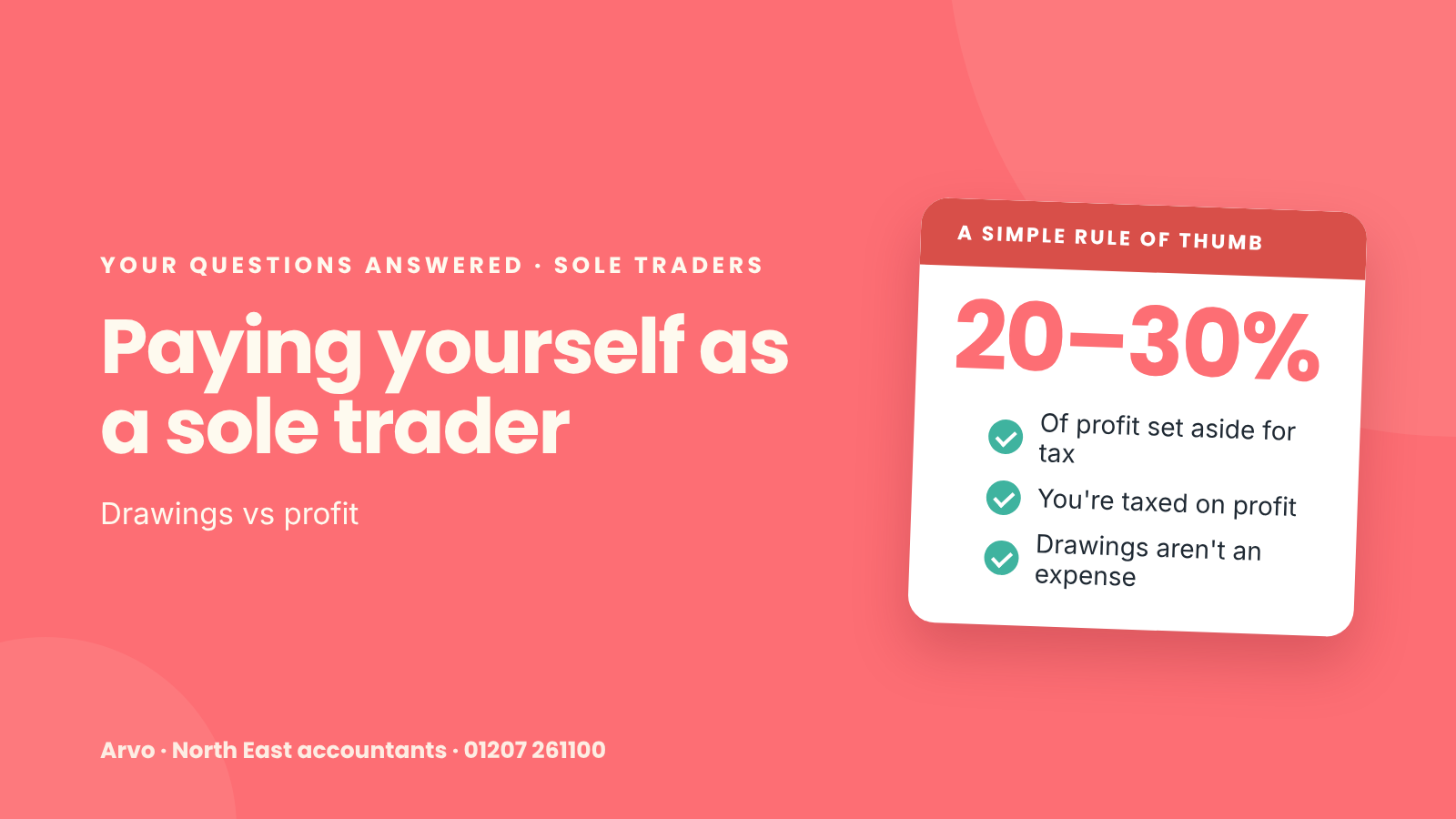
Here's the important part. You pay Income Tax and National Insurance on your profit for the year, not on what you take out.
Your profit is your income minus your allowable business expenses. Drawings are not an expense, so they don't reduce your tax bill.
For example, if your business makes £40,000 profit and you only take out £25,000, you're still taxed on £40,000.
Why it matters
People sometimes leave money in the business account and assume it won't be taxed, or take out more than their profit and run short when the tax bill arrives. Knowing the difference helps you plan.
How much to set aside
A simple rule of thumb is to put 20% to 30% of your profit into a separate savings account for tax. The right amount depends on your income, and whether you have payments on account to make.
Keep it separate
Use a separate business bank account
Pay yourself a regular amount, like a wage
Move money for tax into a separate pot each month
Thinking about a limited company?
If your profits are growing, a limited company may save tax, but it brings more admin and different rules for paying yourself. It's worth running the numbers first.
How Arvo can help
We're a local accountancy practice in Stanley, County Durham. We'll work out how much to set aside for tax and help you plan your drawings, so there are no surprises in January.
Get in touch to arrange a free, no-obligation chat, or call us on 01207 261100.